Psychology and Cognitive Science: Prerecorded presentation - Panel 1
Location: Online - Prerecorded
Presentation 1
SAMANTHA HARRIS and Vickie Mays
Prior research has found that racial identity and institutional context can be a factor in the academic success and thriving of Black students. In particular, Black males have been found to perceive differences in how welcomed, valued and the investment in their success as a function of whether the context is that of a HBCU or PWI (Predominantly White Institution). This study will extend these results by examining how perceived need for mental health services and their utilization may vary based on Black males students' sense of belonging, perceived value within the institution. Data is drawn from three waves of the Healthy Minds Study (2022-2025), a web-based national survey of college students’ mental health. Regression models are used to examine associations, multiple linear regression examines perceived need, and logistic regression assesses service utilization, with both regressions adjusting for sense of belonging. These findings may inform the development of interventions, targeted campus mental health initiatives based on campus context, and resource allocation strategies aimed at improving access and engagement with mental health services for Black male undergraduates .
Presentation 2
TESHINEE KUKAMJAD; Falk Lieder
Future generations will bear the most severe consequences of the climate crisis, yet they have no seat at the table when environmental decisions are made. They rely on the current generation to act on their behalf. However, the current generation has little connection to people who do not yet exist; thus, they fail to take costly actions in the interest of future generations. Using large language models, we gave a voice to these silent victims. We developed a hypothetical future grandchild chatbot who could speak directly to participants, making the abstract victims of climate change vivid, personal, and present. The dialogue centers on how the user’s professional and environmental choices shape the future world. We evaluated the future grandchild chatbot in a preregistered, large-scale (N = 1,124), longitudinal online experiment with an active control group. After the interaction, participants felt significantly closer to future generations, leading to greater concern for their well-being and a higher rate of signing online climate petitions on change.org. Using mixed-effects modeling, we found that these increased pro-environmental attitudes translated into higher pro-environmental actions one week later (e.g., eating more plant-based meals, recycling, and using public transportation). Interacting with a future grandchild chatbot promotes pro-environmental action by reducing perceived social distance to future generations.
Presentation 3
SOPHIA MAMONONG
Autism Spectrum Disorder (ASD) is a lifelong nuerodevelopmental disorder that is associated with challenges in behavior, social interaction, and communication. As a result, those with ASD have difficulty engaging with others and finding opportunities to socialize, causing them to feel isolated. Isolation can lower self-esteem, and stunt their development further as they are limited in the number of meaningful interactions and skill building experiences.
This paper acknowledges the incorporation of extracurricular activities in everyday life in order to improve the sense of belonging and confidence among those with ASD. The variety of activities such as sports, clubs, and volunteering allow kids to develop social skills, build relationships with peers, and to explore their interests in low anxiety, structured environments. Through analyzing existing research, the findings suggest that extracurricular involvement improves social integration, but there continues to be barriers to participation that make it more difficult for those with ASD to find opportunities that are easily accessible for them.
This project emphasizes the importance of having extracurricular opportunities that are available to all kids so that they can learn from one another, and no one feels left out. It creates a less isolated and more integrated environment where all can thrive, especially the youth with ASD who can improve the most through early intervention at a young age.
Presentation 4
GRACE PHAN, Ruby Basyouni, Carolyn Parkinson
How does a person’s position in a social structure shape the way others describe them? Prior research suggests that traits are organized within networks of semantic dependencies, where some traits are more central and influential than others. These high-centrality traits are more meaningful because they imply many other traits and play a key role in structuring how individuals evaluate themselves. However, it remains unclear whether similar principles guide how people form impressions of others.
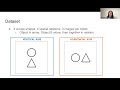
The present study examines whether a target’s position in a learned hierarchy or social network influences the quality of traits assigned to them, with a focus on trait centrality. Participants first learn the relationships between individuals within a structured hierarchy or network. They then evaluate these individuals using trait descriptors that vary in centrality and valence. Measures include trait endorsement and response time, allowing us to assess both evaluative patterns and processing differences.
We hypothesize that individuals in more central or higher positions will be more likely to be described using high-centrality traits, particularly positive ones, whereas individuals in lower or more peripheral positions will receive less central or more negative trait attributions.
This project extends network-based models of the self to social perception, suggesting that people use relational structure not only to organize social information, but also to determine how meaningful or influential the traits they assign to others.
Presentation 5
DAVID SONG, William Kaiser, Sitaram Vangala, and Rujuta B. Wilson
Wearable sensors are increasingly used to objectively monitor infant movement in natural settings. During the first year of life, infants produce both goal-directed and spontaneous movements, including linear motions such as kicks and orientation changes such as postural transitions. Most sensor pipelines focus on movement-generated acceleration and underuse orientation information contained in gravitational data. We present a complementary gravity-referenced approach that extracts the gravitational component of accelerometer signals to estimate limb orientation and quantify richer aspects of infant movement. Using wearable sensors (Opal APDM), we longitudinally assessed infant motor activity at 3, 6, 9, and 12 months. From these data, we computed pitch, roll, and yaw and quantified orientation variability with axis-specific circular standard deviations and a multi-axis composite based on generalized variance. Variability in pitch, roll, yaw, and composite generalized variance increased significantly from 3 to 12 months (p ≤ 0.01 for all). Composite variability was associated with Mullen Gross Motor scores at 9 and 12 months (r = 0.55, p < 0.001). Overall, gravity-referenced orientation features captured developmental increases in postural transitions and correlated with standardized motor outcomes, complementing traditional linear kinematic measures and improving fine-grained tracking of infant motor development in the first year.
Presentation 6
KATHERINE SONG, Francisco A. Reinosa Segovia, Denise Chavira, Michelle Craske, Kate Wolitzky-Taylor
Despite community college (CC) students experiencing higher mental health prevalence than same-age peers in 4-year universities, they are also significantly less likely to use mental health services. This study conducted a secondary analysis from an ongoing randomized control trial (RCT) to understand the impact of demographic matching and supervision modality on service engagement in the second level of care (e.g., digital therapy with peer coaching) of the Screening and Treatment for Anxiety & Depression program. Using a 2x2 factorial design, a total of 244 students from a predominantly Latiné CC were randomly assigned to one of four groups with a peer coach that: 1) was a matching Latiné or non-Latiné coach, and 2) received standard or reduced training. Negative binomial regression models were used to examine the main effects and interaction on session attendance. The interaction between demographic matching and reduced supervision was not statistically significant (p = .08). Demographic matching did not show any difference on session attendance for coach training (IRR = 0.96, 95% CI [0.85-1.10], p = .56); while reduced supervision suggested a borderline increase compared to standard supervision (IRR = 1.13, 95% CI [0.99-1.29], p = .06). These preliminary findings highlight potentially reducing intensity of supervision in peer coaching models to enhance engagement in service delivery of online mental health care for CC students with diverse backgrounds.
Presentation 7
CATHERINE VON HOENE, LISA ORDOÑEZ
Project Title: Digital Activity Selection as a Preventative Mental Health Intervention
Description: App-Based Activity Selection to Address the Mental Health Crisis and Loneliness Epidemic.
The United States is currently facing a mental health crisis characterized by rising rates of depression, anxiety, obsessive compulsive disorder, borderline personality disorder, and social isolation among young adults These intersecting crises motivated the development of Club Wellbeing, a digital mental health platform designed to increase access to preventative resources.
This project examines whether structured activity selection, rooted in principles of behavioral activation and evidence based coping strategies, can improve emotional regulation and reduce self reported distress. The Club Wellbeing website and app were developed to provide users with personalized activity recommendations based on current emotional states, encouraging engagement in meaningful, achievable behaviors associated with improved mood and decreased rumination.
Development included research synthesis on activity selection as a preventative practice, user centered design planning, and pilot testing among university students. Preliminary feedback suggests that users report increased motivation, improved emotional awareness, and greater willingness to seek additional support resources.
This project demonstrates how accessible digital tools can serve as scalable, preventative mental health interventions, particularly for young adults facing barriers to traditional therapy.
Presentation 8
DAYLOR WILLIAMS
A visual scene is more than just a collection of objects. It also inherently has structure: the same two objects can form different scenes depending on how they are arranged. This distinction raises the question of whether a visual foundation model like DINOv2, which represents an entire image as a single global embedding, encodes spatial relations between objects or primarily reflects object identity. To examine this, I constructed a synthetic dataset of simple shape pairs arranged in four relations: above, below, left, and right. These were grouped into a binary axis-classification task (vertical vs horizontal). For each pair, I computed a projection-based difference vector intended to reduce object-specific information while preserving residual structure related to spatial configuration. I evaluated this representation using cross-object generalization, PCA-based dimensionality analysis, principal component ablation, few-shot classification, and permutation testing. Across these analyses, the difference-vector representation showed clearer separation between vertical and horizontal arrangements than raw CLS embeddings, transferred more reliably to unseen shapes, and remained above chance under shuffled-label controls. The results also suggest that the relational signal may be relatively low-dimensional. These findings suggest that relational axis information can be recovered from DINOv2’s CLS embeddings, providing evidence that spatial structure is implicitly encoded in global representations.
Presentation 9
Ashley Yim*, Melody Yuan*, Yuqing (Julia) Zhang*, and Melissa Paquette-Smith
The ability to recognize voices is a fundamental skill for navigating our social environment. Voice recognition is influenced by both the acoustic and phonological characteristics of a speaker’s voice. In this study, we test whether imitating the productions of speakers might improve voice recognition by drawing attention to the distinct characteristics of the speakers’ voice. Using a voice recognition paradigm, participants learned and were tested on different voices each day for 6 days. Across the days, the format of the learning phase varied. In the imitation condition, participants were asked to repeat each sentence aloud while trying to match the “way” the person speaks. In the control condition, participants indicated whether a target word was present or absent in the sentence. After each learning phase, participants were tested on 8 voices (4 old, 4 new) and indicated whether they heard each voice in the preceding learning phase. Data collection is ongoing, but preliminary data (N = 20) suggest that the imitation condition does not elicit better memory than the control condition. However, participants had difficulty repeating the sentences, which may have masked differences between the conditions. We are currently testing a modified version of the task, where participants imitate only the final word of each sentence. This may reduce the demand on working memory. Taken together, this work contributes to our understanding of how social imitation might influence voice recognition.