Psychology and Cognitive Science: Prerecorded presentation - Panel 2
Location: Online - Prerecorded
Presentation 1
KATRINA M. SMITH, Manuel F. Ramirez, and A. Janet Tomiyama
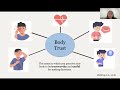
Internalized weight stigma, the self-application of weight-based stereotypes and devaluations, is prevalent in individuals with overweight or obesity. Prior work has linked this phenomenon to adverse psychological outcomes, but underlying mechanisms remain unclear. In this cross-sectional study, we tested the hypothesis that body trust, perceiving the body as safe and useful for making decisions, mediates the association between internalized weight stigma and two psychological distress outcomes: perceived stress and the Patient Health Questionnaire-4, a composite measure of anxiety and depression symptoms. Participants (N = 246) with body mass indices (BMIs) in the overweight and obesity range completed validated self-report measures. Two mediation models controlling for sociodemographic factors and BMI were tested using regression analyses with bootstrapped confidence intervals. Results revealed significant indirect effects of internalized weight stigma on perceived stress (β = 0.09, 95% CI [0.05, 0.14]) and anxiety/depression symptoms (β = 0.01, 95% CI [0.01, 0.02]) through reduced body trust. Body trust accounted for 32.7% of the relationship with perceived stress and 47.2% of the relationship with anxiety/depression symptoms, independent of BMI. These findings suggest that diminished body trust might explain the link between internalized weight stigma and psychological distress. If replicated in future longitudinal studies, body trust may be a promising and modifiable intervention target.
Presentation 2
MARCELLA HEIDSIEK, Steven J. Stroessner
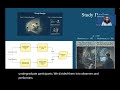
Cognitive frameworks and beliefs regarding learning dynamics are critical in high-stakes environments. This study examines how performance on cognitive tasks is influenced by varying learning conditions and social expectations. Participants (N = 300) were randomly assigned to Performer (n = 200) or Observer (n = 100) roles. Performers were manipulated to believe they were or were not being observed during a task. Simultaneously, Observers were briefed with false academic histories to establish high expectations of the Performer they watched via a two-way mirror. Performers memorized ten pseudo-words before a recall quiz. During this phase, Observers monitored Performers while completing a distractor task. Using an ANOVA, the study analyzed the interaction between Performer belief and cognitive performance. Results suggest that performance declines when an individual believes they are being observed by someone with high expectations. These findings have implications for understanding how social-evaluative stress influences academic and professional achievement, highlighting the need for interventions that mitigate the negative effects of perceived scrutiny in learning environments.
Presentation 3
EMILIANO JASIS, Russell Noble, Naomi Eisenberger
Glucagon-like peptide-1 (GLP-1) receptor agonists are increasingly prescribed for obesity and type 2 diabetes to decrease food cravings. They function in part by modulating mesolimbic reward circuitry, decreasing dopamine release and broadly reducing reward response. Despite early evidence that GLP-1s may have some non-selective effects, there is scant research about its psychological effects and how the drug impacts cravings and rewards other than food. The present online study surveyed 50 individuals currently using GLP-1s to assess retrospective changes in food and social reward perception before and during treatment. We hypothesized that GLP-1 use will be associated with reduced social reward reactivity relative to pre-treatment levels. The survey utilizes various assessments of reward perception, including the Power of Food scale, Anticipatory and Consummatory Interpersonal Scale, Fear of Missing Out Scale, and UCLA Loneliness Scale. Preliminary analyses indicate that participants report decreased loneliness (p < 0.001) and fear of missing out (p = 0.002) along with increased self esteem (p < 0.001). Further paired t-tests and ANOVA will assess within-subject differences in reward sensitivity across social perception and motivation. Potential findings can inform future research into off-target effects of GLP-1 treatment relevant to social connectedness and loneliness, and they can inform future patients of potential risks of pharmacological diet-suppresants for non-food cravings.
Presentation 4
CHRISTINE JOSEPH and Walter Allen
Social media use (SMU) has become an embedded feature of adult life, shaping communication, attention patterns, and daily routines. As smartphone-based environments increasingly operate through reinforcement-driven engagement mechanisms, research identifies associations with social deprivation, sleep disruption, attention fragmentation, and compulsive use patterns. While prior studies have documented these harms, most rely on short-term reduction models and do not incorporate structured behavioral replacement, leaving a gap in understanding whether sustained SMU interruption combined with behavioral regulation can produce measurable improvements in well-being. This pilot study implements a 59-day convergent mixed-method pre–post intervention, reflecting empirically supported habit formation timelines, to evaluate whether extended abstention from SMU, combined with structured behavioral replacement strategies such as physical activity or meditation, is associated with changes in loneliness, depressive symptoms, sleep quality, attention fragmentation, and procrastination among adults. Participants will refrain from SMU while engaging in at least 3 hrs of weekly activity. Quantitative measures of psychological well-being and behavioral functioning, along with weekly qualitative reflection journals, will be collected concurrently and integrated during analysis. Findings will provide preliminary evidence to inform future interventions and contribute to emerging frameworks addressing digital well-being as a public health concern.
Presentation 5
SHRIYA KONA, NEHA SHOME, Carolyn Parkinson
Interpersonal trust is a critical element of social relationships that dictates how individuals navigate complex decision-making. While research shows that trust influences interactions within social networks, it is less clear whether trust established through interpersonal cooperation can transfer to objects associated with that individual. This study investigates whether the perceived trustworthiness of a social partner directionally transfers to a product they recommend. We hypothesize that participants will report higher trust ratings for objects recommended by a “trustworthy” partner compared to an “untrustworthy” partner. To test our hypothesis, participants will complete a two-phase experimental task. First, they will interact with computerized partners, represented by distinct names and photographs, in a behavioral economic Trust Game (adapted from Schwyck et al., 2024). Partners will be programmed to exhibit high trustworthiness (always “splitting” the reward), low trustworthiness (always “keeping” the reward), or neutral trustworthiness (“keeping” and “splitting” equally). In the second phase, these partners will recommend products across consumer categories (e.g., headphones, household goods). Participants will rate their trust in the products, with the target questions masked among distractors. By identifying this transfer mechanism, the study provides insight into the psychological foundations of influencer marketing and why social trust shapes consumer choice.
Presentation 6
CLARA MCKOY
The use of iPads in elementary and middle school education quickly became the standard of learning after the introduction of the Apple product in 2010. The frequent use of this technology from an early age has raised important questions about the impact of iPads on students’ learning and development. Conflicting research has demonstrated that iPad use can support improved learning outcomes and also cause distraction and consequences associated with excess screen exposure. These inconsistencies demonstrate the need for continued research establishing the extent to which iPads should be used in the K-8 classrooms. Addressing this gap, I analyzed data from iPads in education research spanning the last 15 years to study how iPads can be most beneficially integrated into elementary and middle schools. My analysis indicates that iPad use in moderation as a supplement to traditional pedagogical techniques provides increased engagement, individualized learning, and expansive learning possibilities.
Presentation 7
NATALIE NGUYEN, Nikhita Prabhu, Catherine Sandhofer
Communication impairments and emotional dysregulation are distinguishing characteristics of autism spectrum disorder (ASD). In particular, children with ASD experience delays in utilizing emotional vocabulary due to abnormal language development and impaired social attention. Furthermore, they commonly struggle with alexithymia, directly limiting their use of emotion labels. This study aims to characterize the trajectory of emotion language comprehension and production in autistic children between 5 to 12 years old. Our project utilizes a survey that combines elements of the Childhood Autism Spectrum Test (CAST) and the Children’s Communication Checklist (CCC-2) in addition to a vignette test. The ten vignettes require participants to identify and answer questions about a range of emotions, including happiness, disappointment, and jealousy. Although data collection remains ongoing, our analysis will focus on coding response accuracy and frequency of emotion word usage. We expect that the findings will further our understanding of how childhood linguistic development interacts with the clinical presentation of autism. By describing such developmental trajectories, we are building the foundation upon which clinicians develop more effective interventions for neurodiverse children, ultimately supporting them in developing self-advocacy and achieving a higher quality of life.
Presentation 8
ANNI ROBINSON, Danielle Carr
Beginning during the Cold-War, American scientists became captivated by the idea of discovering the secrets of the human brain. This focus was initiated after whispers of Soviet brain washing and mind control spread, which sparked the interest of U.S. defence agencies and initiated ideas about the ability to control behavior by utilizing the brain. As such, funding started pouring into subjects like parapsychology and psychedelic experimentation. Other research was more mundane, but facilitated the same agenda in certain ways. Particularly, psychiatry research shifted towards connecting brain mechanisms with character traits like violence and aggression. While not obvious, these research interests paralleled the interests of several government agencies, and thus were engulfed into the military-industrial complex. Using primary research proposals and correspondence, my project, “Early Brain-Computer Interface Development, Behavioral Research, and Government Involvement," argues that the U.S. government directly intervened into basic psychiatric research during the 1950s-1970s, which developed studies aiming to find the neurobiological basis of behavior.