Psychology and Cognitive Science: Prerecorded presentation - Panel 7
Location: Online - Prerecorded
Presentation 1
SYDNEY BATES, Howard Adelman, and Linda Taylor.
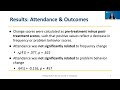
This project investigates chronic absenteeism in low income students, how COVID-19 has impacted absenteeism rates, and what schools can do to improve attendance. I reviewed research from the Center for Mental Health in Schools at UCLA and several relevant outside sources to compile a list of resources containing strategies that schools can implement within the Multi-Tiered System of Support framework (an educational framework that supports students' varying needs through three different tiers, or levels, of support). My project is split into several parts: background information on chronic absenteeism, the problem with punishment, solutions suggested by a case study examining Washington's K-12 schools, and concluding comments. Through my research, I found that preventative measures and initiatives that focus on strengthening the connection between the school and the community are most effective in combatting chronic absenteeism. This project aligns with the Center's overall purpose to provide schools (elementary, middle, and high school) with information resources for addressing barriers to learning and teaching so that they can begin to re-engage students. Rather than making vague suggestions for implementing new interventions, this project focuses on research-based methods that can be easily applied to existing practices and are less demanding to staff.
Presentation 2
ANIL GHARACHOURLOU, Ava Swanstrom, Reina Factor
The current study aims to better understand the extent to which parental engagement in behavioral parent training programs contributes to improvements in child behavior, addressing a gap in the literature regarding the role of parent participation in these interventions (El Nokali, Bachman, & Votruba-Drzal, 2010). While past research shows that greater parent engagement is associated with improved behavioral outcomes, few studies have examined how variability in parent involvement within a structured program predicts changes in child behavior.
The Parent Training Group (PTG) program at the University of California, Los Angeles (UCLA) is a 13-week evidence-based telehealth intervention for parents of children aged 2 to 12 with behavioral challenges. This quasi-experimental study examines whether higher levels of parental engagement, measured by the number of sessions attended as a proxy for active participation, are associated with greater reductions in children’s disruptive behaviors from pre- to post-treatment. Child behavior change will be assessed using pre- and post-treatment scores on the Eyberg Child Behavior Inventory (ECBI). The findings aim to clarify how differences in parent engagement contribute to improvements in child behavior in PTG.
Presentation 3
SARAH Harris, Wesley Meredith, Jennifer Silvers
Emotion regulation skills mature throughout childhood before stabilizing in later adolescence and early adulthood, suggesting that experiences during adolescence are critical for honing emotion regulation skills. One salient experience shown to shape emotion regulation is household unpredictability, whereby characteristics like inconsistent parenting, chaotic routine, or home instability relate to emotion dysregulation (Rauschenberg et al., 2022). Prior work demonstrates repeated training in emotion regulation strategies reduces negative affect and stress in adults (Denny & Ochsner, 2014). Since experiences help shape adolescent emotion regulation, training paradigms may be efficacious for adolescents, especially those experiencing unpredictability. The present study replicated and extended findings from Denny and Ochsner (2014) in a novel adolescent sample (Ntotal=120; Mage=13.58 years, SD=0.79) utilizing a brief, two-week training paradigm. Adolescents trained on emotion regulation strategies showed decreases in negative affect and depressive symptoms over time relative to control condition peers. We next hypothesize that adolescents reporting higher levels of household unpredictability show higher negative affect at baseline, but will then go on to show greater training success, measured by steeper decreases in negative affect over time. These findings stand to inform tailored emotion regulation interventions for adolescents experiencing household unpredictability.
Presentation 4
VICTORIA HENG, Dylan Hughes, Kristen Laulette, Katherine H. Karlsgodt
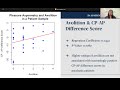
Background: Anhedonia, a lack of pleasure, and avolition, a lack of motivation, have been associated with impairments in social engagement in psychosis (Kasanova et al., 2018). However, there is an “anhedonia paradox,” such that patients with psychosis demonstrate intact consummatory pleasure (CP), but decreased anticipatory pleasure (AP). Here, we investigate avolition as a predictor of asymmetric CP and AP, and assess how this asymmetry may affect social adjustment.
Methods: A sample of 25 early psychosis patients (64% male, 21.0 mean age) from the Multimodal Evaluation of Neurodevelopmental Disorders (MEND) Project was used. Baseline avolition was measured via the Scale for the Assessment of Negative Symptoms, at a later follow up timepoint CP and AP were measured via the Temporal Experiences of Pleasure Scale, and social adjustment via the Social Adjustment Scale Self-Report. A CP-AP difference-score quantified the "anhedonia paradox", with a lower score indicating relatively more impaired AP. Relationships among these variables were tested with linear regression.
Results: Avolition was negatively, but not significantly, associated with CP-AP. Furthermore, lower CP-AP scores predicted lower social adjustment, although not significantly.
Conclusion: Despite a small sample, our findings offer interesting implications for avolition’s asymmetric effects on CP-AP, as well as how CP-AP predicts social adjustment. Ongoing analyses will build on these preliminary findings.
Presentation 5
SARA KHALILIAN, Ashley Pagador, Ryan Lee, Hans Oh, Jimi Huh
Online racial discrimination is increasingly prevalent, yet most research relies on retrospective measures that fail to capture day-to-day variability in exposure. This study used ecological momentary assessment (EMA) to examine daily patterns and contextual factors associated with online racial discrimination among racially and ethnically minoritized adults in the United States. A sample of 230 participants completed two waves of 7-day EMA (2,581 observations), reporting online and in-person discrimination and social media use. Descriptive statistics and multivariable logistic regression were used to examine associations between social media use and the odds of reporting online racial discrimination, adjusting for within-person variation and same-day in-person discrimination. Online racial discrimination was reported on 36.5% of days, comparable to in-person discrimination (34.5%). Participants were significantly more likely to report online racial discrimination on days they used social media more than usual, while same-day in-person discrimination further increased these odds. Hispanic/Latinx participants were more likely to report online racial discrimination compared to Black and Multiracial participants, while no racial/ethnic differences were observed for in-person discrimination. These findings show that online discrimination is a prevalent, dynamic exposure shaped by individual behavior and sociotemporal context among racially/ethnically minoritized adults, with implications for targeted mental health interventions.
Presentation 6
ELIZA KIM, William McCarthy
Effective communication is key to equitable healthcare, yet linguistic bias remains a persistent barrier to quality care. While existing research often focuses on limited English proficiency, the impact of specific ethnolects and dialects within clinical settings remains under-examined. This study addresses how linguistic profiling, which is the practice of identifying a speaker's social identity based on speech patterns, may contribute to healthcare disparities even in the absence of a literal language barrier. This study aims to investigate how a patient’s linguistic patterns influence documented diagnostic accuracy and the quality of care in hospital archives. Specifically, it explores whether linguistic tendencies by patients correlate with correct provider follow-up. Using a secondary data analysis method, I will analyze the transcripts between patients and providers from the Veterans Affairs "4C" dataset. Building on a comprehensive annotated bibliography of linguistic bias in healthcare, the study aims to identify patterns of profiling in medical records and quantify their relationship to patient outcomes. By identifying systemic patterns of linguistic bias, this research provides evidence-based recommendations for linguistic sensitivity training in medical education. The goal is to develop a more nuanced understanding of how linguistic identity influences clinical decision-making and medical outcomes.
Presentation 7
YUEYIN NI and JAIMIE ARONA KREMS
Friendships are among the most meaningful relationships in adulthood, yet little is known about how social comparison processes affect friendship dynamics. Drawing on self-evaluation maintenance theory and social role theory, this study examines whether men and women differ in their emotional and relational responses when they imagine outperforming same-sex/gender friends. Prior research suggests that women’s friendships are more sensitive to inequality, but it remains unclear whether these patterns extend into adulthood. Approximately 600 U.S. adults will be recruited to complete a 10 minute online survey. Participants will report on friendship closeness, desire for success, and their emotional reactions and relational concerns when imagining outperforming close friends. The study also tests whether friendship closeness moderates these effects. It is hypothesized that both men and women will experience negative affect and relational concern but women will report significantly stronger responses. It is also predicted that these effects will be amplified in closer friendships and among individuals with greater desire for success or higher perceived achievement. This research addresses a critical gap in understanding adult friendships and offers insight into how achievement-related disparities shape emotional experiences and behaviors. Findings may inform strategies to promote healthier friendships and shed light on how relational concerns may influence broader social and economic behaviors.
Presentation 8
RISHUBH NAVUDURI, CARLA RACHED, CHLOE C. BOYLE
Long-term exercise has been shown to reduce inflammation levels in the body. In the past, clinical models have shown that exercise buffers the stress response, primarily measured by salivary cortisol levels following psychosocial stress. There remains a lack of studies on the inflammatory response to psychosocial stress, particularly in women. Thus, the current study used a standardized laboratory stressor to incite an inflammatory response and ascertain whether chronic exercise buffers the aforementioned inflammatory response. Healthy young women (age 18-25) completed a standard exercise questionnaire and were randomized to undergo a psychosocial stressor (n = 37), or a no-stress active control (n = 17). This study focused on only the stressed group (n = 37) and conducted a within-group analysis. Blood samples for the pro-inflammatory cytokine interleukin-6 (IL-6) were collected at baseline and 120 mins post stressor. Contrary to hypotheses, activity levels as measured by the exercise questionnaire did not buffer the inflammatory response to the psychosocial stressor. Prior investigation on this topic focused primarily on men, and these results hint at a sex-based difference in stress responses. Future research could utilize more robust measures of exercise levels to ascertain whether exercise does have a buffering effect on inflammatory responses, or whether sex differences play a more critical role.
Presentation 9
CARLA RACHED, RISHUBH NAVUDURI, CHLOE C. BOYLE
While positive trait affect (PA) has been shown to buffer stress-induced inflammation, negative trait affect (NA) is generally associated with heightened inflammatory responses to stress. There is still a limited body of research examining inflammatory responses to acute psychosocial stress, especially among women. Accordingly, the current study utilized a standardized laboratory stressor to trigger an inflammatory response and evaluate whether trait positive affect (PA) or negative affect (NA) buffers that response. Healthy young women (age 18-25) completed assessments to measure trait affect using the Positive and Negative Affect Schedule (PANAS), establishing a baseline measure of affective traits prior to experimental procedures. Participants were randomized and underwent an acute psychosocial stressor (n=37) or a non-stress active control (n=17). The study focused on associations within the stressed group (n = 37) and thus, conducted a within-group analysis. Blood samples measuring the pro-inflammatory cytokine interleukin-6 (IL-6) were obtained at baseline and again 120 minutes after exposure to the stressor. Inconsistent with our hypothesis, our study did not find statistically significant associations between trait affect and inflammatory markers. Future research should investigate whether sex differences contribute to variability in inflammatory responses to stress and moderate associations with trait affect, while accounting for hormonal variability, particularly progesterone, as a possible mechanism.