Anthropology and Gender Studies: Prerecorded presentation - Panel 1
Location: Online - Prerecorded
Presentation 1
KYAH GAINES
Ugo Edu
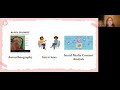
In the United States, Black women suffer from Polycystic Ovary Syndrome (PCOS) and endometriosis at much higher rates than other women. Historical experimentation on Black individuals has created medical mistrust and a desire for alternatives to biomedical practices in the Black community. This research hopes to uncover notable medicinal and naturopathic experiences of Black women living with one or both of these conditions, answering the question: how do Black women navigate symptomology, diagnoses, expertise, and pain management for PCOS and endometriosis? This qualitative pilot study highlights my journey living with PCOS throughout my childhood and endometriosis into adulthood. The methods utilized to collect data include autoethnography, social media content analysis, and interviews with Black women with these conditions, holistic practitioners, and my family members. Preliminary findings suggest that many Black women share similar experiences in hospital settings after their initial diagnosis. Black women also often undergo many different treatments before finding something that works for them. The importance of this study is to increase awareness surrounding the experience of delayed diagnosis for Black women with PCOS and endometriosis, as well as documenting their approaches to the management of their pain and symptoms.
Presentation 2
STORMY GORENCE, Nicole Prucha
Queer male dancers of color have used performance as a means of survival, identity formation, resistance, and community as they navigate a heteronormative, Eurocentric dance world and patriarchal society. This reality is explored in the television series Pose where Damon Richards uses dance to rediscover himself and build chosen community and family. Using a qualitative research approach and performative analysis to conduct close reading of scenes from Pose, including dissertations and books, these sources will piece together the intersection of identities of queer male dancers of color and how they contest Eurocentric dance themes through physical expression. Three central elements of their resistance are explored: (a) the long history of erasure of queer and racialized identities and their experiences in the dance world; (b) how queer POC dancers have challenged heteronormative Eurocentric ideals in both society and dance while reclaiming dance as a mode of survival and belonging; (c) and how media helps to keep queer performance and the queer archive alive.
Presentation 3
ARIELA KAO, Ugo Edu, and Jason De León
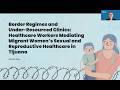
Migrant & asylum-seeker movement within the U.S.-Mexico border has changed significantly due to the COVID-19 pandemic, inclusive of changes to U.S. border policies such as Title 42 and the Migration Protection Protocol (MPP). The prevalence of risky migration in Mexican border towns has increased for vulnerable populations such as children and women, who have been most affected by increasing restrictions and enforcement under the longstanding “Prevention Through Deterrence” strategy. Many migrants live in unsafe conditions while traveling with limited access to healthcare. This places women at a greater disadvantage in terms of health disparities, including gender-based violence, unwanted pregnancies and sexually transmitted infections (STIs). Although the Center for Disease Control (CDC) has removed COVID-19 as a global health emergency since May 2023, border regulations continue to produce poor health outcomes by reinforcing systematic barriers: poor service delivery, difficulties with navigating the system for access to healthcare, and inadequate culturally appropriate care. This research project explores ways healthcare providers provide care in these border contexts, and migrant women experience accessing sexual and reproductive health services. This research will be completed using clinical and person-centered ethnography, interviewing healthcare provider staff and female migrant patients at non-governmental clinics, specifically highlighting the lived experiences within militarized borders in cities like Tijuana.
Presentation 4
MASON NG
Rideshare driving, one of the first and most popular app-based services in the platform economy, is traditionally hailed for its innovative work model and flexibility it provides its workers. However, in recent years, rideshare drivers have suffered multiple workplace abuses, including employee misclassification, unfair app deactivations, and wage manipulation dictated by a blackbox algorithm. In urban spaces like Los Angeles, labor organizing in the form of rideshare unions such as Rideshare Drivers United (RDU) seeks to resist, remedy, and prevent these abuses through collective action, raising the quality of rideshare driving for all workers. Drawing on interviews with 12 RDU members and ethnographic field notes from union meetings, recruitment sessions, and public actions, this study explores why rideshare drivers participate in labor organizing, what strategies they engage to do so, and their perceptions of RDU and trade unionism. I argue RDU members are differentially predisposed to union joining by their previous experience with labor organizing and desire to participate in community building. RDU members also place great importance on experience as a rideshare driver as a prerequisite for organizing in a rideshare union, differentiating their organization from large, bureaucratic unions of which they are skeptical.
Presentation 5
NATASHA TABATABAI, UTPAL SANDESARA
With a focus on the required hijab, this research investigates how regional differences in Islamic identity and practice affect women's experiences with Iran's gender control laws. Although the headscarf is sometimes regarded as a consistent symbol of state control, social reactions and enforcement differ greatly between areas. This study investigates how women's lived experiences of hijab enforcement are influenced by regional cultural contexts and local interpretations of Islam.
This study employs semi-structured qualitative interviews with about fifteen women from various parts of Iran, including religious centers like Mashhad and Esfahan as well as more culturally varied locations, drawing on feminist ethnography and political anthropology. Interviews delve into individual encounters with law enforcement, social norms, and resistance, compliance, and negotiation tactics.
The study showcases significant geographical diversity, with more varied experiences in other regions and more stringent policing and social surveillance in religious centers. The concept emphasizes a range of lived realities influenced by regional religious, social, and political dynamics rather than offering a binary of oppression and freedom.
This study shows how gendered state policies are mediated via daily life and contradicts stereotypical depictions of Iranian women by focusing on women's experiences. Its conclusions provide a more nuanced understanding of the relationship between religion, gender, and state power and add to larger discussion.
Presentation 6
JERICHO TRAN-FAYPON
“If I Could Be Straight, I Would”: Hegemony and Belonging in the Experiences of Non-Heterosexual Fraternity Brothers
This research explores how non-heterosexual men in social Greek life fraternities navigate the cisheteropatriarchal hegemony of fraternity life, especially considering that such fraternities serve as sites of community among college-age men in the United States. Evidence of non-heterosexuality among men in social Greek life fraternities on U.S. college campuses in the United States exists throughout Greek life's history. Of note, homophobia and heterosexism in these fraternities are well-documented in recent literature, although such hegemony is a relatively recent development in this history. Through online person-centered interviews during the summer of 2025 with three non-heterosexual fraternity brothers from a large public 4-year university in Southern California, these men reveal how they navigate their fraternities’ cisheteropatriarchal hegemony by negotiating belonging. These men negotiate a subjective sense of belonging in their fraternities through self-preserving tactics, including managing the visibility of their non-heterosexuality, regulating their responses to homophobia, and using humor strategically. What emerges from these findings is a discussion on how belonging is a continuous act done within powered social structures that shape to whom individuals seek to belong and how they negotiate belonging within these groups.
Presentation 7
CHARLEY WALSH, Kelly Nguyen
Refugee Storytelling and Material Culture as Knowledge Production in Digital Humanities
Politics are heavily ingrained in dominant understandings of refugeehood through the political categorization of refugees, selective admittance to countries of asylum, and dehumanizing statistics reported by governments receiving these individuals. In recent years, communities have begun work to shift understandings of refugeehood and its dominant narrative to one spread by the individual, centering voices of refugees in works of storytelling, preservation of heritage, and the sharing of material culture.
This talk will discuss the work being done by the Refugee Material Culture Initiative to shift understandings of refugeehood from those spread by policy, statistics, and governing peoples to understandings built on the personal narratives told by individuals who have experienced refugeehood. The talk will discuss how the centering refugee voices and the act of storytelling works to establish refugees as knowledge-producers in their own histories, applying frameworks including feminist epistemology, memory-work, and postcolonial theory discussed across Critical Refugee Studies, as well as digital archaeology techniques, to preserve, share, and make accessible the various individual stories of Vietnamese Refugees. The talk will showcase the exploration and sharing of material culture donated by Vietnamese Refugees and their families to the Vietnamese Heritage Museum in Westminster County’s Little Saigon, and the role this digitization plays in processes of storytelling, knowledge production, and re-centering of refugees in
Presentation 8
RUBY WU, JOCELYN VERNER, Desiree Eshraghi, S. Madigan Durham, Molly Fox
Pregnancy is a critical period associated with increased vulnerability to psychological stress and mood disturbances. Psychological stress during this time influences maternal well-being and has been associated with adverse pregnancy outcomes. Previous studies have shown that depression and anxiety are associated with an increased risk of recurrent pregnancy loss. However, relatively little research has examined the reverse relationship between these factors. Therefore, this study aims to investigate the impact of previous incomplete pregnancies on maternal mental health. This study utilizes self-reported survey data collected from pregnant Latina women from the Mothers’ Cultural Experiences study. Maternal mental health is assessed using three validated scales: Pregnancy-Related Anxiety Scale, Spielberger State-Trait Anxiety Inventory, and Edinburgh Postnatal Depression Scale. Linear regression analysis is used to investigate how previous incomplete pregnancies correlate with these mental health outcomes. We predict that women who have experienced an incomplete pregnancy will report higher levels of anxiety, pregnancy-related anxiety, and perinatal depression than women who have not. The impact of a previous loss can leave a woman feeling more vulnerable to risk and future loss, leading to greater anxiety and depression. This research is important as it identifies unique challenges for women who have experienced an incomplete pregnancy and can guide future support to promote healthy adjustment for at-risk women.