Education: Prerecorded presentation - Panel 1
Location: Online - Prerecorded
Presentation 1
NATALIE BARTON
I am making a microbiology themed cookbook that connects scientific topics on soil health and vitamins; fats and lipids; proteins and amino acids; sugars and carbohydrates; and fiber and the gut microbiome to tangible recipes. I created, wrote, and photographed all the recipes in this book. I am currently writing the science textbook-style pages for each chapter. Additionally, each recipe has a nutritional page that breaks down the science behind specific ingredients in that recipe. My project will help educate people on food science in an engaging and interactive way. I want to help educate people on how to use nutrition to improve their health. This project will give people the opportunity to understand how scientific concepts affect their life by merging the gap between science and humanity.
Presentation 2
CLAUDIA ALEXA CASTRUITA, Julissa Muñiz
While there is a growing body of literature focused on the nexus of postsecondary education and carceral systems, the experiences of formerly-incarcerated Latinas is less explored. For this study, I aim to understand the educational trajectories of formerly incarcerated Latinas from incarceration to their enrollment in postsecondary education. Using an intersectional approach and LatCrit lens, I seek to examine the interconnected racialized, gendered, and carceral logics that influence the experiences of these women accessing an educational system built on the subordination and oppression of their identities. Utilizing pláticas conducted with formerly incarcerated cis- and transgender Latinas, this study examines their educational experiences navigating the prison-to-university pipeline. This study draws on a subset of 22 interviews, which themselves are from a larger study led by Dr. Julissa Muñiz. In addition to the pláticas, the study draws on data from a demographic survey completed by all participants. Emerging findings indicate that for many of these women, their trajectories from incarceration to higher education were characterized by: 1) self-motivation from personal relationships and experiences spanning their diverse identities, and 2) self-navigation of complex educational programs and postsecondary institutions. This project helps highlight the overlooked educational experiences of these women, further probing into how students who are formerly incarcerated can be and must be supported by institutional actors.
Presentation 3
RED R. DARBY
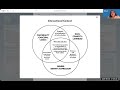
Through its focus on rural higher education learning communities, this qualitative case study aims to illuminate the experiences of rural community college students as they consider transferring to four-year degree-granting institutions. Specifically, I focus on Columbia College in Sonora, California- a rural town in the Sierra Nevada mountains - analyzing how programs like TRiO Student Support Services (SSS) impacts students’ attitudes toward by leveraging qualitative, semi-structured interviews with students enrolled in this program. Given limited data on rural students prior to transfer, this study will describe how students interact with campus resources, and how such programs and resources mediate their educational trajectories. I place particular emphasis on questions of space and place, asking the degree to which distance from home impacts community college students’ aspirations for transferring to four-year institutions. Using both Yosso's model of Community Cultural Wealth (2005) and Crumb et al.’s model of Rural Cultural Wealth (2023), I highlight the normally unrecognized contributions of positive factors in rural students' environments that influence their trajectories beyond their community college experience. The following research questions guide this project: what role do familial connections and campus student support services play in mediating rural community college students’ transfer decisions and educational trajectories and how do rural community college students explain their decisions around transfer?
Presentation 4
STEPHANIE GARIBAY, EMILY I. GUTIERREZ, OLIVIA ROBBINS, KATHALIA WONG
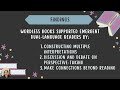
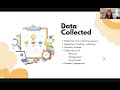
In this study, we examine how a mixed-age dual-language first and second-grade classroom (6-8 yrs) used wordless books to engage in perspective-taking. Wordless books can encourage reflective and meaningful conversations about text from an early age (Lee et al., 2025). Thus, our research question is: How do wordless books support emergent readers in engaging in perspective-taking? Our data sources were observational field notes from classroom lessons on perspective-taking in wordless books. The four authors qualitatively analyzed field notes from classroom lessons on perspective-taking to identify emerging themes (Braun & Clarke, 2022) and negotiated and finalized the findings over two months. Our analysis revealed that wordless books supported perspective-taking by positioning emergent readers as competent storytellers who generate narratives from their own lived experiences (Vygotsky, 1978). The flexibility of wordless books allowed students not only to narrate stories from multiple perspectives but also to discuss and debate how illustrations can be interpreted in different ways. Through wordless books, students engage with literacy in sociocultural ways and develop diverse interpretations, analyze perspectives, and consider multiple viewpoints as they tell stories. Wordless books are not a common genre of literature in early elementary classrooms; however, we are finding that they should be considered a valuable tool for exposing students to critical literacy skills that books with words may not provide.
Presentation 5
LIZBETH GOMEZ
Peer mentoring programs are increasingly used in higher education to support students’ academic success and adjustment to university life. This creative project examines how peer mentoring and coaching relationships support neurodivergent students’ academic experiences and sense of inclusion on campus. My research is connected to my field site at the UCLA Extension Pathway program, where I work as an educational coach supporting neurodivergent students in navigating academic responsibilities and university resources.
This study asks how mentoring relationships influence students’ ability to manage coursework, access campus resources, and develop confidence within the university environment. The project draws on research literature about peer mentoring programs as well as qualitative observations from my research site. Special focus is given to how mentoring interactions occur across different campus environments, such as advising offices, study spaces, and residential areas, to show how these spaces shape students’ experiences of support.
Preliminary findings suggest that mentoring relationships play an important role in helping students navigate university systems, manage academic stress, and build social connections. However, mentoring may help students in ways beyond grades, such as building their confidence, independence, and sense of belonging. This research highlights the importance of mentoring structures and inclusive campus environments in supporting neurodivergent students in higher education.
Presentation 6
ANDY TAING*, SOFIA BYUN*, Xinyi Zoe Mao, Shreya Kannan, Veronika Ivanova, Jennie Grammer, Julie M. Schneider
Noise in learning environments can disrupt children’s attention and inhibition, skills essential for learning. Since classrooms vary in acoustic conditions and instructional demands, understanding how these factors jointly affect children is critical for informing educational practice.
This study examined the effects of acoustics and task difficulty on children’s attention and inhibition using behavioral and EEG measures. 14 children (7–12 years) completed 3 Go/NoGo tasks varying in difficulty (easy, medium, hard) under 3 counterbalanced acoustic conditions (quiet, moderate, loud).
Accuracy revealed significant main effects of task difficulty and noise (ps < .05). A significant interaction indicated that moderate and loud noise facilitated performance on the hard task (ps < .001), suggesting optimal acoustic conditions are task-dependent, with increased stimulation benefiting high-demand tasks.
Frontal-central ERP analyses showed larger P3 amplitudes for NoGo versus Go trials (p < .001), reflecting inhibitory control demands. P3 amplitudes increased with task difficulty (p < .001). A significant three-way interaction among trial type, noise, and task difficulty (p = .036) indicated neural inhibition varied across cognitive and acoustic demands, with stronger NoGo P3 responses in easy tasks under moderate and loud noise, and in hard tasks under moderate noise.
Together, findings suggest moderate environmental stimulation may support attention and inhibitory control, particularly during cognitively demanding classroom activities.
Presentation 7
AVA WARD-WALLACE and Bo-Kyung Elizabeth Kim
Black students are disproportionately placed in alternative and continuation schools as a consequence of exclusionary discipline policies rooted in racial inequality. While quantitative research has documented these disparities extensively, qualitative scholarship centering Black student perspectives remains limited. This study asks: How do Black students experience attending alternative or continuation schools, and how does that experience shape their identity, sense of belonging, academic engagement, and future aspirations? Guided by Critical Race Theory and Freirean pedagogy, this study conducts semi-structured interviews with 6 to 8 Black students who have attended alternative high schools in Los Angeles. Existing literature reveals that Black students often describe these settings as emotionally safer than traditional schools while simultaneously experiencing academic stagnation and the stigma of being labeled at-risk. Anticipated findings suggest that alternative school attendance functions as a double-edged experience: offering relief from the hostility of traditional schooling while narrowing academic trajectories and reinforcing proximity to the carceral system. This research moves beyond institutional framings of the school-to-prison pipeline to center student voice and self-concept as primary units of analysis. Findings aim to inform disciplinary reform, culturally responsive educational practice, and broader advocacy for Black educational equity in Los Angeles and beyond.