Education: Prerecorded presentation - Panel 2
Location: Online - Prerecorded
Presentation 1
SABAH ALIDINA, MARIANA MEZA, Dr. Carla Suhr
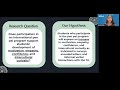
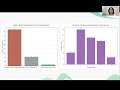
Language learning in bilingual elementary classrooms often relies on structured activities, leaving little room for authentic interaction with native speakers. This study examines whether participation in an international pen pal program supports students’ development of motivation, confidence, empathy, and intercultural curiosity. The developed program, Mensajeros del Mundo, connects third-grade students in a dual-immersion school in California with students in Guadalajara, Mexico, through structured letter exchanges. Using a mixed-methods case study design, data were collected through coded letters, student surveys, classroom dialogue, and informal teacher reflections. Findings indicate high levels of student engagement and excitement, along with increased development of empathy and intercultural curiosity, as indicated by student-generated questions. Furthermore, students demonstrated growth in linguistic complexity as seen in grammatical structure choices; however overall indicated a further need to develop second language acquisition confidence. Overall, this study highlights the importance of integrating systemized penpal programs in bilingual schools in order to foster empathetic and globally aware learners, allowing for the cultivation of authentic-based relationships and partnerships with other countries.
Presentation 2
ALICIA SAMANTHA FERRAEZ DIAZ
“No one wants to be within this system”: The Importance of Critical Consciousness in Reclaiming a Liberated Identity Post Incarceration
While prison education is proven to significantly reduce recidivism, the tracking of recidivism does not reflect the human experience of reentry. Given that each individual who comes home faces unique circumstances when reentering their communities, the trend in neoliberal prison education, which focuses primarily on job training, fails to provide people with the essential critical education necessary to rediscover their identity. I utilized a dataset created by Dr. Julissa Muñiz, for her platicas study, “Latinas Caught in the Carceral Continuum”, and examined them through the theoretical framework of critical consciousness. I selected the platicas for ten participants which included detailed moments of Freirian reflection to examine (1) how Latinas with histories of incarceration describe moments of reauthoring through critical consciousness and (2) how, if at all, does critical consciousness aid in fostering new skills for reentry. The findings of this study reveal that critical consciousness aided Latinas who were incarcerated in reconstructing their beliefs and deconstructing systems of power, allowing them to reclaim their identity. The findings also show how critical consciousness led Latinas who were incarcerated to develop the skills necessary to navigate prisons and the outside world. Findings call for the expansion of critical education in prisons due to its uniquely liberatory potential, allowing people to reenter their communities with renewed self-agency.
Presentation 3
Gurpreet Gill, Isabella Beeckman, Alekos Tetradis, Stanley Huang, Catherin Merida, Ishya Bahl, Sulayman Sargand, Alvin Dunn, Shanna Shaked
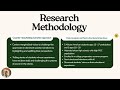
Transfer students are a vital part of the UCLA community, yet they often face unique structural and transitional hurdles that can impede their academic integration. While Learning Assistant (LA) supported STEM courses aim to enhance engagement through peer-facilitated learning, there is limited research on how transfer students navigate these specific environments. This study investigates the accessibility barriers transfer students experience in LA-supported STEM courses and how these obstacles influence their learning engagement and academic confidence. Our research specifically examines the transition from community college to the university setting. We are employing a mixed-methods approach, utilizing online surveys to gather quantitative data on sense of belonging and academic confidence from approximately 40 to 100 students. Simultaneously, we are conducting structured in-person interviews with a subset of 6 to 12 participants to gain qualitative insights into personal experiences with inclusion and institutional navigation. This study also incorporates perspectives from LA supervisors and homologous Student Instructors (SI) at community colleges to identify institutional gaps. While data collection is ongoing, structural barriers and a "hidden curriculum" is anticipated. The significance of this project lies in its potential to inform LA program training and develop pedagogical strategies that foster a more inclusive and equitable environment for the transfer student population at UCLA.
Presentation 4
LAUREN A. GRAY, and Jonli Tunstall
This abstract has been withheld from publication.
Presentation 5
JULIAN JENKINS
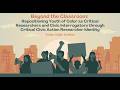
This study examines the expansion of the AP Capstone curriculum, in which students individually design and complete a research study, to incorporate a civic action component at a Los Angeles K-12 school with a largely low-income, first-generation, and Student of Color population. A team of researchers, including UCLA professors, graduate students, undergraduate students, and teachers, designed and piloted a Critical Civic Action Research (CCAR) curriculum to expand the AP Research curriculum and guide students to translate their research projects into impactful community-based civic actions. This study conceptualizes and examines how the pilot curriculum supports the development of students’ Critical Civic Action Researcher Identity (CCARI). Through Design-Based Implementation Research methodology, we conceptualize CCARI and create a Critical Civic Action Researcher Identity Self-Assessment (CCARISA) which students complete to reflect and assess the development of their own identity as they engage in community-based research and civic action. Through qualitative coding analysis of CCARISAs and other artifacts completed by students in AP Research courses at two schools–one that offers the CCAR curriculum and one that does not–we examine how the new curriculum supports students to develop CCARI. Larger implications from this study include expanding student outcome metrics beyond test scores in the AP curriculum and repositioning first-generation, low-income Students of Color as critical researchers and civic interrogators.
Presentation 7
HANA TAWFIK
This research examines the emergence of education “gag orders” across the United States that restrict how teachers discuss race, racism, and systemic inequality in K-12 classrooms. Although these policies are often framed as responses to Critical Race Theory (CRT), they more broadly target equity-oriented teaching practices rather than the legal scholarship itself. Using CRT as a theoretical framework, I analyze state legislative texts, policy language, and supporting discourse to investigate how such legislation constructs race, neutrality, and objectivity in educational spaces. The central question guiding this project is: How do educational gag order bills construct and deploy language around race and structural racism in K-12 classrooms, and what political and ideological assumptions are revealed in sponsor discourse and other supporting statements? Key themes include colorblind ideology, the framing of discomfort as harm, and the tension between academic freedom and state control. I argue that education gag orders function as mechanisms that limit critical discussions of structural racism while presenting themselves as protections against division, thereby reshaping the boundaries of what counts as legitimate knowledge in schools and positioning educators under heightened surveillance and uncertainty. By foregrounding the relationship between race, policy, and classroom practice, this study contributes to ongoing conversations about equity, teacher autonomy, and the politics of knowledge in public education.