Education: Prerecorded presentation - Panel 3
Location: Online - Prerecorded
Presentation 1
HANA CHEKOL
This study uses Brentwood Science Magnet Elementary School as a case study to evaluate the impact of joint-use school facilities and affluent school neighborhoods on community engagement and student learning. In Los Angeles, low income neighborhoods do not have equal access to safe outdoor spaces. This research explores how opening up school facilities to the public can help fill the recreational needs of communities that otherwise lack access to them. Instead of lying vacant outside of school hours, school grounds can serve as vital resources to the neighborhoods that they inhabit. The research used a qualitative ethnographic design consisting of three separate site visits involving non-participant and unobtrusive observations. These visits were used to survey the school grounds and surrounding environment while also monitoring how school and community members used and accessed the space. The findings reveal that the affluence of Brentwood Science’s neighborhood has directed significant investment into the school, resulting in a diverse range of outdoor recreational facilities and enriched learning opportunities. In addition, the school's joint-use agreement has increased community engagement by transforming the school into a shared recreational space, giving both students and residents a vested interest in its parks. This case demonstrates that school parks can be an effective model for addressing disparities in greenspace access and other community needs while also supporting the educational needs of the students.
Presentation 2
SABAH ALIDINA, DORIS CHEN, LITZY GOMEZ, PAIGE WU, Karen Hunter Quartz
This project examines the role of self-efficacy in college and career readiness amongst 7th and 8th-grade students at the RFK UCLA Community School, a public school serving low-income students of color in the Los Angeles Unified School District. Our research is rooted in Eccles & Wigfield’s Situated Expectancy-Value Theory (SEVT) and Yosso’s Community Cultural Wealth, with our research question being: “How does incorporating SEVT-based teaching practices into a middle school college and career preparedness curriculum influence first-generation students' self-efficacy for college and career readiness?” Our study uses a mixed-methods approach, synthesizing data from: 108 student artifacts, 122 student exit tickets, 6 co-created lesson plans, 2 teacher interviews, and 32 teaching journal entries, including records of casual dialogue between teachers and students. Emerging findings affirm the importance of learning about college and career preparation during middle school. More specifically, students reported meaningful connections between lessons and lived experiences, while teachers indicated an increase in the students’ ability to articulate their strengths and goals. These findings show the importance of integrating SEVT-based and culturally responsive practices to provide identity-affirming college and career exploration for first-generation middle school students.
Presentation 3
SIERRA FONG, ELLEN KIM, LANA LEOS, CHARLIE HAINES, GISELLE MEHRANPOUR, ANJANA SHRIRAM, Mario Deng, Federica Raia
The study aims to foster collaboration between UCLA undergraduate students and 9th-grade students at Horace Mann UCLA Community School to examine care and trust-building in doctor-patient interactions. Using a medical context as an entry point, the CARE Lab sought to introduce students to the question: “What does it mean to care for another?” while also exploring how undergraduate students with diverse positionalities entered into, engaged with, and sustained long-term relationships with students of varying lived experiences. This work addressed a need in medical and community education; students from historically underserved communities have limited access to engage with healthcare providers, contributing to mistrust and the perpetuation of health disparities. To develop the curriculum, cogenerative dialogues with a UCLA heart cardiologist were used to select notable clips that followed the progression of care built between the doctor and their patient. Based on these excerpts, the undergraduate students codeveloped worksheets designed to guide 9th-grade students through these interactions. Throughout the quarter, a flexible, student-centered approach required a shift from a large-group didactic teaching model to smaller group activities. Limitations include inconsistencies in how each undergraduate student led their groups. For future iterations of the study, researchers should collaborate with the main classroom teacher to understand student needs and classroom dynamics to allow a productive learning environment.
Presentation 4
VALERIA LUQUIN
Commuter students represent a significant yet overlooked population in higher education. Inspired by my lived experience as a commuter student and the large gap in literature addressing this student population, I selected this topic for my major’s capstone research project. The purpose of this study aims to understand and unpack the diverse lived experiences of commuter students attending a four-year university in California. My leading research questions were: In what ways, if at all, does being a commuter student influence an individual’s postsecondary experience? What other intersecting identities do commuter students have? In my study, I employed semi-structured interviews with individuals who a) were or are currently enrolled in a four-year institution in California, b) were or are commuting during their undergraduate and/or graduate studies, and c) are part of a marginalized community in higher education. My initial findings revealed that many commuters have intersecting identities within other marginalized groups in higher education (e.g., first-generation, low-income, non-traditional, student of color). All this combined contributes to how they experience and navigate higher education. These findings are significant because they reveal the unique struggles present-day commuter students face. Emerging themes include: feeling in-between, transportation stressors, physical and mental stress, and desire for community and belonging. Potential next steps include exploring the resilience and persistence among commuters.
Presentation 5
GWENDOLYN PEREZ-CAMPELO
In the early 1900s, Compton became the ideal city for many African-American and Mexican-American families who sought the “American Dream.” Demographic changes led to many negative effects on this Community of Color. This change in the economy caused a decrease in property value and the loss of critical job opportunities. Existing research shows that the educational system within Compton has been affected by systemic racism, which has led to the oppression of these communities and affected the educational journeys of Students of Color. Therefore, this study will analyze how environmental race based factors such as poverty, the drug epidemic, and gang violence have affected their educational trajectory but also examine how they have exercised their transformational resistance. Using a Critical Race Theory framework, this research focuses on investigating the historical and social injustices within Compton’s educational system in the late 20th century, more specifically the 1980s - 2000s. Furthermore, to better understand the role of the social, political and environmental factors during this time period, a mixed-method approach utilizing semi-structured interviews, surveys, and the Geographical Information System will provide an in-depth understanding of the difficulties these students face. This research is a crucial step in aiding in the dismantlement of the structural racism that perpetuates educational disparities within marginalized communities while demonstrating the transformational resistance of Students of Color as a
Presentation 6
SHREYA SUNDAR and HEATHER LIU
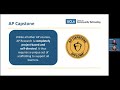
Advanced Placement (AP) courses offered by the College Board give high school students access to college-level learning. Prior research has demonstrated Latino and African American students are under-represented in the majority of AP offerings due to inequitable accessibility and limited course offerings. In response, the UCLA Community School, an LAUSD public school serving low-income students of color, developed an AP For All Program where all high school sophomores are required to enroll in AP Seminar, and most enroll in AP Research as juniors. In order to adequately support enrolled students to succeed in these courses, educators have enacted several scaffolding strategies informed by a Multi-Tiered System of Supports, a model that provides a mix of universal, selective, and intensive learning supports based on individual student needs. This study describes the tiered supports utilized by two AP Research educators and analyzes how a set of 12 focal students, who require different tiered supports, responded to these scaffolding strategies. Data include field notes from 10 separate classroom observation periods, teacher and focal student interviews, and student assignments and grades during the 2025-26 school year. Emerging findings document the range of scaffolds implemented by teachers alongside students’ experiences learning to master rigorous content. Implications for expanding access to AP courses are discussed, with a particular focus on AP Research, part of the AP Capstone Program.
Presentation 7
KAELYNN CADIZ, SARA VAZQUEZ VASQUEZ, Ananda Marin, Lindsay Lindberg
Schools often prioritize stillness and control from students. However, new research challenges these ideas, and suggests that community practices, group work, building trust and vulnerability between students and teachers is worthwhile, and has many benefits to students (e.g., increased test scores, increased emotional regulation, pro-social behavior, etc.). Thinking about and building towards possibilities of schooling, we look to improvisational jazz artists to learn about how creative performers make space or prepare themselves or design a space to prioritize learning through collaboration. We systematically reviewed more than 1,100 articles from The Chicago Reader, an alternative newspaper focused on the arts. Our analysis focused on five artists and their histories of performances both together and apart across a twenty year span. Building on this data set we used R to create a data visualization to demonstrate relationships between both people and performance spaces in Chicago. This is complemented by data of the language used to describe their partnerships and performances. Based on the language used to describe the artists and collaborations over more than 30 years, the articles show evidence of the ways in which these 5 artists create spaces of collaboration and vulnerability. Through this process, we have identified several implications for preK-12 teachers to consider while designing spaces for collaboration, including building trust, intergenerational relationships, and being comfortable with discomfort.