History, Ethnic Studies, Philosophy, Religion: Prerecorded presentation - Panel 2
Location: Online - Prerecorded
Presentation 1
KAYLA KAMEI, NAOMI SUZUKI, Kelly Fong
Anime has emerged as a significant component of American popular culture. While existing literature has investigated Korean popular media’s impact on Asian American youth, little published work has similarly engaged with anime. Thus, this project investigates how anime impacts identity formation in Japanese American college students. Through four semi-structured interviews, data was analyzed using open coding to identify themes. Drawing upon Dr. Ann Kim’s classification of the impact of media interest on identity, we argue that a moderately familiar interest in anime was only one of many influences on identity formation in Japanese American college students; this impact was manifested through cultural belonging, social belonging, and sense of self. Within cultural belonging, all participants associated anime with reinforcing an ethnic identity to varying degrees. For social belonging, all participants demonstrated awareness of stigmas around anime and/or cosplay; in response, most sought out inclusive communities. Overcoming stigmas enabled most participants to manifest a more confident sense of self. However, outside factors, such as varying levels of investment in Japanese culture, limit anime to only one influence on identity. This study provides insights into how globalized ethnic media can be leveraged by youth to uplift marginalized identities. Future directions include increasing participant numbers and expanding the demographic to include multigenerational Japanese Americans and Asian Americans.
Presentation 2
HYOUNG KIM, Soraya de Chadarevian
The definition of Alzheimer's disease has been redrawn multiple times in the past century, yet each transformation has been presented as scientific clarification rather than the contested institutional settlement it was. As biomarker-based tests become clinically accessible, cognitively intact individuals may now be classified as having Alzheimer's disease before experiencing any symptom. This paper asks why one of three scientifically legitimate diagnostic frameworks achieved institutional dominance, and what the consequences are for those who will live inside the resulting diagnosis. Through comparative historical and conceptual analysis of three diagnostic moments — the early twentieth-century emergence of Alzheimer's disease, the 1970s unification of presenile and senile dementia, and the contemporary biomarker turn — this paper draws on primary sources, published diagnostic frameworks, and the philosophy of medicine literature. It argues that the boundary between Alzheimer's disease and normal aging has been shaped not by scientific evidence alone, but by a structural convergence of pharmaceutical, research, and advocacy interests, especially within American institutions. At a moment when biomarker testing is entering clinical practice faster than the ethical and philosophical questions it raises can be addressed, this analysis offers a basis for more informed evaluation of what the diagnosis does and does not establish.
Presentation 3
GEORGIA MCNEILL
This thesis explores the repression of hippies and homosexuals in Laguna Beach, Orange County, in 1968. I hope to illuminate this critically under-studied period, in which the hippie and homosexual communities, concentrated in Laguna Beach due to the extreme conservatism of the rest of the county, created community in the face of arrests, beatings, murders, and harassment from the local police and city government. There has been very little scholarship on this topic, and this thesis hopes to break new ground. The two main primary sources used were newspapers from the Laguna News-Post as well as The Advocate.
In 1968, the Laguna gay community had recently and repeatedly suffered brutal police crackdowns as well as legal assaults against their bars. Hippies flooded into Laguna later that year, replacing the city’s “homosexual problem” with a “hippie problem," as the police chief put it. They came following beautiful weather, cheap housing, and the Brotherhood of Eternal Love, a secret group of hippies that distributed massive amounts of LSD and marijuana. The city directed an overwhelming campaign of repression against the hippies, which would backfire as it allowed the homosexual community to organize themselves while the police were distracted.
Orange County is often thought of as a place without history, and especially without queer history. This thesis hopes to correct that narrative. The queer and hippie population of Laguna is growing old, dying off, or moving away. It is a critical time to preserve their history.
Presentation 4
NICHOLAS FONG NEUWEG
It is impossible to build a perfect criminal justice system because of the nature of how justice itself is interpreted. Even
so, a society committed to fairness should aspire to always be open to change and improvements that reflect what is
fair for all people. This project investigates how legal systems can fail to protect truth when distorted by institutional
power, panic, and flawed epistemic practices. Centered on the 1980s Kern County child abuse trials, where numerous
wrongful convictions were secured through coerced child testimony, the study explores how state mechanisms
constructed guilt through a convergence of fear, media sensationalism, and disciplinary authority. Using Miranda
Fricker’s theory of epistemic injustice and Michel Foucault’s analysis of power/knowledge, the project demonstrates
how marginalized voices were manipulated and discredited, resulting in false testimonies that were used to convict
innocent people. By applying narrative ethics, the project evaluates how courtroom storytelling, once shaped by panic,
became a vehicle for epistemic violence. This research highlights a particular trial that was improperly conducted in
order to bring attention on how the current justice evaluates the validity of testimonies and interpreting the truth.
Through the use of philosophy, the project directly targets on how justice institutions can better safeguard themselves
against confirmation bias and other discrepancies which may occur during a case.
Presentation 5
AKIRA SCHWARTZ
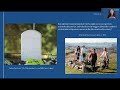
This thesis examines the life and memorialization of Okei Ito (1852–1871), a young migrant at the Wakamatsu Tea and Silk Farm in Gold Hill, Coloma, recognized as the first Japanese woman buried in the United States. Arriving with twenty‑two settlers brought by John Henry Schnell between 1869 and 1870, Okei became part of a short‑lived agricultural experiment that initially drew local enthusiasm but collapsed within two years due to drought and financial instability. While most settlers dispersed, Okei remained as a housekeeper for the Veerkamp family until her death at nineteen, after which she was buried on a hill overlooking the farm. Her grave, rediscovered in 1916, catalyzed her emergence as a cultural symbol in Japan and later within Japanese American memory.
Despite limited documentation of her life, Okei’s story has generated a powerful mythology that resonates across local, diasporic, and national contexts. This mythology contributed to the farm’s eventual designation as a historical landmark, now stewarded by the American River Conservancy, and transformed her gravesite into a contemporary pilgrimage destination. Drawing on public documents, memory studies, and racial formation theory, this paper analyzes how commemorative practices at Wakamatsu construct Okei as a romanticized transpacific figure.
Presentation 6
ANTON STOVER
William Wirt (1772-1834) is a figure often discounted in modern literature, despite serving as Attorney General for twelve years and being involved in hundreds of major cases. Previous scholars have dismissed Wirt’s role in his period as nothing more than one who followed the currents of law, but was never able to influence it himself. This paper seeks to find if that judgment is accurate through the lens of Wirt’s history in federal Indian law. Through an analysis of Wirt’s role in cases during and after his time as Attorney General, especially in Cherokee Nation v. Georgia and Worcester v. Georgia, this paper seeks to uncover Wirt’s evolving jurisprudence, both through the lens of his legal arguments and of the personal feelings Wirt has towards his arguments. The paper examines Wirt’s correspondences with his friends, fellow lawyers, and his wife, as well as his official legal opinions and oral arguments, to assess his changing thoughts on Native Americans. This paper concludes that Wirt’s role in these cases demonstrates his ability to navigate the politics, as well as how his opinions evolved based on his distaste for Jackson and his continued interactions with the Cherokee. Closing with a discussion of Wirt’s possible influence on present-day federal Indian law, I argue that the characterization of Wirt as an irrelevant and, at times, politically corrupt figure purely eclipsed by his fellow lawyers is incorrect in the sphere of Indian law cases, which reveal a more complicated and nuanced William Wirt.
Presentation 7
TROY TIAN
Despite perceptions of being a so-called model minority population destined for “prestigious” careers in STEM, law, research, and academia, Chinese and Asian Americans have a rich, influential tradition of business-making spanning back generations — restaurants have been especially significant into today. Given this history, however, a question naturally arises: how can this clear pursuit of slow-moving institutional security be reconciled with the seemingly simultaneous dynamism of an entrepreneurial spirit? Are these simply two disparate outcomes within the community, or does a common thread unify Chinese American career motivations? After extensive research and qualitative synthesis of scholarly articles on the question, we find that staples of Chinese communities like family-owned restaurants arose initially out of necessary self-reliance due to violence and discrimination. Even after segregation and exclusion ended, the precedent remained, co-evolving alongside the hyperselectivity of the US immigration regime for skilled and thus “prestigious” labor. Both institutional and self-employed occupations crate a sense of security and reliability in the face of scarcity embedded in the immigrant psyche. This project has implications for identifying underrepresented voices within the Asian American community, including artists, working-class people, undocumented people, and others, allowing for critical awareness to fuel collective, direct action.
Presentation 8
TROY TIAN
Immigration regimes and their reflectivity of Asian community
Now more than ever, people are migrating between countries at an exponentially increasing rate. In Asia, the world’s largest continent by land area as well as population, the mobility of persons and groups is shaped by government policies, formal and informal institutions at high, meso, and lower levels, and localised cultural, social, and psychological processes. However, although migratory flows in the Asia-Pacific region are increasing in volume and diversifying in scope, the formal institutional and individual cognitive walls that fundamentally hinder international cooperation (e.g. nationalism, social ostracism, unequal development) are evidently far from being overcome. In a series of two essays, I firstly examine a microcosmic example of a barrier to building intra-Asian cooperation: the restrictive, multi-tiered immigration regime of modern Japan. Using qualitative claims synthesised from extensive sociological and migration-focused research, I claim that the quotidian experiences of intra-Asian migrants demonstrate individual and systemic issues which would preclude the formation of a truly cohesive Asian community.