Languages, Literature, Linguistics, Classics: Prerecorded presentation - Panel 1
Location: Online - Prerecorded
Presentation 1
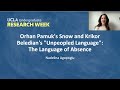
NADELINA AGOPOGLU
This project undertakes a comparative analysis of the “language of absence” utilized in order to approach the catastrophe of the Armenian Genocide in Orhan Pamuk’s Snow and Krikor Beledian’s “Unpeopled Language.” This analysis inquires into how each text approaches the consequences of the Armenian Genocide when only language is left to transcribe what remains inherently indescribable. The project is framed by Marc Nichanian’s account of the genocide as an event that remains inaccessible to full representation and endures through effacement, through the invisibility of what can not be directly represented by language. This "language of absence” is defined by this invisibility, in which the event itself is never directly confronted, but its consequences are transcribed through it. Through close reading, I examine Pamuk’s recurring references to what has been left behind in the wake of the genocide, like the buildings in Kars that formerly belonged to Armenians, which create an inauspicious atmosphere of absence without directly confronting why. I then observe Beledian’s poem by tracing how he transcribes “what remains unnamed” through imagery and structure. I argue that both texts make this “language of absence” a literary expression in which what is an indescribable catastrophic loss is expressed by never directly confronting the event through explicit description, but by approaching what is no longer present.
Presentation 2
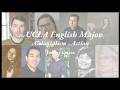
THOMAS CORREA
For my English capstone, I examined how the UCLA English major upholds settler colonial values by displacing Native & Indigenous literature in favor of European literature. I reviewed English course syllabi; course descriptions; major requirements and descriptions for English, American Literature, and Comparative Literature; UCLA general catalogs spanning over 40 years; and interviewed Native students and faculty in the English Department about their experiences as Native people in the Department. Furthermore, I examined the role of language, literature, and history in creating national identities in the present-day U.S. I concluded that at the departmental level, it may appear that providing limited exposure to Native & Indigenous literature may appear as merely displacement, but when taken into historical context, it is, in fact, erasure. My project draws on ideas from Kenyan author and academic Ngũgĩ wa Thiong'o on abolishing the English Department in favor of an African Literature Department as a form of decolonizing. I, in turn, suggest that our English Department does something similar to focus on the history of the literature of the land we are on as opposed to history of the literature created in the language we speak.
Presentation 3
Kellen Glass
Words like “bro” and “blud” are increasingly being used in positions typically occupied by pronouns or other referring expressions, especially among Gen Z and internet users. Due to internet usage making these words more popular, they have shifted from primarily lexical uses towards discourse oriented roles, meaning that while previously these words would only be recognized by their meanings as nouns, they can now be understood as indexing expressions. The common use of GIFs and reaction images amongst young people as a means of communication on platforms like TikTok and Instagram has widely circulated these terms, and their new usage, into popular culture. These changes have been seen with other words in the past, but the internet has sped up the adoption of not only these content words, but functional words as well, showing how mass communication has amplified the development and progress of language. With many new or “trendy” words, the speaker’s tone or prosody dictates how listeners understand. These terms however, spread through memes, are recognized even in text based environments, something relatively unique to internet language. This project asks whether terms like “bro” and “blud”, traditionally analyzed as vocatives, are expanding into discourse-pragmatic markers in online speech and examines how their use in memetic online discourse facilitates broader linguistic adoption into the common cultural consciousness.
Presentation 4
AUSTIN IM
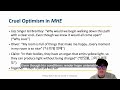
The Tony-winning Korean-produced musical Maybe Happy Ending (2024) took Broadway by storm in 2025—an unlikely feat for an original musical not adapted from pre-existing source material, which premiered eight years prior in South Korea. While Korean media has attributed this success to the global rise of the “K-musical,” existing scholarship on the musical instead emphasizes processes of localization. This paper argues that neither nationalism nor localization alone suffice to explain the musical’s transnational resonance. Rather, I contend that audiences resonate with Maybe Happy Ending’s representation of precarity, disposability, and attachment in contemporary late capitalist societies. Through close readings of both the musical’s Korean and English renditions, this paper examines the musical through the concepts of attachment, slow death, and impasse from Lauren Berlant’s book Cruel Optimism, revealing how the musical stages affective and political dimensions of contemporary precarity.
Presentation 5
NANDANA J. NAMBIAR
This research presentation examines the process of race-making in Thomas Middleton and William Rowley's play 'The Changeling,' arguing that the play's construction of its characters' social and racial statuses is rooted in contemporary practices of white self-fashioning. Critical race readings of this play have not been numerous, and few so far have examined the play’s deconstruction of early modern methods of verifying whiteness. This project seeks to remedy that, encompassing both a literary analysis of the text and historical research into early modern racialism. This includes research into the Spanish blood purity statutes, early modern geohumoralism, and the use of the racial prosthetic in Renaissance theater, all with grounding in the scholarly literature of Premodern Critical Race Studies. This research into early modern racial epistemologies provides the background necessary for my argument: that Middleton and Rowley utilize established epistemologies of whiteness to construct their characters' racializations, as they reveal the instabilities of such unreliable methods of ascertaining whiteness. Furthermore, my presentation argues that the play itself, in satirizing such questionable racial epistemologies, concludes that white hegemony’s increasingly restrictive self-policing will lead to its own destruction. This work adds to the growing field of premodern critical race studies, highlighting the influence of racialist constructions (and their subversions) in the theater of the period.
Presentation 6
BRINN D. WALLIN
Transferring to UCLA and getting accepted into several research scholarship programs has been the catalyst for actualizing my project. Utilizing the reading and inquiry I engaged in during community college, I interrogated questions like "How has Sylvia Plath's life, work, and legacy been misrepresented in academia and popular culture?" and "In what ways can we shift our understanding of Plath to better appreciate her depth and skill as a writer?" to jumpstart my project. Using physical research notebooks for each work, and keeping an extensive digital research notebook, the main goal of my work has been to examine Plath's journals, while incorporating scholarship from a variety of authors. Through the Keck/Humanistic Inquiry Research Program, I have channeled my hard work into what will amount to a thirty to forty page research paper. My study will consider Plath’s literature, specifically that constituting what I call her "private" and "public" voices, ‘in suspension' by focusing on each work's value apart from the tendency to mythologize, pathologize, and misrepresent female artists that is central to western culture. This paper, along with all the research I have conducted at UCLA, will lay the groundwork for a future book.
Presentation 7
Daniel Armstrong
There is a sizable niche, in studies of Tolkien, of literature on the way his works converse with Shakespeare's plays. Tolkien drew from Shakespeare, responded to Shakespeare, and, famously, hated Shakespeare. This field generates conversations, specifically, on ways in which Tolkien absorbed elements of Shakespeare's plays into his own work, reflecting and responding to them. Within this subfield, I argue, The Tempest is overlooked and undervalued. Rather, the play is pivotally important to the project of The Lord of the Rings: Tolkien has written narratives and elements from The Tempest into the core of his story, and uses the play to respond to his contemporary moment. My inquiry looks at shared motifs on the symbols and machinations of power; similarities in racial constructions of monstrosity and the monstrous; and previously unacknowledged direct parallels in narratives across the two texts. I draw from (as a noncomprehensive list) Julia Kristeva, to read Tolkien’s construction of the monstrous; Vaughan & Vaughan, for a historical framework of The Tempest; Humphrey Carpenter, for a biography on Tolkien; Tom Shippey, for a backdrop in Tolkien studies; and Tolkien’s own scholastic and personal writings. Both Shakespeare and Tolkien cast long literary and cultural shadows. This project seeks to fill a significant gap in Tolkien studies, and interrogate themes in relation to race, power, and colonial hierarchies as Tolkien writes from the end of British empire.