International Studies and Political Science: Prerecorded presentation - Panel 1
Location: Online - Prerecorded
Presentation 1
EDEN BJORNSON
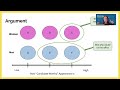
Though women’s representation in Congress has trended upwards in recent years, US women are still significantly underrepresented in their government. Because women win elections at the same rates as men, this analysis focuses on how women are prevented from running for office in the first place. In this paper, I evaluate (1) “How does appearance affect female vs male candidates?” and (2) “Does appearance prevent women from running for office?” I hypothesize appearance is a potential mechanism filtering many women out of the candidate pool. Women without a certain look (what I call a “candidate-worthy appearance”) are socialized against running for office from a young age and are continually overlooked as potential candidates throughout their adult lives and careers. I investigated these questions and claims through several phases: (1) an experimental survey to evaluate which traits make male vs female candidates appealing to voters, (2) mock elections to test non-candidate worthy appearing men vs women’s chances of winning an election, and (3) a survey of college students about others’ appearance-based perceptions of them and whether they’ve considered running for office. Though I do not pin down what makes up a candidate-worthy appearance, I find that such an appearance exists and is more salient for female candidates than male candidates. Thus, this research strengthens existing literature on gender and appearance in politics and provides a novel explanation for women’s underrepresentation in the candidate pool.
Presentation 2
ALEX DAI
Local Voter Partisanship and Affordable Housing Development in Metropolitan California
California faces an urgent housing crisis, in which local opposition to development is a major contributing factor. This study examines whether local voter partisanship helps explain variation in affordable housing production across metropolitan California. Specifically, it tests whether counties with higher Democratic vote shares built a greater percentage of very low income (VLI) and low income (LI) housing relative to their Regional Housing Needs Allocation (RHNA) targets during the 5th Housing Element Cycle (2013–2024). Using county-level data, the analysis employs correlational methods and multiple linear regression (OLS) to examine the relationship between average Democratic vote share in the 2016 and 2020 presidential elections and the share of VLI and LI RHNA-required units completed. The results provide partial support for a positive relationship between Democratic vote share and affordable housing performance, though the evidence is not conclusive. These findings suggest that local voter partisanship may play a role in shaping housing outcomes and should be considered in future policy design.
Presentation 3
HAMZA EL LAHIB
How does the specificity of leaders’ statements about conflict progress influence public perceptions of war trajectory and support for continued military engagement? Building on elite cue and cost-benefit theories, I theoretically explore and empirically test how the informational specificity in elite messaging shapes public support for war. While prior scholarship emphasizes partisan cues as drivers of divergent public attitudes, it largely overlooks how leaders vary in the specificity of conflict updates. I argue that greater informational specificity, evidenced by monetary figures, quantitative achievements, and operational details, provides clearer benchmarks through which individuals evaluate conflict progress, thereby increasing confidence in military successes, which in turn, decreases perceptions of the negative costs associated with conflict. On the other hand, vague statements create uncertainty, which leaves the public to rely on competing partisan cues or prior beliefs. To test this, I employ a survey experiment that varies the level of informational specificity in presidential speeches while holding all other conflict factors, such as the adversary, stakes, and objectives, constant. By doing so, I aim to demonstrate the causal effect of informational specificity on perceptions of conflict progress and continued support for military operations.
Presentation 4
JADE FAIRCLOTH
This paper examines how the United States invoked Article 98(2) of the Rome Statute to negotiate bilateral immunity agreements (BIAs) that shield its nationals from the jurisdiction of the International Criminal Court (ICC), analyzed through a Third World Approaches to International Law (TWAIL) framework. Following its initial signature and subsequent “unsigning” of the Rome Statute, the U.S. pursued a global campaign of immunity agreements, reinforced by measures such as the American Service-Members’ Protection Act and the Nethercutt Amendment, which leveraged aid conditionality to secure compliance from states dependent on U.S. assistance. While existing scholarship has largely focused on doctrinal interpretations of Article 98(2), this paper situates its application within broader structures of political and economic power. Drawing on U.S. government records, bilateral agreements, and UN materials, it demonstrates how legal reinterpretation, combined with economic and diplomatic coercion, reshaped the ICC’s functioning without formal amendment. Ultimately, it argues that the Article 98(2) regime exposes how international criminal law, while professing universality, can reproduce colonial hierarchies that obscure enduring inequalities between powerful and weaker states.
Presentation 5
Sofia Gilmore
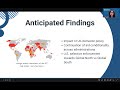
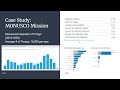
While most research praises the United Nations (UN) peacekeeping programs for focusing on targeting violence and instituting peace initiatives, there is a growing concern of peacekeeper-perpetrated sexual exploitation and abuse (SEA), and specifically, an underaddressed gap in the role of UN-granted immunity. This thesis addresses sexual abuse and prosecution rates of troop-contributing and host countries and argues that causes for variation among countries fall into two categories: Government Agency and Normative frameworks. Drawing on V-Dem and UN datasets from 2015-2024, I test variables on seven peacekeeping missions and find that Government Agency accounts for a higher level of variation.
Presentation 6
NGOC NGUYEN
As governments accelerate the development of regulatory frameworks for AI, scalable approaches to analyzing policy documents are increasingly important. Natural language processing (NLP) provides a suite of methods for extracting insights from large textual corpora; however, methodological choices can substantially shape inferred policy priorities.
This study develops a structured NLP pipeline for analyzing institutional priorities in AI governance, based on an extensive dataset of 41 documents from global, regional, and national organizations. We first apply keyword-based domain detection and Latent Dirichlet Allocation (LDA) topic modeling to explore and characterize the thematic structure of the dataset.
We evaluate how NLP methods, including zero-shot classification using “facebook/bart-large-mnli” model, semantic similarity analysis using “all-MiniLM-L6-v2”, and dictionary-based word-frequency analysis, measure institutional priorities in AI governance documents. These methods are evaluated against human-coded benchmarks for two dimensions of institutional priorities: innovation emphasis and regulatory stringency.
Results show that all three methods achieve moderate reliability in detecting innovation emphasis, while performance on regulatory stringency is substantially weaker. Notably, a modal verb-based linguistic measure yields a strong correlation with human labels, suggesting that regulatory intensity in formal policy texts is more effectively captured through syntactic modality patterns.
Presentation 7
LUNA TAKAHASHI
Immigrants have historically leaned Democrat. However, in the 2024 election, the margin between Democratic and Republican support among immigrants narrowed to just 4%, despite the heavy use of anti-immigrant rhetoric. Naturalized citizens make up 10% of eligible voters, yet little is known about their political behavior. One underexplored factor is immigrants’ attitudes toward immigration policy itself. Some evidence implies that assimilation pressure induces naturalized immigrants to behave more conservatively. Using the 2020-2024 Cooperative Election Study panel survey, this study examines whether and why immigrants differ in their attitudes towards immigration policy, compared to U.S.-born citizens. OLS regression estimates the effect of immigration status on the average sentiment across political topics, measured on a 0–1 scale. Contrary to conventional expectations, first-generation immigrants are significantly more restrictive toward immigration policies than native-born citizens, with an average difference of 0.067 (p < 0.05). In contrast, they are more liberal on non-immigration issues. Within immigration topics, first-generation immigrants are particularly more conservative on illegal immigration topics, suggesting that their restrictive view may be driven by the desire for others to follow the same legal pathway. These findings challenge the conventional understanding that immigrants are uniformly more liberal, pointing to more complex mechanisms underlying their political attitudes and behaviors.
Presentation 8
DEFNE TANYILDIZ, Kevan Harris
Streaming services are not simply distributors of content; they are gatekeepers of culture as they decide the media catalog on their platforms for each country or region. Streaming services have had a great impact specifically on the television industry. As local broadcasters begin to be replaced by streaming services based in the United States, there comes questions of visibility: if audiences are shifting to streaming services, whose content are they watching? Using large-scale data on top-10 popularity charts from 36 countries between 2020-2025, this study examines the extent to which streaming audiences exercise agency within global platform ecosystems. Comparative descriptive analysis investigates how content circulates from producer countries across country income levels and world regions. Though the United States and high income countries remain the most streamed across the data, there seems to be a growing percentage of middle income countries and content from East Asia and the Middle East being watched on streaming services worldwide. By using Ordinary Least Squares models, additional explanatory variables on each country’s development will be incorporated, such as internet usage and GDP, to assess whether these circulation patterns hold once differences in national development are taken into account. As a result, this study contributes to debates on cultural imperialism, media globalization, and platform power by providing an empirical account of what international visibility really looks like in the streaming era.