Arts, Music, and Multimedia: Prerecorded presentation - Panel 2
Location: Online - Prerecorded
Presentation 1
VALENTINA CRESPO
This project addresses the mass deportation and arrest of immigrants in America. As a nonwhite individual with immigrant parents, I am personally connected to this crisis. My work argues that these actions are destroying the foundational American identity, specifically the idolized concept of the melting pot. To express this, I designed a protest poster using felt-tip markers. The drawing depicts a golden melting pot with diverse hands reaching upward. When the darker marker colors bled together during the drawing process, I morphed the hands into thick clouds of black smoke, creating the visual of a burning melting pot. This smoke motif is mirrored in the poster's lettering. Supporting the pot is a cracked stovetop inscribed with J. Hector St. John de Crèvecœur’s 1782 vision of diverse peoples melting into a unified American identity. The cracks symbolize how this historical expectation of diversity is failing, leaving us as a divided, broken people. This poster is intended for a public street protest, accompanied by actual pots of burning food and firewood. The billowing smoke and burning scent would fill the streets, making the protest undeniable. Ultimately, this project is significant because it forces the public to confront the destruction of our immigrant heritage, using visual art and sensory elements to expose the fractured reality of the American identity.
Presentation 2
LIA GONZALEZ
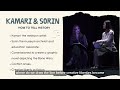
"Bone and Blood and Flesh" is an original play that investigates the notorious "Bone Wars," a 20-year-long fossil feud between 19th-century paleontologists Edward Drinker Cope and Othniel Charles Marsh. When Sorin and webtoon artist Kamari are tasked with creating a graphic novel based on this historical feud, conflict arises. Sorin believes the novel should reflect solely primary sources, while Kamari seeks to humanize the rivals through speculative complexity and creative liberty. This historiographical critique asks the question: where do we draw the line before artistic freedom becomes fiction?
The research for this piece centers on the tension between idealism and realism in historical storytelling, questioning if it is possible to reconstruct the past without projecting onto it. This piece is being researched using primary and secondary sources relating to all-things Cope, Marsh, and the Bone Wars. It is currently in rehearsal, which is a feedback-heavy process that focuses on editing and rewriting. The end goal for this piece is a public staged reading on May 2nd and May 3rd, 2026. After the reading, a talk-back will occur, where audience members can share their thoughts and takeaways from the performance.
Presentation 3
CHRISTIAN LEE
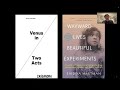
Similar to many Asian Americans in the West, my family resided in Southern California for several generations; however, we are still regarded as aliens. I am always stunned by how little is known about America and us we helped build; how the rich emotional textures of who we are, why we are here, and what we contribute remain erased from the photograph. Researching Asian migration patterns in California throughout the 1800s and 1900s, I remember discovering a lynching postcard featuring the corpse of a young Chinese boy, savagely killed by a white mob. He resembled me and was close in age. I yearned to learn more about his life. I decided to reimagine him and those AAPI migrants who lived in fear of racial terror but still persevered and rebuilt. To many, they are the nameless, faceless Asians of the West, but to me, they are beautiful and proud. Through lyrical portraiture, "Wind Burial" reimagines Asian Americans in the historically charged Southern California landscape, honoring our communities and contesting a predominant visual legacy of whiteness.
Presentation 4
KIERA WANG, Faculty Mentor Rebeca Mendez
Environmental privilege in Los Angeles is highly unequal, with communities of color three times more likely to lack access. Environmental redlining limits experiential learning for underserved youth, highlighting outdoor education as a critical pathway for improving cognitive & emotional outcomes. This study examines the Biophilia Treehouse, an art-science intervention designed to integrate environmental education, community engagement, and urban biodiversity while helping students understand local natural phenomena through an interdisciplinary lens. The project was implemented as a community participatory design at the Sisters of Social Service Center. The treehouse incorporates native coastal sage scrub that supports indicator bird species. Data collection includes field observations, student-made artifacts, and educator feedback, alongside photographic documentation of bird-plant interactions to assess ecological engagement. Preliminary implementation includes the development of a two-phase curriculum for elementary students, teaching species identification with creative documentation and scientific inquiry. Early observations indicate that students engage with ecological concepts through multisensory and creative approaches, while the site supports ongoing bird activity. These findings suggest that place-based interventions can function as effective ecological & pedagogical nodes, promoting environmental literacy and biodiversity in urban communities historically excluded from access to nature.
Presentation 5
El Yang, Anthony Baniaga
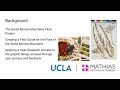
The Santa Monica Mountains are a highly biodiverse coastal mountain range in Southern California with deep cultural significance for Indigenous peoples and important recreational value for millions of residents.To support conservation and research in this region, the Santa Monica Mountains Flora Project aims to establish a new foundation of knowledge for plant conservation and research. This includes the production of “A Guide to the Flora of the Santa Monica Mountains,” a field guide useful to both professional and amateur botanists. The guide will include annotated photographs, descriptions of conservation status, and notes on the local ecology for each species. Informed by surveys, test users, and professional designers, the guide is intended to communicate the unique geographic and cultural features of the Santa Monica Mountains while remaining useful and accessible to readers.The Santa Monica Mountains Flora Project aims to create a fundamental resource for efforts connected to plant conservation and research in the Santa Monica Mountains.