Community Engagement, Disability and Social Justice: Prerecorded presentation - Panel 3
Location: Online - Prerecorded
Presentation 1
MICHAEL CICELSKI, SHIRA GOZLAN, Marina Navarro, Sarah Paredes, and John Thehumury
This project examines how truancy policies within the Los Angeles Unified School District (LAUSD), the second-largest public school system in the United States, impact neurodivergent students. Neurodivergence refers to variations in brain function such as autism and ADHD, which challenge rigid attendance expectations that assume a neurotypical baseline. Current LAUSD policies issue truancy letters after only three absences, neglecting the lived realities of neurodivergent youth and leading to unintended ableism. To explore this issue, our group employs qualitative methods, including interviews with faculty, staff, and students, visual mapping with neurodivergent students, and analysis of truancy policies. These approaches aim to reveal how institutional assumptions contribute to patterns of absenteeism and exclusion. While qualitative research captures nuanced experiences, it is limited by subjectivity, potential researcher bias, and challenges in representing such a large student population. Nevertheless, this project highlights the need for LAUSD to adopt policies that support neurodivergent individuals, such as excused mental health absences and flexible attendance benchmarks. Our findings aim to inform sustainable interventions, including staff training, peer mentorship, and policy revisions that foster inclusion rather than punishment. By centering neurodivergent voices and recognizing attendance challenges as systemic, this research contributes to more equitable educational environments.
Presentation 2
VANSHY C. HERNANDEZ MINERA
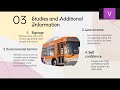
Transportation is an issue for people with disabilities as people considered to be “abled” bodies– according to Galis (2019), are able to live and sleep normally without the social constructs and are considered ‘independent,' appear to take advantage of such seats even when public transportations have signs that encourage disability equity. Therefore, my research question would focus on how has transportation affected people with disabilities regarding securing a seat in the Los Angeles Metro bus? A preview of sources consists of prioritized seating arrangements (Abass, 2023), accessibility and transportation equity (Antipova, 2020), exclusion and vulnerability on public transit (Lubitow, 2017). The data used will consist of ethnographic observations, sensory impressions, and interactions in the Los Angeles metro bus and utilizing literature review articles to identify what the barriers are for people with disabilities. The methodology of the conceptual framework consists of a critical disability lens and disability analysis to further discuss the difference in treatment and how race/ethnicity play a role in treatment. This project aims to focus on the lived realities of people with disabilities who rely on public transportation to reach their destination and how accessible transportation is for them.
Presentation 3
ANTHONY PADILLA
With federal funding for higher education continuing to be cut, marginalized students face barriers to academic success. This project investigates how cuts on federal education funding intersect with demographic vulnerabilities. Specifically, this project analyzes the effects of these cuts on the enrollment and retention of Latinx men in higher educational institutions. This project combines data from termination records of the National Institute of Health (NIH) grant cuts to higher education institutions, the U.S. Census Bureau’s 2020 Diversity Index, and the National Center for Education Statistics (NCES) enrollment data from 1976 to 2023 to create data visualizations. Cross-referencing NIH data and Census data finds that states with the highest number of grant terminations, such as New York (114), Texas (83), Florida (48), and California (39), also possess the highest scores on the National Diversity Index. Furthermore, NCES data finds that Latinx male undergraduate (1,493,900) and post-baccalaureate (126,300) enrollment is much lower in comparison to Latinx women at the undergraduate (2,131,900) and post-baccalaureate (242,900) level. As such, this project argues that structural disinvestment disproportionately erodes educational systems in places with the most vulnerable populations. For Latinx men, these barriers may combine with pre-existing cultural barriers like machismo and an expectation to be family providers that both forces premature exits from academia and widens educational attainment between genders.
Presentation 4
TAHMUL QURESHI, CHINMAYEE IYER, ANISA WARSHAN, ELISE MENDEZONA, Lauren Chen, Aubery Wang
Language barriers represent a significant social determinant of health for the approximately 25.7 million individuals in the United States with limited English proficiency (LEP), with California accounting for nearly one quarter of this population. In Southern California, where over 220 languages are spoken, limited interpreter availability and gaps in culturally competent communication contribute to disparities in healthcare access and patient safety. This study examines how language barriers affect healthcare access among immigrant communities and identifies structural gaps in interpreter availability and patient awareness of language access rights. Using a community-based pilot needs assessment, a structured survey was conducted among Afghan refugees in Southern California to assess healthcare communication experiences, interpreter availability, and awareness of language access rights. Results indicate that 45% of participants reported difficulty understanding healthcare providers due to language differences, and 35% reported avoiding healthcare services because of communication barriers. These findings highlight persistent gaps between language access policies and patient experiences in clinical settings and underscore the need for expanded interpreter infrastructure, improved patient awareness of language access rights, and culturally competent communication training to promote more equitable healthcare delivery for immigrant populations.
Presentation 5
DAISY SAUCEDO
Individuals with disabilities often face difficulties in building and maintaining social relationships and thus are more vulnerable to social isolation and loneliness. In the United States, over 40% of adults with disabilities report feeling lonely or socially isolated (Fatema Shafiq et. al). As digital technologies become more integrated in everyday life, platforms such as Facebook raise questions about whether these platforms support or discourage social interaction for individuals with disabilities.
This study uses an ethnographic observational approach grounded in a critical disability studies framework. By joining and observing a Facebook disability support group, this study allows for direct observation of interactions, making it possible to examine how communication, support, and community are experienced in everyday digital spaces. The study focuses on patterns of interaction, including how users engage with one another, the types of support exchanged, and whether these interactions reflect a sense of comfort, belonging, or social integration. At the same time, considering potential limitations of digital technologies, including whether a lack of familiarity with these systems or unequal access to them creates new forms of exclusion. Although the group is publicly accessible, this study maintains anonymity and avoids the use of identifiable data. Overall, this study seeks to understand the dual role of digital platforms as facilitators of inclusion while also identifying areas where they may reinforce inequalities.
Presentation 6
SHREYA SUNDAR, ANTHARA THIRUPATHI
Organic farming is a cost-effective alternative to pesticide farming, offering potential health and financial benefits. Project RISHI UCLA is a 501(c)3 student-led organization that supports the sustainable development of rural communities in India. As part of one of its ongoing research-practice partnerships in the Tiruvallur district of Tamil Nadu, the organization conducted an organic farming and livestock management training for 34 participants to evaluate its reception and influence on organic farming practices. Data on community context, short-term training outcomes, and long-term adoption were collected at four timepoints over the span of two years. Adoption was found to vary by socioeconomic and landholding characteristics. Increased landholding was positively associated with likelihood of adoption. Middle-earning farmers and those who owned livestock demonstrated higher sustained adoption compared to very small, kitchen-garden-scale and high-income farmers, suggesting constraints in training fit at both ends of the income distribution. The cost-labor tradeoff, in which the reduced pesticide costs are offset by increased labor demand, appears to be economically relevant for these “middle-earning” households making 50,000 to 150,000 rupees annually. Future research should characterize other barriers to adoption among these groups as well as incentive structures that can encourage uptake.