Community Engagement, Disability and Social Justice: Prerecorded presentation - Panel 4
Location: Online - Prerecorded
Presentation 1
ASHLEY DE LA CRUZ
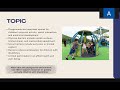
All playgrounds are constructed differently with varying components of accessibility for children. Playground environments includes physical features such as ramps, shade, noise variations, layout, fencing, and sensory elements. My research question will be, “how do physical and social environmental barriers on playgrounds limit participation and contribute to health disparities among children with disabilities"? Materials I will be using to find supporting evidence for my research will be sources from scholarly articles, literature reviews, playground observations, and analyzing playground guidelines and standards. My research is significant because I could relay the information I have found on playgrounds and environment to organizations that work more closely with children with disabilities. They could then work to limit equipment or tools in these playgrounds that cause a significant health risk to children.
Presentation 2
MYYANI R.K. FULLER
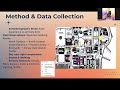
Students choose their college campus for a myriad of reasons, with the campus's aesthetics (appealing visual uniformity) being a major factor. But what happens when the seemingly simple choice of prioritizing aesthetics is revealed to come at the expense of accessibility? This autoethnography seeks to investigate how this potential prioritization of aesthetics shapes the navigational experiences of visually impaired (V.I.S.) students on UCLA’s campus, including those V.I.S. students who have multiple disabilities. Using qualitative data, I will lay out the strain of uniform design on daily wayfinding (navigation using landmarks and nonvisual sensory cues), using my personal experiences of traversing UCLA’s campus, an interview from another visually impaired individual, and a literature review on the barriers to wayfinding and the prioritizing of visual appeasement on built environments. This work is through the lens of disability studies frameworks, and will address critiques of the social model of disability. This model of disability has limitations that result in an unaccommodating environment that disables the individual. To conclude, wayfinding is distorted by unmarked pavement, lack of landmarks, insufficient lighting of the campus, and many other factors, all of which increase the mental and physical tax of simply making it to class. This study seeks to shine a light on the experiences of visually impaired students and the impediments we must overcome.
Presentation 3
SADHVI AIYER, DAISY SAUCEDO, JENNY TRAN, Kathryn Kietzman
Adults with disabilities frequently face systemic exclusion from the programs and services intended to support their health, independence, and overall well-being. Strict eligibility thresholds, including income limits, employment status, age requirements, and functional assessments, can create significant barriers to accessing healthcare, housing assistance, and long-term services and supports (LTSS). To further examine these barriers, we developed qualitative composite case studies from the California Long-Term Supports and Services study, which recruited participants through local community organizations and conducted ~1 hour long interviews to learn about their lived experiences. Our analysis of composite case studies related to participants’ housing status, household income, employment status, and functional difficulties identified recurring patterns of exclusion and structural barriers to care due to strict eligibility thresholds. Participants who were marginally above income thresholds, lacked a permanent address, were currently employed (even if only part-time), or were perceived as being “too high functioning” were sometimes restricted from essential support. For some, these gaps in care discouraged employment and perpetuated financial challenges. Our findings suggest a high need to expand programs like California's Working Disabled Program, raise income eligibility thresholds, and redesign eligibility frameworks that currently exclude and penalize disabled populations.
Presentation 4
LEAH SCHULMAN
Mainstream fitness and recreation culture has expanded drastically in recent years, yet its gyms, yoga studios, and recreation programs remain largely designed around non-disabled bodies and normative assumptions about movement and motivation. For people with intellectual and developmental disabilities (IDD), participation in these spaces raises the question of whether, beyond physical access, the psychological conditions for genuine inclusion are actually present. This study is guided by Self-Determination Theory (SDT; Deci & Ryan, 2000) as a theoretical framework to examine how mainstream and inclusive recreation spaces support or frustrate the three basic psychological needs, autonomy, competence, and relatedness, of people with IDD. To explore this, a comparative ethnographic approach will be used using participant observation and informal interviews in both mainstream gyms and disability-inclusive recreation programs, with detailed fieldnotes capturing patterns of interaction and participation over time. These experiences are interpreted through a lens informed by Self-Determination Theory and will pay close attention to how social dynamics, coaching and instruction styles, and everyday interactions shape whether individuals feel supported or out of place. This work contributes to disability studies and exercise psychology by shifting attention from access alone to the quality of participation, emphasizing how environments can either support or undermine self-determination.
Presentation 5
SAIHARSHITHA YERELLA, Ramneek K. Rana, Meagan Suen, Lorna Kwan
Numerous studies, such as those by Chevarley et al. (2006), Horner-Johnson et al. (2014), Drew and Short (2014), Wei et al. (2007), have shown that women with disabilities are less likely to receive Pap smears and mammograms than women without disabilities. Given the lower rates, an important follow-up question is whether these screening gaps are associated with a higher risk of cancer. A study by Iezzoni et al. (2022) found that women with physical disabilities have significantly higher rates of breast and cervical cancer. Similarly, a different study by Mahar et al. (2023) found that women with intellectual or developmental disabilities are much more likely to have metastatic cancer at diagnosis than women without disabilities.
The goal of this study is to identify barriers women with disabilities face in accessing screenings and use the findings to improve access at UCLA Health. This pilot study, which has recently received IRB approval and is currently in the recruitment phase, seeks to assess the feasibility of the methods. All participants will complete a survey and a subset who indicate interest will be invited to participate in an interview. The findings may also be used to raise awareness of disability-related barriers in healthcare and improve accessibility and equity.