Community Engagement, Disability and Social Justice: Prerecorded presentation - Panel 5
Location: Online - Prerecorded
Presentation 1
VANIA SALDAÑA, LEAH HIEN, JOLENE ROBLES, BRYAN NGUYEN, Cinthya Salazar, Jason Dorio
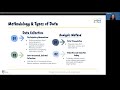
This community-based action research project examines the college-going needs and assets of immigrant-origin students and their families in the context of the UCLA community schools. The guiding research question for this project is: What are the college-going assets and needs of immigrant-origin students and immigrant families, and how can they be addressed in the schools? To answer this question, we draw on multiple forms of qualitative data including 5 participatory observation description notes, 56 post-school site visit reflective memos, 45 parent and student surveys, 6 interviews, and about 20 student artifacts. The project design and analysis was guided by Yosso’s Cultural Wealth framework and Hoover-Dempsey and Sandler’s Model of the Parental Involvement. To code all data, we used Saldaña’s systematic coding process, helping arrive at the findings of the study. Our findings suggest that relationships, trust, and context are essential for meaningful family engagement. Direct family invitations increased parental engagement, and we observed strong aspirational, familial, and navigational capital among students and families in college preparation efforts. As parents gained knowledge, their confidence grew, highlighting the importance of building parental self-efficacy. These findings matter because they highlight the intersection of student and family strengths with systemic inequities, and they point to the need for more intentional, accessible, and relationship-centered approaches to engagement.
Presentation 3
ELLE E. NELSEN
Ride On Therapeutic Horsemanship specializes in adaptive riding for individuals with varying disabilities. Ride On employs several therapists and has over a dozen volunteers who interact with both the horses and riders. They offer an alternative to typical therapies for those with varying disabilities including but not limited to developmental, mental and physical and in order for this organization to run smoothly and safely volunteer and employee training is essential. After observing through an ethnographic lens how they run their organization, it raised the question of how they ensure volunteers are confident and effective in executing their duties safely at all times and especially during an emergency. Through a disability studies analysis of their process and conduct through weekly visits and memos along with cross referencing sources based in equine therapy practices, it has become clear that volunteers regardless of previous experiences with both disabled individuals and horses receive minimal training. Results of preliminary research has shown that extensive training in emergency situations and accessibility is lacking in regards to illustrated disability standards. This research project seeks to understand the procedures around volunteer training and critique the ways in which it is open for improvement and what improvements can be made in order to have a safer and more efficient organization.
Presentation 4
ELINORE NOURANI
This study examines audience engagement with Up to Us, an entertainment-education sexual health intervention written by and for justice-impacted youth, during the first month of its Instagram mini-episode series campaign (February 4 – March 8, 2026). Building on pilot study findings highlighting the effectiveness of narrative-based sex education and the need for wider distribution, the series expanded to social media at a time when access to comprehensive sexual and reproductive health resources is increasingly restricted. Using a mixed-methods approach combining engagement metrics, qualitative comment analysis, and semiotic analysis of emoji use, this project evaluates whether short-form, narrative-driven content can effectively reach and engage young audiences on digital platforms. Preliminary findings reveal substantial reach, with episodes surpassing 100,000 views — including over 229,000 for Episode 1.2 and 139,000 for Episode 1.4 — suggesting circulation well beyond the account’s follower base through algorithmic amplification. Comment analysis reveals predominantly positive reception, with viewers expressing emotional investment and anticipation for future episodes, while a single negative response illustrates how sexual health content can be interpreted through broader cultural and ideological lenses. As the first phase of a longitudinal analysis, these findings position digital platforms as actively sought-out spaces where young audiences engage with reproductive health narratives on their own terms.
Presentation 5
PAIGE LOVY PRESCOTT
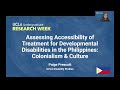
Children with developmental disabilities face significant challenges to receiving adequate treatment and support, particularly in developing countries where poverty and limited resources restrict access to care. While some governments have introduced new policies to support people with disabilities (PWDs), these efforts fall short of ensuring meaningful improvements in their daily lives. In the Philippines, this gap is extremely evident. Despite significant legislation reform like the Magna Carta for Disabled Persons, many children and their families continue to fall through the cracks. Understanding why developmental disabilities remain undertreated requires an examination of persistent poverty rates and the current healthcare system. These issues are deeply tied to the Philippines’ long colonial legacy, which has shaped Filipino lives through economic conditions, governmental structure, and healthcare. As a result, inequities in accessing care are not solely economic, but are also influenced by deep social and cultural factors. Improving life outcomes for children with developmental disabilities requires reform that directly confronts the Philippines economic inequities, policy priorities, cultural practices, and the colonial legacies that sustain them.
Presentation 6
RACHEL ANNE ROJO
Ableism remains a present-day issue that continues to affect the disabled community, where systemic injustices of proper healthcare accessibility for individuals are reflected from the medical model. Through a redefined medical environment by the power of education and the call to action for disability healthcare rights, this opens an avenue for the disabled community to be better represented in their healthcare journey. The main research question addresses both factors of how and what healthcare resources can be more accessible towards individuals with disabilities alongside being further implemented in medical practices such as a clinical setting. Additionally, this research project centers on improving infrastructure support and medical frameworks of addressing the medical model through the social model. The ethnography of the field site analyzes healthcare practices in a rehabilitation center that promotes supporting lower income communities. The methods to this project involve interviews from different physical therapists’ experiences in supporting patients with disabilities as well as research articles understanding the divide in sociodemographic groups between disabled individuals’ narratives and their access to healthcare support. Preliminary data analysis highlights the need for reform in healthcare institutions and practices. This project is designed to advocate for improving environmental conditions by paying close attention to current inequities in healthcare systems.