Biology: Prerecorded presentation - Panel 1
Location: Online - Prerecorded
Presentation 1
RYAN ARAKAL, MYLES O'LEARY, Adithya Ramesha, Xinghang Jiang, Rhonda Souvenir, Qiuxia Li, Quanjiang Zhang, E. Dale Abel
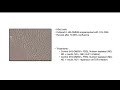
Unc-51-like kinase 1 (ULK1) plays multiple roles in a cell. ULK1 is inactive under physiological conditions. The present study characterizes the mechanisms underlying inhibition of ULK1 signaling by assessing Beclin1 phosphorylation at S30, a specific downstream phosphorylation site, in cardiomyocytes. Nutrient deficiency (Hanks balanced salt solution, HBSS) markedly increases Beclin1 phosphorylation at S30 in H9c2 cells (rat embryonic cardiomyoblasts), and this increased phosphorylation is fully inhibited by SBI-0206965, a selective ULK1 inhibitor, at 20 uM. Under nutrient-deficient conditions, adding 100 nM insulin to H9c2 cells significantly attenuates Beclin1 phosphorylation at S30. In the presence of rapamycin (15 ng/mL), a specific mTORC1 inhibitor, insulin at 100 nM may comparably and significantly attenuate Beclin1 phosphorylation at S30 under nutrient-deficient conditions. In summary, our present study indicates that insulin signaling deactivates ULK1 in an mTORC1-independent manner in cardiomyocytes. This study implies the previously unknown mechanisms underlying ULK1 deactivation in cardiomyocytes.
Presentation 2
ITZEL CUEVAS, Meagan Martin, Barbara Natterson-Horowitz
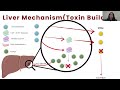
Hepatic necrosis, or hepatocyte death, is a major cause of acute liver failure. Acetaminophen toxicity is a major cause affecting millions in the United States each year. Without transplantation mortality ranges from 40–75%. Current treatments focus on transplantation or surgical removal of damaged tissue. Most pharmacologic therapies target known mechanisms of disease. Few aim to enhance intrinsic cellular resistance to oxidative injury.
A central driver of toxin-induced necrosis is depletion of glutathione (GSH). GSH is the liver’s primary intracellular antioxidant. It neutralizes reactive oxygen species (ROS). When GSH is depleted, ROS accumulate and trigger cell death.
Species that tolerate extreme oxidative stress may provide evolutionary insight. The Caspian seal (Pusa caspica) is a deep-diving marine mammal exposed to repeated hypoxia–reoxygenation cycles. This physiology generates substantial oxidative stress. We hypothesize that adaptive variation in antioxidant genes—GSTO, GPX, and SOD—supports enhanced cellular resilience in this species. We propose comparative genomic analysis with a non-diving sister species, the domestic ferret (Mustela putorius furo).
Identified variants could be tested in marine models. Targeted upregulation of antioxidant pathways may offer a novel, evolution-informed strategy for preventing hepatic necrosis.
Presentation 3
JULIA FELDMAN, Paul Hirose, Kymora Scotland, Karan Thaker, Reyhaneh Nazarian
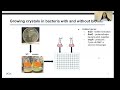
Kidney stone disease affects ten percent of the human population worldwide, however the exact pathogenesis is yet to be characterized. Recent findings have shown discrete deposition patterns of bacteria and calcium oxalate (CaOx) crystals within kidney stones, pointing to an active role of biofilm forming bacteria in the development of CaOx crystals and stones. This project aims to evaluate the effect of bacteria biofilm on size and nucleation of CaOx crystals by comparing brightfield microscopy image data of crystals grown in bacteria with and without gene knockouts of biofilm forming pathways. Wild-type and mutant strains of known biofilm forming bacteria, Escherichia coli and Pseudomonas aeruginosa, were grown in liquid culture and added to tissue treated wells alongside separate calcium and oxalate stock solutions. Following ten days of incubation and shaking, CaOx crystals grown in wild-type conditions showed an average increase of ten percent in observed crystal count than the control and the mutant groups, indicating that bacterial biofilms may have a facilitating role in crystal nucleation. To this end, further exploration into the composition of bacterial biofilm and their interaction with calcium and oxalate ions may serve as a bridge towards new kidney stone preventative measures.
Presentation 4
ALLYSON GOODMAN, LOGAN MACDONALD, Desiree Eshraghi, S. Madigan Durham, Molly Fox
Mother-infant bonding has lasting consequences for a child's social, cognitive, and emotional development. While psychological stressors during pregnancy are well documented bonding risk factors, the role of maternal physical illness remains understudied. Earlier research found that prenatal anxiety and pregnancy complications significantly increased disturbed bonding risk. Previous studies found that COVID-19 during the prenatal period was associated with elevated postpartum depression but did not directly affect bonding, leaving open whether other prenatal illnesses more directly impair bonding. Therefore, we assess whether urinary tract infection (UTI) frequency during pregnancy predicts impaired postpartum bonding. In the Mothers' Cultural Experiences study, a cohort of pregnant Latina women in Southern California completed self-report questionnaires on UTI frequency and postpartum bonding outcomes using the Postpartum Bonding Questionnaire (PBQ). We examined the association between UTI frequency and total PBQ scores using statistical regression. The study controlled for general health status, prior pregnancies, and physical and mental illnesses. We hypothesize that higher UTI frequency in the prenatal period will be positively associated with higher impaired bonding scores, reflecting the physical strain of prenatal illness. Future research may examine mother-infant bonding disruptions from prenatal illness and their persistence over time.
Presentation 5
RITA KAMAL, Alan Levinson, Brianna Gaughan, Andrew Goldstein, Neil Lin
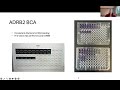
Prostate cancer (PCa) develops within a complex and heterogeneous tumor microenvironment composed of stromal, epithelial, and neural components. While autonomic nerves have been implicated in driving PCa initiation and progression in vivo, the lack of a human ex vivo model has limited mechanistic investigation. To address this, we are developing a co-culture platform integrating patient-derived prostate organoids with autonomic neurons differentiated from human induced pluripotent stem cells (hiPSCs). MYC overexpression via lentiviral transduction is used to model early-stage transformation in organoids, which are characterized by confocal immunofluorescence imaging and secretome analysis, demonstrating luminal architecture and expression of AR, PSA, K8, and HOXB13.
Autonomic neurons are generated using a small molecule-based differentiation protocol, with neural crest identity confirmed by morphology and PHOX2B expression. Ongoing work includes generating lysates from neural crest cells, spheroids, and neurons to validate differentiation timelines and optimize co-culture conditions. Differentiation of SOX10 reporter and HIPS2 lines will be performed in parallel to ensure reproducibility. Viral constructs, including shADRB2, are being validated alongside pharmacological studies. This platform enables investigation of neural influences on tumor biology and supports RNA sequencing and single-cell analyses to define PCa cell states across lineages.
Presentation 6
DESIREE RICE, Alexys Long, Alexandra Davis, Peggy Fong
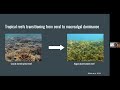
Globally, tropical reefs are shifting from coral domination to algal domination. While reefs dominated by coral have high topographic complexity that historically supported biodiverse communities, it is unclear how reef complexity (rugosity) influences the ecological strategies of novel algal communities that inhabit the structure left behind by dead coral skeletons. In this study, we investigate how reef complexity affects the ecological functions and strategies of novel macroalgal communities using a trait-based approach. Our aim is to identify functional tradeoffs and improve predictions for the future of tropical reef ecosystem services as macroalgae continues to dominate these ecosystems. On a tropical reef in Mo’orea, French Polynesia, macroalgal individuals were randomly collected across high and low rugosity strata (N=102, n=51). Nine functional traits were measured on each thallus, with each trait imputing the ecological functions of resource acquisition, resistance to herbivory, and resistance to physical disturbance. PERMANOVA will be used to determine if reef complexity serves as a significant predictor of algal community trait expression and PCA will visualize trade-offs in ecological strategies exhibited by algal communities in habitats of varying complexity. This work provides critical insight into the ecological functioning of novel algal communities in tropical reef ecosystems.
Presentation 7
IKA VUKIC and Pei Yun Lee
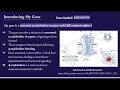
In 2006, the Stronglyocentrotus purpuratus genome was fully sequenced, however, as the function of many of their genes remains unknown, this study researches an unstudied purple sea urchin gene to help address this gap in this genome’s studies. The goal of this project aimed to determine whether an unknown Stronglyocentrotus purpuratus gene could be successfully cloned into a plasmid vector. Using bioinformatic databases, including BLAST, Interpro, and Echinobase, the unknown sequence was identified to be the neuronal acetylcholine receptor subunit alpha-3, a ligand-gated ion channel involved in acetylcholine signaling. I additionally used MEGA to construct a phylogenetic tree and determine the gene’s relationship to its equivalents in other species. This gene functions in the cholinergic signaling pathway and mediates several muscle contractions. The gene was amplified via PCR, then purified and ligated into the pGEM-T Easy vector. Through transformation, recombinant plasmids were introduced into competent e. coli cells, with cloning success then evaluated using colony PCR, restriction enzyme digestion, and DNA sequencing. These verification methods provide evidence that the gene was successfully cloned and were in agreement with the gene identity found in the initial database search, the neuronal acetylcholine receptor subunit alpha-3. As it plays a major role in neural communication, its research can help scientists understand nervous system development and function and initiate the study of neurodegenerative diseases.