Biology: Prerecorded presentation - Panel 2
Location: Online - Prerecorded
Presentation 1
SARAH BEN MAKHLOUF, Zitian Wang, and Päivi Pajukanta
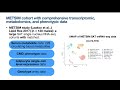
This abstract has been withheld from publication.
Presentation 2
LILAH REGUS
NOAH REGUS
David Reznick
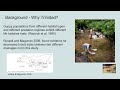
This study examines the potential for reproductive isolation in populations of Trinidadian guppies. In particular, we compare three populations to a fourth that delineated from guppy, Poecilia reticulata, to a separate species, Poecilia obscura, in 2009 based on genetic data. A common garden experiment crossed all populations with all potential crosses of males and females. We examined length of time between brood births, inter-brood interval, brood size at birth and offspring size. We found no significant differences for any of the variables in any of the crosses. This is in contrast to other studies with guppies that found evidence for decreased brood size in crosses of guppies from different river drainages. Importantly, there is evidence for precopulatory isolation in different guppy populations in terms of sperm viability. If reproductive isolation is occurring between the Quare population of P. obscura and other Trinidadian guppy populations this study may have not examined the right mechanisms. In addition, it is possible this study lacked the statistical power to detect a signal.
Presentation 3
MIA SANTIAGO, Martín Alcaraz Jr., Aparamita Pandey, Camelia Dumitras, Leilani Pradis, Estefany Gomez, Adriana Soto, Pasquale
Saggese, Bin Liu, Steven M. Dubinett, Claudio Scafoglio
Dietary α-Ketoglutarate delays lung adenocarcinoma in females and modulates TBX5- associated transcriptional programs
Lung adenocarcinoma (LUAD) is the most common form of lung cancer and a leading cause of cancer-related mortality, underscoring the need for new chemopreventive strategies. α-Ketoglutarate (α-KG), a tricarboxylic acid cycle metabolite and dioxygenase cofactor, links cellular metabolism to chromatin regulation. A genetically engineered LUAD mouse model was generated by intranasal AdCre delivery at 12 weeks of age to activate oncogenic KRAS, followed by 16 weeks of 2% calcium-αKG supplementation in the standard mouse chow diet. At week 17, tumors were harvested for analysis. Here, we show that dietary α-KG remodels LUAD in a sex-dependent manner. In female mice, hematoxylin and eosin (H&E) staining revealed that αKG reduced tumor area. Bulk RNA sequencing demonstrated activation of a differentiation-associated transcriptional program, MYOGENESIS, and increased expression of the transcription factor TBX5. Immunohistochemistry (IHC) confirmed increased expression of the transcription factor TBX5 at the protein level. In male mice, H&E staining revealed that αKG increased tumor area. Bulk RNA sequencing demonstrated suppression of MYOGENESIS and decreased expression of the transcription factor TBX5. IHC confirmed decreased expression of the transcription factor TBX5 at the protein level. Analysis of human LUAD revealed that TBX5 expression is enriched in female tumors and associated with improved survival, suggesting it may serve as a marker of favorable outcome.
Presentation 4
SEEMA THAPA, Ava Mousavi, Victoria Cassady, Gerson Gonzalez Marin, Javier Prieto, Doug Rowland, Jeff Gelb, Aaron J. Celestian, and Kymora Scotland
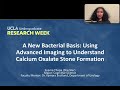
While calcium oxalate (CaOx) stones comprise the vast majority of kidney stone cases, their internal structures and mechanisms are still not completely understood. The most prominent theory involves urinary supersaturation of calcium and oxalate minerals. The typical modalities for viewing CaOx stones include computerized tomography, which allows stones to be identified, but does not provide insight into their architecture. This project aims to explore the three-dimensional properties of stones using novel technologies to understand the patterns behind their formation. Dynamic 3D reconstructions, Raman mapping, and density line scanning identified areas of mineral layering. They revealed that the outer layers presented a density resembling pure calcium oxalate. Going inwards, the density alternated between thresholds of crystal and bacterial components, but never back to that of pure stone. In addition, compositional maps revealed distinct clusters of environments. These environments ranged from pure bacteria to pure crystalline. The most common regions were mixed-phase. This provides evidence for stone formation involving biofilm and bacterial interactions rather than the traditionally simple mineral precipitation. These findings have many implications for future research endeavors. The formation process mirrors stromatolite fossils, prompting further study in the parallels between geology and biology. They can also inform the invention of new targeted therapies or drug delivery systems involving biofilm disruption.
Presentation 5
JOHNATHAN TRAN, Kashmira Khaire, Aren Kasparian, Michelle Yeung, Kelly Tang, Joey Lin, Valerie Jun, Malachi Arp, Maitreyi Bharath, Jau-Nian Chen
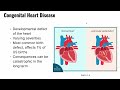
About one in every 110 babies born in the United States suffers from congenital heart disease (CHD), an umbrella term for developmental defects in the heart. Although CHD can present in many ways, a common feature is abnormal cardiac muscle development. Because the heart requires a constant supply of ATP from mitochondria to function, mitochondrial dysfunction is a compelling target for understanding the molecular mechanisms that contribute to CHD. One promising target is Voltage-Dependent Anion Channel 2 (VDAC2), a protein on the outer mitochondrial membrane involved in calcium homeostasis, ATP transport, and metabolite exchange between the cytosol and intermembrane space. However, whether VDAC2 is essential for healthy cardiac muscle development in zebrafish remains unclear. To address this question, VDAC2 knockout zebrafish hearts were analyzed at 5 days post-fertilization using confocal microscopy and compared with wild-type controls. Histological analysis was also performed on hearts from 1-year-old knockout and wild-type fish to evaluate longer-term structural effects of VDAC2 loss. The knockout fish showed reduced cardiac trabeculation and fewer cardiomyocytes at 5 days post-fertilization compared with controls. These findings suggest that VDAC2 plays a crucial role in normal cardiac development and may be a promising target for future research into mitochondrial dysfunction and CHD.
Presentation 6
AREK YACOUBIAN, JOSEPH CASTILLO, Xinshu Xiao, Sari Terrazas, Jae Bahn Hoon, Thuy Linh Nguyen
ADAR1 is a protein expressed in cells that facilitates the conversion of Adenosine bases in RNA to Inosine, which is read as Guanine in post-edit RNA sequences. Pre-edit RNA sequences may have sequences that can fold onto themselves, pairing the bases causing large regions of double stranded RNA. This is a common characteristic among viral RNAs, which cause innate inflammatory responses. Cells utilize ADAR1 to edit Adenosine to Inosine in endogenous RNA in order to prevent complete double strandedness. This prevents the protein MDA5 from classifying the dsRNA as dsRNA, and classifies it as single stranded, preventing innate inflammatory immune response.
ADAR1 has 2 isoforms of this protein: p110 and p150. p110 operates within the nucleus, whereas p150 operates in the cytoplasm. This project investigates how these 2 isoforms independently contribute to innate inflammatory response within cells.
To identify the specific RNAs that must be edited to prevent MDA5 activation, I will generate ADAR1 knockout cell lines in HEK293T and H9 human embryonic stem cells. We will utilize prime editing to introduce a premature stop codon into exon 1 of the ADAR1 gene. The prime editing will be validated via genomic DNA (gDNA) sequencing and single-clone selection. The knockout will be confirmed by quantitative PCR (qPCR) and western blot (WB). My specific contributions to this project include PCR, cell culture, molecular cloning, cell transfection, qPCR, and WB analysis.