Biology: Prerecorded presentation - Panel 3
Location: Online - Prerecorded
JCCC funded Scholar
Presentation 1
Amaya Ellis (Undergraduate Researcher), Valerie Tornini (Principal Investigator)
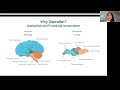
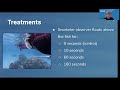
Neural development is a complex process, where early environmental exposures can have lasting effects on an individual's lifelong neurological state. This study aims to understand how heat and/or noise stress shapes early neural circuit formation and how these may be differentially affected in genetic models of autism, using zebrafish as a biologically relevant model of vertebrate neurodevelopment. Wild type (WT) or mutants for autism-linked chromatin regulators kmt2a and ash1l larvae were exposed to control, heat stress, and/or aberrant noise during early critical periods of neurodevelopment. Preliminary results suggest that WT larvae exposed to early heat stress had opposite behavioral phenotypes as those exposed to aberrant noise conditions, and that kmt2a and ash1l mutants showed differential susceptibilities to early noise relative to WT. Since behavior is a physical manifestation of its underlying brain activity, our results suggest that early exposure to environmental stressors altered neural circuit formation. By performing behavioral profiling, identifying the circuits or pathways that are affected, assessing changes to brain morphology and activity, and analyzing altered gene networks, our ongoing and future work will determine the mechanistic bases for these phenotypes.
Presentation 2
MEGAN ASHABRANNER, SYDNI BEDNAREK, TRAVIS CRANE, CORDELIA KUIPER RAUCH, CATHERINE TRAN, Taylor N. Bastian, and Daniel T. Blumstein
The growing popularity of ecotourism is increasing human-wildlife interactions in coral reef ecosystems. Although often considered benign, interactions with humans can alter essential antipredator responses. Reef fish exposed to humans often modify their antipredator behavior. Prior work has shown that fish respond differently in marine protected vs. non-protected areas (MPAs), but it remains unclear whether these differences stem from protection status or differences in human presence. We studied dusky damselfish (Stegastes nigrican) antipredator behavior across three sites separated by MPA status and human activity. We also investigated how different durations of short-term exposure to snorkeler presence influenced risk assessment across these sites. We quantified antipredator responses using: 1) the proportion of time fish were displaced from their territory during different durations of snorkeler exposure, 2) post-treatment flight initiation distance (FID), and 3) latency to return after fleeing. Human presence explained more variation than MPA status in all metrics. Fish from reefs with high human presence remained in their territories longer during treatments, had shorter FIDs, and returned faster after fleeing. Our findings suggest that snorkeling induces immediate behavioral changes and alters risk assessment following exposure in damselfish, potentially compromising fitness-promoting behaviors and predation avoidance.
Presentation 3
AARUSH DE and Igor F. Tsigelny, Valentina L. Kouznetsova
CircRNA Biomarker-Based Prediction of Therapeutic Resistance in Cancer: A Machine Learning Approach
Therapeutic resistance remains a major challenge in oncology, often limiting the long-term efficacy of targeted cancer treatments and responsible for up to 90% of all cancer-related fatalities. Emerging evidence suggests that circular RNAs (circRNAs) play a regulatory role in gene expression networks involved in drug response, yet their potential as predictive biomarkers for therapy resistance remains underexplored. In this study, we develop a machine learning framework to evaluate whether circRNA expression profiles can predict cancer therapy response and resistance. Publicly available transcriptomic datasets containing circRNA expression and treatment outcome data were processed and integrated into predictive models. Multiple supervised learning algorithms were trained and compared to classify therapy-sensitive versus therapy-resistant samples based on circRNA signatures. Feature importance analysis was performed to identify key circRNAs associated with resistance phenotypes. Our results demonstrate that circRNA-based models can achieve meaningful predictive performance, suggesting that circRNAs may serve as informative biomarkers for therapy response stratification. These biomarkers may also serve as targets for future drug discovery and therapeutics. This approach highlights the potential of integrating non-coding RNA profiles with machine learning to improve prediction of treatment outcomes and contribute to more personalized oncology strategies.
Presentation 4
MICHAEL GRIFFIN, ABIGAIL HEALING, CORDELIA KUIPER RAUCH, HIEN NGUYEN, ALEXYS LONG, PEGGY FONG
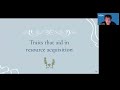
Coral reefs worldwide are facing disturbances from anthropogenic factors, including climate change. As a result, reef systems are shifting from coral to macroalgal-dominated communities. In Mo’orea, French Polynesia, the brown macroalga Turbinaria ornata is a novel foundation species that proliferates across the reefs. We explored ontogenetic shifts in the ecological strategies employed by T. ornata by measuring seven functional traits. We found that in early life, T. ornata prioritizes resource-acquisition traits, but as it grows, resource-acquisition traits decline and traits that resist herbivory and physical disturbance increase. We posit that the community context of T. ornata individuals changes with size as smaller thalli are protected from herbivory by stands of larger, canopy-forming individuals. As thalli grow taller, they become increasingly available to herbivory and physical disturbances, requiring allocation of energy to resist these forces. Thus, the capacity for ontogenetic shifts in ecological strategies Turbinaria ornata provides one possible explanation for its rapid spread across South Pacific reefs.
Presentation 5
SATVIK SARIPALLI, Xuegang Yuan, Gay Crooks
Human and murine T-cells develop from progenitors in bone marrow. The migration of CD34+ progenitors to the thymus initiates T-cell differentiation. In mouse models, the effects of transcriptional factors on T-cell development have been studied. For instance, BCL11B (B-cell lymphoma/leukemia 11B) is critical for T-lineage commitment and has been widely studied in murine T cell development. Moreover, a recent murine study suggests potential allelic differences of BCL11B in regulating T-cell fate; one BCL11B allele may be silenced and activated days later to ensure differentiation (Pease et al., 2021). However, there are species dependent differences in T-cell development (Parekh et al., 2012) and there are few studies on the role of BCL11B in human T-development. Thus, details on BCL11b allele-specific regulation of human T cell development, especially early commitment is unknown.
Our lab has developed a novel in-vitro system called artificial thymic organoid (ATO), which faithfully mirrors the developmental stages found in endogenous human thymi and can facilitate human induced pluripotent stem cells (iPSCs) differentiation into conventional T-cells. To address how BCL11B acts during T-cell development from human iPSC-ATOs, a bi-allelic BCL11B dual-fluorescent reporter iPSC line has been created using CRISPR-Cas9. With the bi-allelic iPSC reporter line and monitoring of thymopoiesis in the ATO system, this study will provide insights on how each allele of BCL11B regulates T-cell fate in iPSC-based T-cell development.
Presentation 6
Zoe Saxer, Laurel Diaz, Diego Lera-Lozano, Vivian Li, Anthony Bellantuono, Mónica Medina
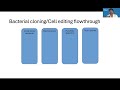
Abalone is a critically endangered marine invertebrate that is key to the health and longevity of California’s biodiverse kelp forest ecosystems and central to indigenous cultural traditions. Abalone larvae rely on crustose coralline algae (CCA) as a settlement substrate to initiate their lifecycle. CCA is a common calcifying algae that hosts a biofilm containing a community of microorganisms responsible for inducing the settlement and metamorphosis of marine invertebrates. Supported by the 2026 La Kretz Center and Stunt Ranch Reserve Research Awards, this project focuses on understanding the ecological and microbial factors responsible for inducing larval abalone settlement in order to inform conservation efforts and boost rates of initial settlement and survivorship to adulthood. This project utilizes settlement assays and bacterial isolations to determine which genetically unique CCA species and associated biofilm bacteria are responsible for most productively inducing red abalone (Haliotis rufescens) larval settlement. This research, performed in Dr. Mónica Medina’s lab, will contribute to broadening scientific knowledge of the abalone life cycle and the microbial factors at play in marine invertebrate life cycles, which is increasingly relevant in the face of warming, acidifying and polluted oceans.