Climate, Environment, and Sustainability: Prerecorded presentation - Panel 3
Location: Online - Prerecorded
Presentation 1
ANDERSON, GALLENA. Zhang, Yuhui. Ibrahim-Watkins, Zanobia. Jay, Jennifer.
According to the World Health Organization, antimicrobial resistance (AMR) is one of the top global public health threats. By community demand, samples in Tulare County, CA were collected via dust, water, and bioaerosol sampling to assess impacts of concentrated animal feeding operations on environmental antimicrobial resistance. These sites are contrasted with unimpacted clean sites. AMR is assessed by constructing antibiotic resistance ratios through plate counting, multi-drug resistance testing via Kirby-Bauer Disk Diffusion, and modified E-coli specific IDEXX. Conventional PCR is added to this process to identify isolates and analyze the relationship of microbe identity to resistance. Quantitative PCR is used to compare levels of ARGs (antibiotic resistance genes) across Tulare County. This process was used to optimize teaching methodology for DNA based environmental resistance testing techniques.
Presentation 2
MAYA CHURCH, Elena Hernandez, and Megan Mullin
While city-scale initiatives to mitigate and adapt to climate change are helpful in reducing greenhouse gas emissions, the field of neighborhood-scale initiatives for climate action is extremely rare. The Transformative Climate Community (TCC) program, funded by the California Strategic Growth Council (CSGC), is one initiative that fills the gap in the lack of climate action from cities and neighborhoods. The TCC program includes neighborhood-based initiatives that span multiple sectors such as transportation, greenification, energy, and heat. Community members are invited to participate throughout the planning and implementation of such programs. We, at the Luskin Center for Innovation, conduct qualitative research through the use of interview data to evaluate the efficacy and impact of the projects in the respective neighborhoods of participants. Results are presented to the CSGC in order to determine if the programs successfully empowered historically disinvested communities. Ultimately, the facilitation of the survey data helps determine how to increase the efficacy of funding and future TCC programs.
Presentation 3
ELISE DUNN, KARA MALONE, ANNIE BRYANT, DANIEL WANG, JACK BOYD, KLARA PARANG, MEGAN THORNTON, Antonio Marino, Chatura De Silva
Food waste is one of the key sustainability issues in large-scale healthcare environments where dining services must meet multiple demands for patient nutritional needs, dietary limitations, sanitation requirements, and operational effectiveness. Our project examines leftover food waste at the UCLA Ronald Reagan Medical Center—from patients and the cafeteria—with the aim of gaining more insight into their dining service practices and analyzing if their existing practices are efficient measures in working towards their goal. The purpose of our study is to comprehend the sustainability of food waste in hospitals and how it can be measured and reduced without compromising the quality of services and operations—a critical sustainability issue in the operations of healthcare services and facilities. As of now, we have established connections with staff, taken facility tours, and obtained food waste data. In Spring Quarter, we will be conducting food waste audits by weighing and observing leftover patient and cafeteria food, along with analyzing food waste logs and menu data to identify patterns in waste trends and operational inefficiencies. In addition, we will be interviewing the UCLA Health Food & Nutrition team to gain further context on current system practices. The final product of this project will be a report based on data findings, including waste trends, sustainability, and optimization strategies, which can be shared via the UCLA Health website to promote transparency and progress toward sustainability.
Presentation 4
TIANA HOANG, Bharat Venkat
Heat represents a largely unacknowledged source of danger within the American workplace, and these impacts continue to be exacerbated as global temperatures rise. As such, Federal OSHA’s proposed standard “Heat Injury and Illness Prevention in Outdoor and Indoor Settings” presents a significant landmark in not only acknowledging heat as a source of consequential harm in the workplace, but also putting forth regulations in order to mitigate its effects. However, the proposal is also being met with strong opposition. This project addresses the question of how the current form of the federal proposal has been informed by historical debates surrounding occupational health, and how these debates continue to drive current discourse surrounding workplace heat safety.
As part of the rulemaking process, Federal OSHA held informal hearings over the course of three weeks from June to July 2025, giving various stakeholders the opportunity to present their views regarding the standard. Preliminarily, quantitative figures were compiled revealing the types of speakers and the kinds of arguments presented at the hearings. Further, a discourse analysis was conducted examining the testimonies and patterns for and against the proposed standard. Ultimately, these insights are critical to understanding the current status of a decades-long push towards nationwide occupational heat safety, especially in the context of present administrative attitudes towards climate safety and regulation overall.
Presentation 5
BELLA GOLDWASSER, ALLIE QUAN, KRISTINE VO, Eric Fournier, Jackson Guze, Maya Ofek, Rachel Steinberg, Stephanie Pincetl
In the United States, residential and commercial buildings account for almost a third of total greenhouse gas emissions, highlighting a significant gap between the potential for all-electric building technologies and their implementation. Whereas prior studies highlight the emissions reduction benefits of utilizing these technologies, practical barriers that affect their adoption are often overlooked, particularly in non-residential buildings. This study addresses these knowledge gaps in order to support the California Air Resources Board in developing a refined building classification framework that captures these real-world constraints on electrification. Analysis will be conducted in three phases: a review of existing building and electrification literature, targeted recruitment of industry practitioners (e.g. electricians, building inspectors, and engineers), and focus groups and pre-session surveys. Focus group transcripts will be categorized via a qualitative coding approach, with anticipated challenges including utility capacity limitations, physical space constraints, and high upfront costs. The insight gathered from experts will aid ongoing decarbonization efforts in California and further develop outreach and qualitative data collection methods in a bottom-up approach.
Presentation 6
ALYSON WEST FALL, MAX MALINOFSKY, MARIUS VON ESSEN
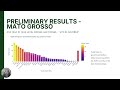
Transformation of the biosphere in tropical forests, such as through deforestation, may contribute to climate warming, increases in infectious disease spread, and decreases in biodiversity. Scholarly evaluations of governance methods addressing deforestation often argue that actors of all levels and institutions must be involved in effective and sustainable solutions. Specifically, second-tier governments have broad authority to reduce deforestation in many tropical regions. However, there is a lack of focus on the effectiveness in implementation of these policies and initiatives. Even with well structured policies, the results don't always align with initial goals. By better understanding this ‘implementation gap’, governance approaches can be optimized to achieve the best results. To this end, we are developing a database showing movement in and out of key state government bodies within the states of Mato Grosso in Brazil. Utilizing publicly available daily gazettes and Diários Oficiais, which record hirings, terminations, transfers, retirement, and other movement of employees, we are developing an automated extraction which will create a usable database of civil servant movement. This will allow for better understanding of the capacity that environmental agencies such as Secretaria de Estado de Meio Ambiente (SEMA) have to adequately govern subtropical forests.
Presentation 7
DAVID WISE, Christopher Kelty, Katherine Hernandez
This project examines the fiscal efficiency and conservation effectiveness of the Wallis Annenberg Wildlife Crossing, the largest wildlife crossing in the world and the first of its kind in California. Although initially framed as a predominantly privately funded project, the crossing has exceeded its original budget by nearly 25%, with a growing share of costs covered by public funds. This study analyzes the project’s funding structure, including the balance between private and public investment, as well as the transparency of how these sources are presented. Drawing on financial reports, news coverage, and social media, the project evaluates whether the crossing represents an effective use of public resources. This project further compares the Wallis Annenberg Wildlife Crossing to alternative wildlife conservation strategies to assess relative cost-effectiveness. Ultimately, this analysis considers whether the environmental and societal benefits of the project justify its financial cost, accounting for both direct economic outcomes and broader externalities.