Climate, Environment, and Sustainability: Prerecorded presentation - Panel 5
Location: Online - Prerecorded
Presentation 1
KEVIN D. BRISEÑO, Edidiong Mendie, Regan Patterson
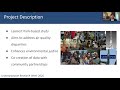
This study examines how community-based air quality monitoring and community engagement can strengthen environmental health literacy and support community advocacy in Leimert Park, a historically Black neighborhood shaped by redlining and environmental injustices. Using a community-based participatory research (CBPR) approach, this project develops a partnership between local community organization, Ezrach, and academic researchers at UCLA to co-produce knowledge on air quality and exposure. CBPR methods include community engagement workshops, sessions on green workforce development and community air pollution exposure, and active resident participation in air quality monitoring. This study assesses how community-based monitoring contributes to mitigation strategies, environmental health literacy, and eventual policy developments.
A low-cost air quality sensor from Clarity Inc. will provide Leimert Park residents
with local data on exposure burdens near the monitoring site. These data are used in several different applications, including a real-time interactive dashboard to enhance accessibility. By doing so, this project will improve community members’ understanding of local air quality, strengthen capacity for data-driven advocacy, and support informed health choices. By expanding access to real-time air quality data, this study empowers residents and demonstrates how integrating between CBPR with low-cost monitoring can advance environmental justice.
Presentation 2
LAUREN KIM, Janine Baijnath-Rodino
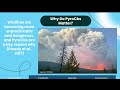
Pyrocumulonimbus (pyroCb) storms are among the most dangerous and unpredictable fire weather phenomena, capable of producing lightning and extreme fire behavior that severely endangers communities worldwide. Existing atmospheric stability tools were designed for conventional thunderstorms and do not account for the heat and moisture wildfires contribute to the atmosphere, limiting their usefulness for fire weather forecasting. This project develops a Python-based forecasting tool that combines two complementary fire-atmosphere metrics into a unified time series output derived from Bufkit, a meteorological visualization tool used to forecast atmospheric sounding profiles from weather models. The first model calculates the Pyrocumulonimbus Firepower Threshold, representing the minimum fire energy required to initiate a pyroCb under given atmospheric conditions. The second performs a Blow-Up Analysis, identifying the temperature increment needed to cause a sudden jump in the Equilibrium Level height and its magnitude. By combining firepower threshold, blow-up temperature, and blow-up magnitude, this framework improves identification of conditions favorable for pyroCb development and sudden fire intensification, providing predictive insight beyond traditional stability indices. Initial results using forecast soundings from western Montana during the 2017 Rice Ridge Fire show identifiable fire danger windows consistent with the observed fire behavior, demonstrating the tool’s potential for operational fire weather forecasting.
Presentation 3
MARIO MORENO, TIFFANY LEIU, OLIVIA TEICH, MACK LYONS, JUSTINE LIM, GRAYSON SCIACQUA, BARIA ALASWAD, Christophe LaBelle
Previous research has established the importance of communicating effectively to change behavior regarding sustainability. In particular, a lack of knowledge can prevent individuals from engaging in further sustainable behavior. This project builds on existing work by striving to understand how knowledgeable UCLA students are and how UCLA Sustainability can leverage mass communication to increase that knowledge. This project will identify topics that UCLA students do not understand and devise specific approaches to increase awareness of these topics, working alongside UCLA Sustainability to optimize existing communication channels. Our initial interviews with sustainability professionals, both at other campuses and at UCLA, have already provided guidance on how to measure sustainability literacy, how to increase the accessibility of our project, and how to craft communication materials that will resonate with the student body. Spring Quarter will involve applying our interview findings to execute our focus groups and survey. Our focus groups will allow us to gather qualitative data and feedback while the survey will yield quantitative data about student knowledge. Ultimately, findings will help inform UCLA’s next Sustainability Tracking, Assessment & Rating System (STARS) report at the end of this year and contribute to a more sustainable campus by increasing sustainability knowledge on campus through mass communications.
Presentation 4
MAX MURDOUGH, PARMIDA HEMATI, SYDNEY BEBLA, LEO REYNOSO, ADRIANNA RAJEWSKA, DAVID LUCIANO
Plastic waste, especially polyethylene terephthalate (PET), has accumulated throughout ecosystems worldwide, causing problems with chemical leeching and consumption of microplastics. One common approach to mitigating this issue involves breaking PET into its constituent chemical components, which can then be further degraded or metabolized by biological organisms. However, in laboratory settings, chemical degradation pathways can be expensive, time-consuming, and impractical for widespread use. In contrast, biological systems have already evolved efficient methods of processing complex polymers, which can be implemented on a larger scale than lab degradation. This study aims to investigate whether Pleurotus ostreatus (oyster mushrooms) can contribute to the breakdown of PET plastic through the activity of a lignocellulolytic enzyme, laccase. PET fragments will be combined with a growth mixture containing a 2:1 ratio of substrate to mushroom spawn, allowing the mycelium to colonize and interact directly with the plastic. By observing the physical degradation of the pieces, this project will explore how well degradation occurs in the mycelial network of oyster mushrooms. In addition to advancing our understanding of fungal exoenzyme degradation and fungal pathways in general, this work adds to the growing number of solutions to combating climate change and plastic pollution.
Presentation 5
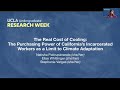
Nicole Floum, NATISHA PATIRUPANANDA, ELISE WHITLINGER, STEPHANIE VARGAS, Carmen Lo, Diego Flores, Elena Gareau, Aida Fraser, Sara Ghanbari, Symphony Jackson, Yina Marin, Bharat Jayram Venkat
Extreme heat poses a growing threat to public health in the United States. Yet exposure and vulnerability to heat are unevenly distributed. Incarcerated individuals are at particular risk of experiencing heat-related illness, injury, and even death. Because most prisons lack adequate air conditioning, purchasing a range of “cooling items” from prison commissaries represents one of the primary—albeit inadequate—climate adaptation strategies available to those incarcerated for protecting themselves against heat. Drawing on data from thirty-one California Department of Corrections and Rehabilitation prisons, we analyze the purchasing power of incarcerated workers in relation to hours of labor, prison wage structures, and prices of limited cooling items available through prison commissaries. We specifically focus on purchasing labor hours, or the number of hours of work required to purchase a given cooling item. Because incarcerated workers earn wages far below the minimum wage outside of prisons, the real cost (in terms of number of hours worked) of such items in prison tend to be far higher than similar items purchased outside prison. We argue that the limited means of climate adaptation available is limited even further by the particular parameters of the economic system that operates within carceral settings. Our recommendation is not simply that commissary prices should be reduced, but that access to such crucial yet inadequate forms of climate adaptation should not be contingent on meager wages earned through forced labor.
Presentation 6
AARUSH DE, NAVYA RAWAL, Richa Tiwari, Diya Rajaram
A Novel PstS-Enabled 3-Tiered Filtration Device for Sustainable Wastewater Phosphorus Capture and Reuse
Phosphorus pollution from agricultural runoff and wastewater discharge has led to harmful algal blooms, devastating aquatic ecosystems and threatening water quality. Current removal methods, such as chemical precipitation and traditional filtration, are expensive, generate secondary pollutants, and fail to effectively recycle phosphorus. To address this, we developed a novel PstS protein enabled 3-Tiered bio-filtration device for wastewater. This is a sustainable and cost-effective alternative to phosphorus capture and reuse. The first layer incorporates immobilized phosphate-binding proteins (PstS), expressed in E. coli and immobilized on Nickel-NTA resin affinity beads, to selectively capture phosphorus from wastewater. The second layer utilizes biochar, a porous carbon-based material with a high phosphorus adsorption capacity. The third layer consists of duckweed (Lemna minor), a fast-growing aquatic plant capable of naturally absorbing phosphorus while serving as a biomass resource. We assembled these filter layers in gravity columns and evaluated their efficiency in reducing phosphorus levels. By integrating synthetic biology, protein engineering, and biofiltration, our device creates a scalable, environmentally friendly solution to mitigate nutrient pollution while enabling phosphorus recycling for agricultural use.
Presentation 7
NATALEE RICE, Kirsten Schwarz
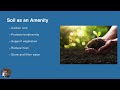
Soils are an essential resource for the health of people and for the resiliency of cities, acting as carbon sinks, protecting biodiversity, supporting vegetation, and reducing heat. Contamination of soils, from legacy sources, such as paint and leaded-fuel, industry, and wildfires, can hinder these functions. The LA Urban Soil Social Impact Collaborative is a community-university partnership that, over the past two years, has co-developed and piloted a theory of change for system-level soil solutions in Los Angeles that includes soil testing and education, clean soil resources via soil banking and composting hubs, community-led bioremediation, and policy analysis. At two soil testing pop-up events, held in Pasadena and Watts, we asked community members to vote on the priorities outlined by the Collaborative. In Pasadena, a fire-impacted community, participants identified soil testing and education as a top priority, while in Watts, a community impacted by legacy contamination, bioremediation and policy were selected as priorities. Although the sample size is limited, results indicate that place-based strategies may be important to addressing soil contamination and advancing equitable access to healthy soils.
Presentation 8
ARUSHI PARIKH, ZOE SAXER, TIFFANY LIEU, Annie Ding, El Yang, Orisha Lamon, Isabel Colburn, Rebecca Shipe
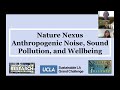
Despite growing evidence that chronic noise pollution negatively affects both human health and ecological systems, there are many gaps that remain in understanding how urban soundscapes are experienced at the community level. Most existing research focuses on ecological impacts or laboratory-based human health effects, but does not account for lived experiences or public health outcomes. In collaboration with Nature Nexus, a Los Angeles-based organization striving to provide equitable access to community-nature relationships, this project addresses the gap of community-centered, place-based research by centering community members impacted by noise pollution and anthropogenic sound in the Baldwin Hills. Our interdisciplinary undergraduate research team developed a thorough literature review on urban soundscapes and anthropogenic noise and presented it to high-school students involved in the Nature Nexus Greenhouse Program, an environmental science and youth leadership development classroom through Zoom lectures and in-person workshops in the Baldwin Hills Scenic Overlook State Park. Further developments of this project will include the creation of interactive zines with artistic renditions of the urban soundscapes of Baldwin Hills and tabling events at the West LA Climate Arts Festival. Through community engagement, this project aims to bring together science and lived experiences to inform noise mitigation and improve health-centered urban park management strategies around the Baldwin Hills community.