Chemistry and Biochemistry: Prerecorded presentation - Panel 1
Location: Online - Prerecorded
Presentation 1
CHHABRIA, TANYA, Kappel, Kalli
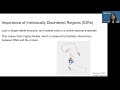
Human RNA-binding proteins (RBPs) are central to processes for life. Intrinsically disordered regions (IDRs) of RBPs play important roles in modulating RNA binding affinity and specificity, yet the relationship between IDR variation and disease remains unstudied. Previous studies have identified common RBPs, mapped RNA-binding sites, and demonstrated associations between RBPs and disease-causing RNA viruses, but a systematic analysis of IDR-specific vulnerabilities is lacking.
The goal of this project is to understand how mutations in IDRs of RBPs contribute to disease mechanisms and to utilize this to create a predictive model of this relationship. In the short term, I will integrate mutation and disease data from databases such as ClinVar and UniProt with functional annotations of RBPs to identify patterns of pathogenicity within IDRs. Specific objectives include: identifying variants in RBP IDRs, evaluating whether mutations in IDRs are enriched in disease-associated cases, and testing whether structural and localization features influence pathogenicity.
Methodologically, I will combine computational annotation of RBPs with data visualization enrichment analyses. This work will lay the foundation for a broader framework to identify biophysical vulnerabilities of RBPs and to define predictive signatures of disease-associated mutations, ultimately guiding future computational and experimental investigations, and the development of an initial machine learning model to predict disease associations of RBP variants.
Presentation 3
CHEYENNE MARIE FERNANDES, Devon J. Stuart, Ellen M. Sletten
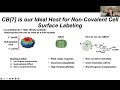
Sugars are an essential part of biological function, and exploring their roles and adaptability is crucial for understanding diseases, particularly neurodegenerative diseases and cancer. The chemical reporter strategy is a 2-step bioorthogonal tool to first incorporate a metabolite with a non-native functional group that can utilize the cell’s naturally occurring pathways, and secondly, detect the non-native functional group via a bioorthogonal reaction. These covalent reactions can be slow and exhibit off-target labeling, so we propose to use noncovalent chemistry instead due to its faster binding, more stable binding partners, and effectiveness at low concentrations. Sialic acids are our glycan of choice because they hold a critical role in disease and can reliably label the cell surface due to the promiscuity of the enzymes involved in their biosynthesis. We modify the C9 position of the sialic acid, using preestablished mechanisms and novel chemistry, to bind with high affinity to synthetic hosts. Curcurbit[7]uril or CB[7], is our host of choice as it's well-characterized, water-soluble, and has strong binding affinities with guests. High-affinity guests of CB[7], such as trimethylsilyl methyl amine, can be appended onto sialic acid to make a complementary pair, which shows higher affinities that rival the traditional biotin-avidin complex. With this work, we can identify and visualize these incorporated metabolites, which can be used to better understand disease and expand the functionality of fluorescent imaging.
Presentation 4
HOLLY HADSALL, Chen Cheng, Siavash Kurdistani
Histones are essential proteins involved in DNA packaging. An octamer, consisting of two copies each of histones H2A, H2B, H3, and H4, forms a structure around which DNA coils, creating a nucleosome. While histones are primarily known for regulating transcription, recent research (Attar et al. Science, 2020) has revealed that the H3-H4 tetramer also functions as a copper reductase enzyme.
My research explores the impact of a T45I mutation in H3, which has been linked to neurodevelopmental delays. Using yeast as a model, I found that under standard conditions, the T45I and wild-type (WT) strains exhibit similar growth. However, a distinct phenotype emerges under copper stress. When the copper transporter gene (CTR1) is deleted, the T45I strain grows to three times the density of the WT strain in environments with 0.1 and 0.5 μM copper.
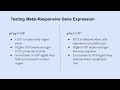
To investigate whether the T45I strain had altered intracellular metal levels compared to WT, I utilized two GFP reporter plasmids driven by the CUP1 and FET3 promoters, which respond to copper and iron, respectively. Notable differences in fluorescence between the T45I and WT strains were observed at all tested concentrations of both metals. These findings suggest that the T45I mutation may enhance metal localization within the cell. This research highlights a potential connection between neurodevelopmental pathology and metal homeostasis, proposing that such disorders may arise from changes to cellular metal localization.
Presentation 5
ISABEL ROSALES, Ramzi Massad, Paula L. Diaconescu
The extracellular matrix (ECM) is a dynamic network that provides structural support and regulates essential cellular processes. Its ability to control cell behavior through mechanotransduction motivates the development of biomimetic materials that replicate
its mechanical properties in vitro. Hydrogels are three-dimensional polymer networks that have emerged as promising ECM mimics. Time-dependent ECM properties, such as viscoelasticity, regulate cell- and tissue-level processes. While viscoelastic hydrogels
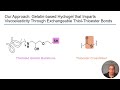
can be engineered, biologically inert systems often require added ligands for cell interactions. In contrast, protein-based hydrogels offer inherent bioactivity. Although gelatin hydrogels are popular, few incorporate viscoelasticity via dynamic covalent chemistries. Here, we characterize a highly tunable, photocrosslinked gelatin hydrogel that imparts viscoelasticity through exchangeable thiol-thioester bonds, enabling it to act as a tunable cell-instructive matrix. Thiolated gelatin precursors (GelSH) permit controlled modulation of viscoelasticity through varying degrees of substitution. The use of a diallyl crosslinker with an embedded thioester allows for control over the rate of stress relaxation via the change in thiol acidity. These hydrogels support C2C12 myoblast growth, with enhanced spreading, elongation, and differentiation observed on medium and fast-relaxing hydrogels with excess thiols.