Chemistry and Biochemistry: Prerecorded presentation - Panel 3
Location: Online - Prerecorded
Presentation 1
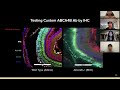
ELISE CHIU, ALVIN DUNN, VIVIAN LE, BRYAN LEE
The ATP-binding cassette transporter ABCA4 plays an essential role in the retinoid cycle by transporting retinoid byproducts from photoreceptor cell outer segments (OS). Dysfunction of the ABCA4 protein has been implicated in retinal degeneration, such as in recessive Stargardt macular degeneration. Orthologs of the human gene Abca4 are Abca4a and Abca4b found in zebrafish (Danio rerio), which are excellent animal models to study retinal biology due to their cone-dense retina. Previous work has shown that blue cones are particularly sensitive to degeneration, so we applied a newly purified blue-cone opsin antibody to zebrafish eye sections. Through immunohistochemistry, we observed a significant degeneration of blue cones in Abca4b-/- (BKO) zebrafish in particular, but not in the Abca4a-/- (AKO) zebrafish, using confocal microscopy. Likewise, using phospholipid extraction of whole-eye zebrafish tissue and subsequent high-performance liquid chromatography (HPLC) of these homogenates, we observed a high presence of bisretinoids in the AKO and double-mutant Abca4a-/- Abca4b-/- (DKO) zebrafish eyes, but not in the AKO zebrafish eyes. Thus, we isolated the function of the Abca4b ohnolog as significant in the prevention of cone degeneration and bisretinoid accumulation, both of which play a role in the pathogenesis of Stargardt disease via buildup of bisretinoids (lipofuscin) in the eye. We have ultimately generated a zebrafish model of ABCA4 human retinal degeneration for future prevention and treatment of Stargardt disease.
Presentation 2
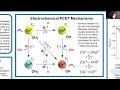
TYLER HSU, Jiangtian Sun, Yifan Du, Jingwen Sun, Chong Liu, Matthew Nava
Proton-coupled electron transfer (PCET) underpins critical energy conversion processes in biological systems and nonbiological fuel-forming reactions. Elucidating subtle mechanistic and kinetic dependencies in PCET is challenging because of the large number of experimental conditions that must be prepared, tested, and evaluated, necessitating a tunable synthetic model that can be probed using high-throughput analytical methods. We have developed a platform for investigating PCET dynamics that leverages automated electroanalysis to characterize a family of osmium aquo complexes bearing functionalizable pyridyl ligands. Our automated system enhances research throughput more than 10-fold over manual experimentation, opening up new lines of inquiry with “big data” that were previously not feasible. Modulating the electron-withdrawing and electron-donating strength of para-substituents on the pyridine ligand shifts pKa1 and pKa2 while retaining constant pKa separation. Functionalizing ligands with a cationic trimethyl ammonium group increases observed rate constants compared to neutral ligands, whereas an anionic sulfonate group decreases rates. Notably, addition of phosphate buffer as a proton donor/acceptor enhances kinetic rates by promoting the otherwise unfavorable concerted PCET mechanism. Further investigation of varying buffer compositions elicits distinct relationships between buffer concentration and observed rates, suggesting nuanced intermolecular interactions between complexes and electrolyte ions.
Presentation 3
LANCH, SANDY
Establishing an Auxin-Inducible Degradation Platform to Study TCTEX1D Proteins Using CRISPR-Mediated Endogenous Tagging
Conditional protein depletion systems enable precise temporal control of protein abundance, which is essential to dissect dynamic cellular processes such as mitosis and ciliary function. The auxin-inducible degron 2 (AID2) system permits rapid, reversible degradation of tagged proteins via expression of a mutant Oryza sativa TIR1 (OsTIR1(F74G)) and use of a modified auxin ligand. Here, we describe progress toward establishing an AID2 platform in human cells to study the TCTEX1D protein family through CRISPR/Cas9-mediated endogenous tagging with a minimal AID (mAID) tag and fluorescent reporters. HDR donor constructs were synthesized and successfully cloned into Gateway pDONR vectors. Efforts to generate sgRNA-expressing CRISPR plasmids encountered challenges during cloning with type IIS restriction/ligation strategies. These results underscore a key technical bottleneck and highlight strategies for further optimization. Completion of this platform will enable controlled degradation of TCTEX1D proteins and advance the understanding of their functions.
Presentation 4
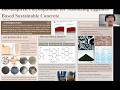
ZEKUN LANG, Min Kyu Lee, Richard B. Kaner
The construction industry contributes nearly 8% of global CO₂ emissions, largely due to the energy-intensive production of Portland cement. Reducing cement consumption through sustainable alternatives is therefore a critical research goal. Eggshell powder (ESP), a calcium carbonate (CaCO₃)-rich agricultural waste, has been widely studied as a partial cement replacement because of its chemical similarity to limestone and its ability to promote early hydration. However, excessive ESP content often increases porosity and weakens mechanical performance, limiting its structural application. Recent studies have explored bio-inspired polymers and organic modifiers to improve interfacial bonding and hydration control in cementitious systems, yet many adhesive bio-inspired materials remain underexplored in CaCO₃-rich sustainable concrete. Among these, polydopamine (PDA), formed through the oxidative self-polymerization of dopamine, possesses strong adhesion to inorganic surfaces and abundant catechol and amine functional groups capable of interacting with calcium ions. Although PDA has been studied in cement hydration and biomineralization contexts, its feasibility as a stabilizing and reinforcing agent in ESP-modified concrete has not been systematically examined. This review synthesizes literature on the environmental burden of cement production, the performance limits of ESP-based systems, and the surface chemistry of PDA, and proposes a conceptual framework in which PDA-mediated interactions may enhance cohesion and durability.
Presentation 5
Katerina Varsamis, ANDREW OSEGUERA, Antonio Tinoco Valencia
Bile salt hydrolases (BSHs) are microbial enzymes responsible for catalyzing the deconjugation of bile acids in the human gut microbiome. They reshape the intestinal bile acid pool, influencing microbial composition and pathogen resistance. Previous work by Foley et al. (2023) demonstrated how specific BSH isoforms modulate bile acid profiles, and how they restrict Clostridiodes difficile growth in the murine gut, highlighting the health relevance of structural and functional diversity among BSHs. However, most research done to date has focused on characterizing BSHs originating from bacteria, where as the potential for bacteriophages to encode BSHs and contribute to metabolism of intestinal bile acids is largely unknown. Lysogenic bacteriophages, specifically, integrate their viral genome into bacterial hosts, and can influence bacterial gene expression, altering host-microbe interactions.
The focus of this project is to heterogeneously express and purify BSH homologs encoded in three human gut lysogenic bacterial strains. Enterococcus avium ATCC 14025, Enterococcus villorum ATCC 700913, and Lactobacillus helveticus MB2-1. From their purification, their protein structures will be investigated using protein X-ray crystallography to better characterize the activities of these prophage-encoded enzymes and how they contribute to bile acid metabolism and host-microbe interactions.