Clinical Medicine, Dentistry, and Public Health: Prerecorded presentation - Panel 3
Location: Online - Prerecorded
Presentation 1
RIYA ANJALI ABIRAM, C. S. Taylor, C. Tang, D. Markovic, M. Pellegrini, M. Zinter, J. Pineda, C. Zhang, N. Do, L. Sanchez-Pinto, S. Reddy, C. R. Wang, C. J. Sallee, A. Schwingshackl, A. Sapru
Critically ill pediatric patients exhibit variability in their inflammatory response to RBC transfusion, and understanding host genetic contributors to this heterogeneity may inform more personalized transfusion practices. We conducted a GWAS in 151 critically ill children receiving RBC transfusions, measuring 249 inflammatory biomarkers pre- and post-transfusion as log2fold change. A composite phenotype was derived via PCA, and whole genome sequencing was performed using Illumina NovaSeq with DRAGEN post-processing, leaving 1.1 million SNPs tested using linear regression adjusting for ancestry and other covariates with PC1 as the outcome. One intergenic SNP surpassed the Bonferroni threshold (5*10^-8) and five protein-coding loci reached FDR <0.05, with top hits at RPL32P14 (5:19043617:C:T) and MIR621 (13:40810596:G:C), and genotype-phenotype plots confirming dosage-dependent effects on PC1 residuals. pQTL analyses identified two cis-significant associations, KIT (chr4:54699279) for KDR and SLC27A1 (chr19:17484461) for GDF15, the only cis hits identified, with several additional loci reaching Bonferroni significance in trans. The implicated genes are involved in cytokine-mediated signaling, vascular inflammation, metabolic stress response, and angiogenic regulation, supporting the integration of genomic profiling into transfusion decision-making in pediatric critical care.
Presentation 2
GEORGIA CRANE, Jennifer Long (PI)
Vocal fold scarring, a common consequence of laryngeal cancer treatment, disrupts the layered microstructure of the lamina propria and significantly impairs phonatory function. Tissue-engineered implants offer a promising avenue for restoring vocal fold biomechanics, yet their functional efficacy requires rigorous preclinical validation. This study evaluates the laryngeal biomechanics and phonatory outcomes of porcine vocal folds bilaterally implanted with a tissue-engineered construct designed to regenerate scarred vocal fold tissue. Implanted porcine larynges are being evaluated using excised larynx phonation methodology. Vocal fold vibratory behavior is assessed with high-speed videography, kymographic analysis, and Glottis Analysis Tools software to quantify fundamental frequency, glottal gap index, and phase symmetry. Biomechanical properties including elastic modulus and tensile strength are characterized via uniaxial tensile testing, and tissue architecture is assessed histologically using Pentachrome staining. We anticipate that COVR-implanted larynges will demonstrate biomechanical and phonatory characteristics comparable to previously tested normal porcine larynges, suggesting the implant successfully restores tissue function toward a healthy baseline. If supported, these findings would provide preclinical evidence for the translational potential of the COVR implant as a restorative intervention for laryngeal scar, with meaningful implications for voice rehabilitation in patients
Presentation 3
JOCELYN HEBISH, ANGELA WONG, ANAGHA DOGIPARTHI
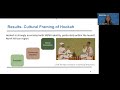
Hookah holds deep cultural significance in Middle Eastern cultures, and usage, including e-hookah, is notably rising, even with established health risks. This research study explores how cultural connections shape hookah use and perceived risk among Middle Eastern and North African (MENA) youth aged 18-22+ at UCLA. Young college students are most vulnerable to health risks such as lung cancer, heart disease, infectious diseases, reproductive and fetal harm, and carbon monoxide poisoning. Because of hookah’s cultural normalization, college-aged students with connections to the MENA region often underestimate risks. To better understand the relationship between cultural connection and perceived harm, we interviewed 20 participants from UCLA, each with a self-identified cultural connection to the MENA region. This was broadly defined as either birthplace or ancestral heritage from a country within the MENA region, cultural or ethnic identification within the region, speaking a regional language, spending an extended period of time within the region, or participating in cultural or religious practices. Interviews coded for re-emerging themes identified a clear connection between Middle Eastern cultural affiliation and the perception that hookah is not particularly harmful, and have revealed key sources of health risk misinformation. These findings, alongside other core themes identified, have significant potential to help inform culturally relevant public health interventions to target MENA college students more directly.
Presentation 4
REBECCA LEE, Delmy Munguia Lopez, Kelly Vitzthum, Steph Tuazon
In the United States, individuals with special healthcare needs (SHCN) represent the largest population reporting unmet dental needs. Although insurance-related factors have been identified as key barriers, less is known about how unmet dental care persists among insured adults with disabilities. This study examines how the prevalence, reasons for, and delays in dental care due to unmet need differ by insurance type and level of support need among insured adults with disabilities. A cross-sectional survey was administered online using Qualtrics to collect data on unmet dental needs, delays in care, insurance status, and functional support needs. Findings show that unmet dental need persists even among insured individuals, indicating that insurance coverage alone is insufficient to ensure access. Participants reported barriers related to insurance limitations, treatment approval, and provider availability, with many experiencing delays exceeding one to two years. Individuals with public insurance and higher support needs had substantially higher odds of unmet care and longer delays. These disparities may reflect differences in provider participation and preparedness to treat patients with higher support needs. In the context of anticipated reductions in Medicaid support, these findings underscore the need for policy and clinical interventions that extend beyond expanding coverage to improve reimbursement, provider participation, and access to specialized services.
Presentation 5
KANISHKH PATALAY, Jeffrey Harding, Shallu Tomer, Beth Jamieson, Christina Ramirez, Anjie Zhen
Introduction: Cannabis use among HIV positive individuals is common but its effects during the initial untreated infection is unclear. Using the Multicenter AIDS Cohort Study (MACS), we tested whether cannabis use during seroconversion was linked to altered epigenetic aging.
Methods: Longitudinal PBMC samples from controls who remained HIV negative and cases who seroconverted were analyzed before and after infection. Participants were classified as consistent cannabis users or non users. Outcomes analyzed included viral load, change in CD4 count, activated CD4 and CD8 T cells, and various epigenetic aging measures. Models were adjusted for baseline values and various covariates such as smoking pack years and hepatitis B status.
Results: Cannabis use was not associated with higher viral load after seroconversion. However, cannabis using seroconverters showed greater CD4 depletion, increased activated CD8 T cells, greater age acceleration residual change, and greater DNA methylation based telomere shortening than non cannabis users. Phenotypic and extrinsic age acceleration showed similar but not significant trends, and GrimAge acceleration showed no difference between groups.
Discussion:
These findings suggest that cannabis use during initial untreated HIV infection may exacerbate immune dysfunction and biological aging, and supports further study of cannabis use during HIV infection.
Presentation 6
ERIK SIRANOSIAN, SOUMYA BUKKAPATNAM, KATE PARK, PARMIDA HEMATI, EDDIE WEI
Metabolic dysfunction-associated steatotic liver disease (MASLD) and metabolic dysfunction-associated steatohepatitis (MASH) are increasingly becoming public health issues, and their burden varies across populations. In this project, we aim to analyze the role of the social determinants of health regarding which individuals develop the disease, who gets proper diagnosis and treatment, and who ends up suffering complications from downstream liver damage. Through an intensive literature analysis, a synthesis of the current literature concerning the relationship between food insecurity, neighborhood deprivation, race and ethnicity, sex, under-diagnosis, age, and obstacles to equitable care will be conducted in regards to the incidence of, severity of, and outcomes of MASLD and MASH. Additionally, studies have shown that many individuals with signs of steatohepatic disease go unacknowledged or under-staged in terms of how advanced the disease is, causing delays in preventive measures and referrals. Collectively, all of these results indicate that the health disparity of MASLD/MASH is influenced by both metabolic risks as well as social inequities. This project’s examination of steatotic liver disease via a social determinant framework underscores the importance of addressing health inequality in terms of both equitable care access, alongside measures to aid prevention. Future research will include community screening data with IRB approval.
Presentation 7
JAY Y. TAIMISH, Allycen R. Kurup, Natalia Ramos
LGBTQ+ youth face disproportionate mental health burdens and significant barriers to care. The UCLA EMPWR Program provides specialized, evidence-based mental health services (e.g., individual, family, and group therapy; medication management) to promote resilience in LGBTQ+ youth with psychosocial concerns. This retrospective cohort analysis utilizes electronic medical record data to evaluate symptom trajectories for 72 adolescent patients (mean age at intake: 15.69 years; 44% transgender male or female, 18% nonbinary) seen at EMPWR from 2017–2025. Depression and anxiety symptoms were assessed using the Patient Health Questionnaire-9 (PHQ-9) and Generalized Anxiety Disorder-7 (GAD-7). Paired samples t-tests comparing initial and latest available PHQ-9 and GAD-7 assessments revealed significant reductions in both depression (13.11 to 11.14, p=.041) and anxiety (11.48 to 9.45, p=.004). Mixed effects models conducted with symptoms as the outcome, participant as the fixed effect, and time in months as the random effect indicated a significant reduction in anxiety symptoms (b=–0.066, p=.001), though no significant reduction in depression symptoms (p=.415). These findings suggest that affirming, tailored mental health care is associated with meaningful reductions in internalizing symptoms. While prior studies have examined gender-affirming care, this is one of the first to examine specialized mental health care for LGBTQ+ youth. Data extraction and analyses are ongoing, and more complete data will be included in the presentation.
Presentation 8
ALYSSE ZIMMERMAN, DANIBEL KASBARI, TIANA NGUYEN, LUNA TAKAHASHI
California is home to the largest immigrant population in the U.S; 28% of residents are foreign-born. Despite this, noncitizens are disproportionately uninsured due to the “chilling effect” (Watson, 2014): withdrawal from government programs due to fear of deportation or change to legal status.3,4 California has continued to expand MediCal, with the Jan. 2024 policy extending coverage to all income-eligible adults regardless of citizen status.
This study examines the impact of the January 2024 expansion of Medi-Cal eligibility to undocumented immigrants on enrollment rates, focusing on whether more conservative districts experienced different enrollment than democratic districts.
Using fixed-effects regression, our results suggest that the change in the rate of enrollment post policy expansion was not significantly different between the conservative and liberal districts, and they follow similar trends post-expansion. Other covariates such as the median household income, rurality, and the percentage of foreign-born residents were stronger contributors in deterring the change in enrollment rate.
The results suggest that California’s strong, liberal baseline may minimize local-level chilling effects. We recognize our limitation through inability to measure undocumented-specific enrollment; the datasets only provide overall enrollment counts. Additionally, the reliance on a static measure of political ideology may fail to capture the changing political sentiment over our study period.
Presentation 9
TANISHKA GANGAVELLI
In order for the timely development of essential vaccines, diagnostics, and other therapeutic tools, the rapid sharing of pathogens and their genomic sequence data by countries is critical. Global surveillance systems coordinated by the World Health Organization (WHO) have depended on cooperation to conduct research and disseminate information. However, a historic systemic inequality within global vaccine access exists. Low-income countries that detect outbreaks are frequently the last to access the vaccines that are produced. During the COVID-19 Pandemic, countries around the world contributed SARS-CoV-2 genomic sequences to international databases, yet vaccine distribution in the early stages has been marked by inequality. In response, the WHO’s 2025 Pandemic Agreement established the Pathogen Access and Benefit Sharing (PABS) System, which is currently under negotiations. This study analyzes sequencing contribution and vaccine supply across 188 countries from January 2020 to August 2022. Sequence data were normalized per 1,000 cases and vaccine supply per capita, with countries grouped by World Bank income levels and median thresholds. Results show that countries with high sequencing but low vaccine supply were primarily low and lower-middle-income countries (73.8%), with 76.2% located in Africa, while no low-income countries were present in high-access groups. These findings reveal a misalignment, suggesting that without strong enforcement and region-based allocation, PABS risks reinforcing existing global inequities.