Engineering: Prerecorded presentation - Panel 1
Location: Online - Prerecorded
Presentation 1
CALEB ESGUERRA and Jennifer A. Jay
A majority of antibiotics in the US are used in livestock farming, and when exposed to antibiotics, bacteria have the ability to gain antibiotic resistance. Bacteria near concentrated animal feeding operations (CAFOs) are more likely to have elevated levels of antibiotic resistance compared to pastures and other areas with less dense livestock. Due to its location near CAFOs, Tulare County has become a county of concern for antibiotic resistance, so its antibiotic resistance ratio must be studied. Antibiotic resistance ratios signify environments that have elevated antibiotic resistance and can be measured using non-selective plate counting, Kirby-Bauer disk diffusion, and modified IDEXX testing. Evaluating environmental antibiotic resistance is a global health concern because antibiotic resistance genes can be spread to pathogens and threaten the effectiveness of modern medicine.
Presentation 2
AAMMARAH GAGE, Jimmy Penaloza, Veronica Santos
Getting dressed is a common activity of daily living
that presents challenges for many individuals. While prior work
has explored robotic assistance through tool manipulation and
arm-based feedback, limited focus has been placed on integrating
sensing directly into the tool. In this work, an MPR121 capacitive
proximity sensor controller is embedded within a sock-donning
tool to estimate the distance between the tool and the human
limb. This sensorized approach enables reliable, real-time up-
dates in pose estimation, supporting safer and more adaptive
human–robot interaction during dressing tasks
Presentation 3
Paloma Casteleiro Costa, PARNIAN GHAPANDAR KASHANI, Xuhui Liu, Alexander Chen, Ary Portes, Julien Bec, Laura Marcu, Aydogan Ozcan
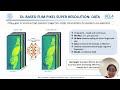
Fluorescence lifetime imaging microscopy (FLIM) captures metabolic and molecular information from tissue without the need for external labels, making it a promising tool for real-time clinical diagnostics. However, widespread clinical adoption has been hindered by slow image acquisition and low signal-to-noise ratio, which force a difficult trade-off between image resolution and imaging speed. This project asked whether deep learning could overcome these limitations by reconstructing high-resolution FLIM images from data acquired at lower resolution, effectively decoupling resolution from acquisition time.
We developed FLIMPSR, a multi-channel pixel super-resolution framework trained using a conditional generative adversarial network. The model learns to reconstruct fine spatial detail from images acquired with up to a 5-fold larger pixel size. We evaluated the framework on held-out patient-derived tumor tissue samples in a blind testing protocol, assessing performance across multiple image quality metrics.
FLIMPSR reliably achieved a super-resolution factor of 5, corresponding to a 25-fold increase in the space-bandwidth product of the output images. Fine tissue architectural features lost in lower-resolution acquisitions were successfully recovered. Compared to diffusion model-based alternatives, the conditional generative adversarial network approach offered more robust reconstruction with substantially faster inference, an important advantage for pra
Presentation 4
ALSTON KAO, Abdullatif Jazzar, Ricardo Martinez, Muqing Si, Alison Shea, Laurent Pilon, Ximin He
An increase of usage of air conditioning exacerbates the heat island effect in urban regions, forcing people to further rely on cooling machineries. The malign cycle forms, and removing or reducing heat produced is challenging. Current mechanisms of urban cooling include reflection and water evaporation. Materials with combined properties are not fully investigated. Herein, an effective and reusable heat dissipating material is aimed. A double network of PVA and DMAPS with radiative layer of P(VDF-co-HFP) is reported. The whole system aims to maximize the intermediate water content for its instability and low energy threshold to evaporate, while the coating could block the radiative heat. Gels will be soaked to various salt solutions for higher water content. The optimized gel reaches a decent cooling power of ~ 200 W/m2, a remarkable water weight ratio approaching 15. Overall, the study investigated a new systematic synthesis of hydrogel for reusable heat dissipating purpose, and future study of real applications is expected.
Presentation 5
JESSICA MCWILLIAMS
Three-dimensional gantry systems are widely used in applications such as 3D printers, CNC machines, and automated robotics because they allow precise movement along multiple axes. Traditional gantry systems typically use a separate motor for each axis, which can limit efficiency and restrict the usable range of motion, particularly along the vertical axis. This project presents the design and development of an improved gantry system using a T-bot configuration that mechanically links the y and z axes through a single timing belt driven by two motors. By rotating the motors in the same or opposite directions, the system can produce controlled movement along either axis while simplifying the overall mechanical structure.
The initial prototype was constructed using aluminum extrusions and rolling wheels to allow the gantry plate to move along the axes. Although the system functioned as intended, the wheel-based design introduced mechanical wobble that reduced positioning accuracy. To improve stability and precision, the wheels were replaced with linear rails and sliders that provide smoother motion and greater resistance to torque. After the redesign, the wobble in the system was significantly reduced.
The final gantry assembly was integrated with an x-axis using ball screws and linear sliders to create a full three-axis motion system. This system is intended for use in a biological research assistant robot designed to manipulate and analyze laboratory samples autonomously.
Presentation 6
Yang-gon Kim, Nikhil Rout, Chengxuan Wang, ERIC SONG, Blaise Tine
This abstract has been withheld from publication.
Presentation 7
G. Chen, S. A. Kim, S. Park, X. Fan, Y.-R. Li, Y. Yang, J. Tian, H. TRIVEDI, S. Zia, B. Malik, N. Lin, Z. Jabbour, S. Li, J. Chen.
Sleep bruxism is a prevalent, stress-linked behavior that may serve as a behavioral biomarker for depression, yet existing diagnostic tools are burdensome, lab-based, and not suited for continuous monitoring. This project investigates a smart dental guard system that embeds a magnetoelastic generator sensor within a custom EVA mouthguard to non-invasively detect jaw activity during sleep. Integrating material design, magnetoelastic sensing physics, and machine-learning-based signal classification, the device captures distinct electrical signatures of clenching, grinding, and tapping behaviors. High-resolution current waveforms, frequency-domain features, and time-frequency analyses demonstrate that each movement generates a unique magnetic profile. A one-dimensional convolutional neural network trained on raw time-series signals achieved >90% classification accuracy, confirming the guard’s ability to automatically differentiate oral behaviors. Preliminary correlations between bruxism metrics and self-reported stress and depression scores suggest potential for mental-health-related monitoring. This work demonstrates the feasibility of a comfortable, battery-free, and unobtrusive wearable capable of long-term bruxism detection and lays the foundation for future integration of wireless transmission, broader datasets, and real-world sleep studies. Ultimately, this smart dental guard offers a promising pathway toward continuous, user-friendly assessment of sleep bruxism as a window into mood-related physiological change.