Engineering: Prerecorded presentation - Panel 4
Location: Online - Prerecorded
Presentation 1
ARLENE CAZARES GARCIA, Kyle Yoshida, Robert Marlow
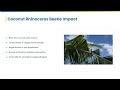
Coconut Rhinoceros Beetles (CRBs) are causing a rapid decline in coconut tree populations throughout the Pacific, threatening islander cultures and economies. Existing intervention methods, including pesticides and drone detection, are often costly, dangerous, or infeasible. Therefore, we are developing a new, low-cost, “vine robot” to help control the spread of CRB. Vine robots are soft continuum robots, inspired by plant biology, that grow through eversion. Their lightweight plastic bodies allow them to navigate hard-to-reach or tight spaces without damaging obstacles. While vine robot applications range from medical intubation to search-and-rescue, this project focuses on deploying them for coconut tree management. We developed a low-cost vine robot (~$25) that runs on a small pump and uses cable-driven or pre-formed shape compositions to anchor and climb coconut trees. A multi-purpose mounting system enables the attachment of flower thinning, camera, and grasping modules to assist with coconut management. Future work includes implementing pneumatic artificial muscles for active steering control, increasing the mechanical reliability of a magnetic-roller interface, and carrying additional sensors. This project enables low-cost, effective management of tree crops, especially coconut trees that are in rapid decline in the Pacific.
Presentation 2
Jasmine Keane, DOYEON HAN, Spencer G. Hamilton, Grace Kim, Richard B. Kaner, Sarah H/ Tolbert
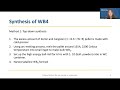
Rising industrial demands for durable tools increases the demand for novel superhard materials. Although diamond and cubic boron-nitride remain industry standards for these needs, their high-pressure synthesis dramatically increases their cost. Transition metal borides (TMB) are an attractive alternative due to their ambient pressure synthesis which lowers their cost and their high degree of tunability. One TMB, tungsten tetraboride (WB4) is one of the most promising with a Vickers hardness (Hv) of 43.3 GPa, well above the 40 GPa threshold for superhard. Based on the Hall-Petch effect, we can increase the hardness of these materials by reducing the average grain size of our material. Synthesis of WB4 has proven to be challenging, as in bulk extremely high temperature and excess of boron are required. These conditions are not suited to the formation of nanocrystalline materials. However, in this work we show a versatile ambient pressure and temperature mechanochemical synthetic route to the formation of nanocrystalline tungsten tetraboride and its solid solutions. We then evaluated the result of this synthesized materials with high-pressure radial X-ray diffraction to examine the impact of nano structuring on the yield strength of these materials. Through these studies we have found that the reduction of size in these materials is especially beneficial to their mechanical properties.
Presentation 3
JESSE HOWARD, Sangsuk Lee, Eric M.V. Hoek
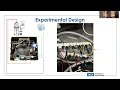
Portable seawater reverse osmosis (SWRO) units are important for military operations. Although SWRO units provide purified water, few are currently equipped to monitor water quality and membrane performance. To this end, we are developing an AI-based model for real-time system monitoring. The model currently relies on electrical conductivity (EC) as a measure of salt rejection. However, EC only provides a bulk measure of ionic strength and does not resolve species-specific ion transport. This study evaluates whether ion-selective electrode (ISE) measurements provide additional insight into membrane performance beyond EC alone. A sodium (Na+) ISE was integrated into a pilot-scale SWRO system to collect continuous permeate data alongside EC, temperature, oxidation-reduction potential, and pH. Predictive model accuracy with EC only and with ion-selective inputs is assessed using metrics including root mean squared error. Under single-salt (NaCl) feed conditions, Na+ concentrations exhibited temporal variability despite relatively stable permeate EC, resulting in a weak correlation between EC and Na+. These early findings indicate that bulk EC may not fully capture dynamic changes in ion transport, and future results are expected to expand on this concept with the addition of a multi-salt feed solution and water hardness ISE data. Ultimately, creating and improving real-time monitoring capabilities will enhance the reliability of portable SWRO systems.
Presentation 4
ANNA LI, Theresa Stewart, Ali Mosleh
Hydrogen blending in natural gas pipelines has emerged as an important decarbonization strategy, but the effects of hydrogen exposure on polymer materials used in non-pipe system components, such as valves, regulators, and seals, remain limited and fragmented. This project investigates whether the existing literature can be synthesized into a predictive framework for understanding how hydrogen-related failures in different classes of polymers are influenced by material and environmental inputs.
During the winter quarter, I developed qualitative models that capture causal relationships among inputs, material properties, failure mechanisms, and failure modes. Drawing on literature compiled by researchers at the UCLA Risk Institute, I focused on three material classes: semicrystalline thermoplastics, fully amorphous thermoplastics, and elastomers/rubbers. Using relationships identified in the literature, I employed Bayesian networks to combine established dependencies with the limited experimental data currently available in this research area.
Next quarter, I plan to populate the qualitative elastomer/rubber model with quantitative evidence to enable the prediction of failure modes from specified inputs. Ultimately, this project aims to create a tool that quantitatively synthesizes the existing body of research on hydrogen-related polymer degradation while also highlighting the most significant knowledge gaps in the hydrogen-blending polymer space.
Presentation 5
ADITYA PATIL, Yupeng Zhang, Mohammad Khalid Jawed
Kirigami-inspired bilayer composites transform flat sheets into complex structures through thermally induced deformation, enabling applications in soft robotics, deployable structures, and biomedical devices. However, predicting the configurations these structures adopt requires computationally expensive finite element (FE) simulations, limiting use in real-time design. This work investigates whether Neural Ordinary Differential Equations (Neural ODEs) can serve as a viable surrogate for predicting morphogenesis in kirigami shells.
Neural ODEs were trained to predict hinge angle trajectories, the primary degrees of freedom governing 3D shapes, as a function of applied thermal strain. Ground-truth training data was generated by automating parametric FE simulations in Abaqus across a range of thermal loading conditions. A physics-informed module was introduced to explicitly decouple per-hinge thermal coupling from residual nonlinear dynamics, improving interpretability. Trained on 37 FE trajectories, the model achieved hinge angle prediction errors below 0.045 radians on held-out cases.
These results demonstrate that Neural ODEs can accurately capture kirigami shell mechanics at a fraction of the cost of FE simulation. This work contributes a data-efficient surrogate modeling framework for shape-programmable structures, with significance for applications in adaptive systems.
Presentation 6
ANGELINA SOTELO, Arda Sahin, Varun N. S. Renugah, Scott J. Brandenberg, Jonathan P. Stewart
Liquefaction occurs when saturated soil loses its strength and stiffness, causing the soil to behave more like a fluid than a solid when dynamically loaded (i.e. earthquake shaking). This phenomenon has caused major ground failure worldwide, resulting in severe damage to buildings, dams, bridges, and other infrastructure where the soil loses its ability to support structures. Because liquefaction is a complex soil behavior, well-documented, high-quality case histories are essential for improving current probabilistic liquefaction triggering and manifestation models. The Next Generation Liquefaction (NGL) project established a relational database to organize laboratory and in-situ data into a unified and publicly accessible database. This directed research supports the NGL project by collecting and summarizing high-quality case history data from published literature, and integrating the raw information into the project database. Expanding the NGL database is fundamental to liquefaction engineering. It strengthens a valuable and comprehensive public resource for improving our understanding of soil behavior under earthquake loading. This work will allow researchers to develop more reliable models and ultimately advance the state of practice for seismic ground failure assessment.
Presentation 7
CARA SUSILO, Manvel Yelanyan, Mireille Kamariza
CRISPR-Cas13 systems have recently been leveraged as molecular diagnostic tools due to their high specificity and sensitivity to genomic targets, and their ability to amplify signals due to their trans cleavage activity. While several high-throughput and multiplexable assays have been developed utilizing these systems, the Cas enzymes are free in solution, limiting extremely low detection capabilities. I aim to engineer this enzyme through developing a biotinylated Cas13 that could be strongly bound to a surface or bead, thus lowering the limit of detection by increasing local concentrations. Using standard cloning techniques, I designed unique Cas constructs with a biotin-specific tag, leveraging methods including PCR, Gibson assembly, gel electrophoresis, and transformation methods to assemble the engineered protein. Nanopore nex-gen sequencing confirmed expected assembly of four distinct constructs. Next quarter, I aim to develop an in-house protein-purification pipeline to isolate this protein, perform in vitro biotinylation assays, and test for proper protein function. In all, this work will provide a detailed protocol for future protein engineering and initiate a diverse library of Cas enzymes that could be used to enhance further molecular diagnostic development.
Presentation 8
WINNIE WONG, Jonathan Chen, Rena Yang, Gerard Wong
Chronic obstructive pulmonary disease (COPD), a chronic inflammatory lung disease, is responsible for more than 3 million deaths annually, becoming a major global health problem. Cigarette smoking is a critical risk factor that promotes persistent inflammation. Even after smoking cessation, inflammation still persists, which can be explained by autoimmunity; however, its specific mechanisms in COPD are unclear. The project’s focus is to propose DNA-AMP complexes on TLR9 activation as a direct mechanism that can clearly explain the autoimmunity in COPD. Antimicrobial peptides (AMPs) form nanocrystalline complexes with DNA, which amplifies TLR9 activation and upregulates cytokines. Although at the project’s preliminary stage, three aims will be employed. I will inspect for high charges and sigma scores in proteins present in airway plasma through a Support Vector Machine (SVM). Using 4 AMP-like candidates, I will run small angle X-ray scattering experiments to characterize the interaction between AMPs and cf-DNA by measuring these complexes’ inter-DNA spacing. With an ELISA assay, I will measure IL-6, IL-β, and TNF-ɑ production in type II alveolar epithelial cells induced with these complexes. With a peptide fragment’s high charge and sigma score, a DNA-AMP complex will form with optimal inter-DNA spacing and increasing TLR9 activation. This project reveals insight on the fundamentals of the innate immune system and how modulating TLR9 activation to amplify immune responses can be applied to a range of diseases.