Engineering: Prerecorded presentation - Panel 5
Location: Online - Prerecorded
Presentation 1
NATHAN CHEN, EMMA VIDAL, Joanne Qiu, Johanna Bai, Ananya Anand, Sean Son, Zeckria Kamrany, Eleazar Eskin
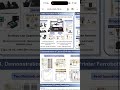
Robotic automation has accelerated scientific discovery, but most liquid handlers operate "blindly": if a pipette tip fails or a plate is misaligned, the robot continues regardless, reporting "success" despite a failure. While Self-Driving Labs (SDLs) integrate AI to monitor and adjust experiments, they are prohibitively expensive and engineering-intensive to build. To address this reliability gap without a full-scale SDL, we developed a practical, AI-assisted monitoring tool deployable today. Using a $50 Logitech camera and a dual computer vision pipeline (segmentation and classification models), the system automatically detects labware types and their precise deck coordinates, cross-referencing this data against the active protocol to verify the physical deck matches digital instructions. A user-friendly web interface allows researchers to confirm labware placement and capture time-lapse photos throughout the run. Deployed on two Opentrons Flex robots in the SwabSeq lab, the system achieved ~90% accuracy in labware recognition and 100% reliability in protocol matching. This scalable, low-cost solution provides critical experimental oversight and data collection without the traditional barriers of cost and complexity.
Presentation 2
DAVID FOMIN, Nick Lamb
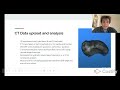
There is a clinical need for anatomically accurate 3D printed bone models for small bones as currently, non-3D printed models are generally used. They have consistent density throughout and are also based on data from load bearing bones rather than small bones. In this study, we strive to create variable density 3D models of small bones. This includes precise modelling of the cortical and cancellous bone regions. CT scans were obtained of 30 cadaver models and a 3 point bend test was conducted on each model. Stress strain curves were obtained for these bones, using cement to fix the ends. Using MATLAB, the CT scans were converted into a 3D matrix of HU values and used to calculate moment of inertia and stiffness. Then, a computational framework using a 2 stage Chan Vese algorithm was developed on MATLAB to calculate the area of the middle cross section of each bone. The first stage of this method isolated the bone and the second stage distinguished cortical bone from cancellous bone. Ultimately, a 3D volumetric segmentation with voxels attributed to either cortical or cancellous regions of varying densities was created. The segmentation will ultimately be used, in conjunction with calculated density HU relationship and stiffness values, to create 3D models which will vary infill density and pattern. Additionally, the 3D volumetric segmented model can be used in an FEA simulation to validate the results of the 3 point bend test.
Presentation 3
JASON IRIE, Evelyn Kim, Khalid Jawed Mohammad
This work addresses the challenge of enabling agricultural field robots to understand natural-language instructions and carry out long-horizon navigation and data-collection tasks in real farmland. Although current Vision–Language Models (VLMs) can describe objects visible in a camera’s immediate view, they do not reason well about unseen spaces, and Vision–Language–Action systems are typically limited to short-horizon tasks. We ask whether a training-free Vision–Language Navigation (VLN) framework can bridge this gap for practical agricultural deployment.
To answer this question, we develop a hierarchical VLN architecture with two components: a global semantic-planning module and a real-time perceptual-verification module. During exploration, the robot builds a 2D SLAM map and links visited coordinates to VLM-generated scene descriptions, creating a semantic dictionary of the environment. At runtime, a user instruction such as “take a picture of the peach tree” is embedded and matched to stored descriptions to retrieve relevant coordinates and generate waypoint plans. As the robot navigates, the VLM continuously verifies whether the target scene is visually present and emits simple control tokens to determine when to continue, stop, and activate the camera.
Initial results show successful retrieval of crop targets, accurate visual verification of instructed scenes, and compatibility with an existing waypoint-following controller. This project is significant because it demonstrates a practical, robust, and training-free ap
Presentation 4
JONATHAN LIU
There has recently been massive growth of learning-based research in the field of dexterous manipulation. In particular, learning methods like imitation learning depend heavily on human demonstration data. The MERLIN project aims to fulfill this need by providing an affordable anthropomorphic robot hand for large-scale data collection of generalized hand motion. Due to the mechanical constraints of the hand, the use of custom printed circuit boards (PCBs) and firmware was necessary. The electrical architecture consists of a motherboard that facilitates bidirectional communication with a central computer and directs data to and from satellite PCB boards, which provide control for individual fingers. The motherboard utilizes a STM32H753ZI chip due to its built-in peripherals, large number of pins, and its 1 MB flash memory size for large programs. The built-in CAN-FD and MCP2518FD SPI to CAN-FD controllers are used for communication with the satellite PCBs. Latency and throughput testing was conducted for CAN communication by using two STM32 boards: one end used the built-in CAN-FD while the other used the SPI to CAN. The average latency for a round-trip signal was 1296.8 µs, which fell within the acceptable range. Throughput testing was performed by measuring how many bytes could be sent over the range of one second. These tests indicated zero packet loss at 498 kb/s. Future work involves increasing throughput to 5 Mb/s distributed across all fingers, which will increase the precision of control.
Presentation 5
DYLAN L. PHAM, Luke A. Sage, Kyle T. Yoshida
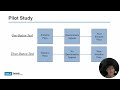
Perception of visual, auditory, and haptic cues informs human-computer interface design. This study investigates the Colavita Visual Dominance Effect using a Race Model Inequality analysis to assess 7 unimodal and multimodal combinations of visual, auditory, and haptic stimuli. A user study with 6 participants was conducted to measure reaction time and perceived stimuli. In the first task, 3 participants responded to stimuli presented at random intervals with a single button press to record reaction time, then reported the stimulus they perceived. In the second task, 3 participants performed a simultaneous identification task using three buttons, each corresponding to a sensory modality, while measuring reaction time. In the first task, auditory-haptic stimuli (0.586 ± 0.065s, p = 0.210) elicited slower responses than the race-model prediction, suggesting sensory interference. In both tasks, participants commonly identified visual-auditory-haptic stimuli as just visual-haptic stimuli, consistent with Colavita Visual Dominance and implying visual stimuli being the most dominant, followed by haptic, then auditory cues.
Presentation 6
JOSEPH POHLOT
The 1994 Northridge earthquake (M6.7) struck the San Fernando Valley on January 17, 1994, producing ground accelerations exceeding 1.0g and causing between $20–$44 billion in regional losses, exposing deficiencies in the seismic provisions of the then current Uniform Building Code (UBC). This study investigates how structural characteristics and building code era influenced residential repair costs in the aftermath of the event, with the central research question being whether properties built under more robust post-1971 seismic codes sustained less damage than their predecessors. Drawing on field investigation records for 400 residential properties compiled by Bank of America Construction Services, this analysis examines repair cost estimates, structural characteristics, and construction dates to identify patterns in financial and structural damage. Results indicate that pre-1973 construction averaged $38.90 per square foot in repair costs compared to $31.38 for post-1973 properties, and that red-tagged single-family properties averaged $185,021 in repair costs compared to just $47,063 for green-tagged structures. Properties with attached garages averaged $96,640 in repair costs versus $54,707 for those without, attributable to soft-story vulnerability. These findings underscore the significance of evolving seismic codes, particularly the near-source amplification factors introduced in the 1997 UBC, as direct responses to the deficiencies Northridge exposed. They serve as a reminder that building codes are living documents
Presentation 7
Shun Ye, BELLA ROSE SCHREMMER, Zixin Guan, Artem Goncharov, Gyeo-Re Han, Vivek Rajasenan, Yichen Zou, Xiang Li, Charlotte Rose McDonough, Aydogan Ozcan, and Dino Di Carlo
Automation in the life sciences remains dominated by expensive, centralized robotic systems, leaving most laboratories unable to access precision robotic liquid handling. Here we present the Microfluidic Lab-on-a-3D-Printer (μLab3DP), a reconfigurable robotic microfluidic platform that repurposes the motion control, thermal regulation, and open-source programmability of consumer 3D printers to deliver laboratory-grade automation at a hardware cost below $500. By replacing the extruder with a multifunctional magnetic toolhead, μLab3DP actuates ferrofluid droplets with sub-100 µm positioning accuracy and programmable volume control spanning 0.5–25 µL, enabling the full repertoire of digital microfluidic operations within inexpensive laser-cut chips (<$3). We quantitatively validate system performance through long-term droplet transport exceeding 40,000 s without degradation, automated serial dilutions with high linearity (R² ≥ 0.99), and fully automated colorimetric nucleic acid amplification assays whose results match conventional benchtop workflows under tightly regulated isothermal conditions (CV ≈ 0.3%). By harnessing the global economies of scale of consumer 3D printers, μLab3DP provides accurate, reproducible, and programmable assay automation at a fraction of the cost and footprint of conventional systems, establishing a practical path toward desktop-scale, democratized laboratory robotics.