Engineering: Prerecorded presentation - Panel 7
Location: Online - Prerecorded
Presentation 1
Researcher: Zihao Liu
Advisor: Kyle Yoshida
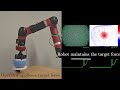
Biomimetic underwater propulsion aims to replicate the efficiency of biological swimmers through traveling-wave body deformation. However, most soft robotic fins rely on distributed actuation or multiple control inputs, increasing system complexity and limiting compact integration. This work investigates a fully soft, single-valve-driven pneumatic architecture that generates self-organized traveling waves via internal fluidic delay and mechanical coupling.
The design integrates a dual-column chamber configuration within a cast silicone body, where sequential pressure propagation produces phase-shifted activation. Opposing chambers are mechanically coupled through compliant seesaw structures, converting alternating pressurization into lateral fin oscillation. By varying valve switching frequency, delay length, and input pressure, the system aims to achieve tunable control of phase offset, wave speed, and amplitude.
Experimental validation in a water tank will correlate internal pressure dynamics with fin kinematics, demonstrating a compact and scalable single-input propulsion strategy for integrated underwater soft robots.
Presentation 3
MICHELLE SUN, Peiran Wang, Kunlin Cai, Alex Chang, Yuan Tian
Large language model agents are increasingly used to complete multi-step tasks by reading files, following external instructions, and interacting with tools. This creates new security risks, including prompt injection attacks, where malicious content hidden in data sources attempts to override the user’s original intent. Prior attention-based defenses assume that a model under attack will shift attention away from the user prompt, but this assumption may not hold in dynamic, context-dependent tasks where attending to external content is often necessary. This project studies whether existing attention-based prompt injection defenses remain reliable in these more realistic settings. I implement and analyze baseline methods, including RENNERVATE and AttentionTracker, and evaluate how they perform on benchmark scenarios designed to reflect diverse agent workflows. The benchmark includes multiple domains and attack styles, along with matched benign hard negatives that resemble attacks but contain legitimate contextual instructions, allowing for more robust evaluation of false positives and detection failures. The goal of this research is to measure how attention distributions change across malicious and legitimate cases and to assess the limitations of current defenses on realistic agent tasks. This work contributes toward safer LLM agents by improving how prompt injection detection is evaluated in context-dependent environments.
Presentation 4
ANASTASIA GABRIK, VARUN VEMULA, Rajesh Ghosh, Rui-Chian Tang, Barath Palanisamy, Mihye Lee1 Gyeo-Re Han, Aydogan Ozcan, Dino Di Carlo1
This abstract has been withheld from publication.
Presentation 5
ERIC WANG, Tobias Dürschmid
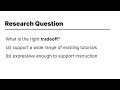
Computer science tutorials need to juggle pedagogical expressivity and modern software standards, often resulting in wasted instructional time debugging instructor and environmental errors. Fortunately, many tutorials share common pedagogical techniques. In this work, we exploit this observation to present a new tutorial document format that is built to minimize instructor overhead for the common case while supporting various customization methods. Thus, this allows the specification of a tutorial framework for instructor-authored, step-based programming assignments designed to ensure reproducibility across CI pipelines and local machines. We propose Learning Assistant Continuous Integration (LA CI), a novel tutorial automation technique to balance pedagogical expressivity with generality, supporting diverse categories of instructional tasks without excessive task-specific customization. LA CI combines approaches from automated assessment systems with scaffolding and cognitive load theory to map instructional needs to technical entities. LA CI specifies a tutorial document format and provides an example implementation of the framework. We designed LA CI with the goal of supporting most categories of programming activities in a CS 2 course while minimizing types of instructor overhead. LA CI is designed to encourage instructors to use mastery-based learning, explicit hierarchical learning objectives, reduced student cognitive load, and some direction maintenance to ensure transfer of responsibility to the student.
Presentation 6
BRIAN YE, Jiawen Wang, Mathew Silva, Khalid M. Jawed
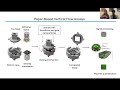
Applying mechanical compression for hemostasis currently lacks continuous subsurface monitoring because manual compression disrupts acoustic coupling for ultrasound imaging. To resolve this, we are developing a robotic system featuring a deformable hemispherical end-effector that integrates visuo-tactile sensing and co-located ultrasound to apply regulated force while maintaining imaging access. The system utilizes dual embedded cameras tracking a marker array within a silicone membrane to estimate contact forces, alongside a centrally mounted high-frequency ultrasound transducer. My current research focuses on enhancing the visuo-tactile membrane modeling resolution and accuracy through iterative hardware and software improvements. Additionally, I am developing a constitutive model that leverages stress gradients to better quantify contact phenomena for modelling and control of the end effector. Preliminary modeling efforts indicate that integrating advanced stress gradient models and 3D ultrasound reconstruction improves the spatial awareness and force-tracking fidelity of the robotic end-effector. Ultimately, this project establishes a critical foundation for autonomous, sensing-rich robotic compression, which has the potential to significantly improve patient safety, reduce clinician burden, and standardize procedural consistency in vascular management.
Presentation 7
Raymond M. Spearrin, Nick Jaeger, Yi Yan, SAM YOON
Benzene (C₆H₆) is a potent carcinogen produced during incomplete combustion of wood materials, posing significant health risks to firefighters responding to wildland urban interface (WUI) fires. Despite its recognized toxicity, benzene has rarely been the primary focus of fire emissions research, leaving a critical gap in time-resolved quantification data. This study employs laser absorption spectroscopy (LAS) within a controlled-atmosphere cone calorimeter (CACC) to measure benzene generation time histories from three wood fuel loads (oriented strand board (OSB), plywood, and western red cedar) under simulated WUI fire conditions at 21% O₂. The LAS system uses a mid-infrared interband cascade laser tuned to the 2006–2010 cm⁻¹ absorption band of benzene, enabling spectrally-resolved, high-fidelity measurements robust to beam steering and laser drift. Results reveal that all three materials produce benzene concentrations exceeding EPA Acute Exposure Guideline Level 1 thresholds during active flaming, with plywood exhibiting the highest emission factor at 4.03 mg/g and western red cedar falling between the two previously studied fuels at 2.95 mg/g. The correlation between benzene generation and modified combustion efficiency (MCE) confirms that incomplete combustion is the primary driver of toxic emissions. These findings demonstrate the viability of portable LAS sensors for real-time toxicant monitoring and motivate further investigation across varied oxygen concentrations and fuel types.