Medical Research: Prerecorded presentation - Panel 1
Location: Online - Prerecorded
Presentation 1
MICHELLE AKANNO, and Lilian Gelberg, and Dallas Swendeman
In the United States, substance abuse continues to be one of the most expensive public health issues. Recognizing that addiction is shaped by social conditions and biological factors, there is a need for coordinated approaches that begin with screening and prevention in primary care settings. While prior work demonstrated reductions in risky drug use through physician brief advice and two telehealth coaching sessions by paraprofessionals, a deeper understanding of the underlying reasons, barriers, and competing factors that influence an individual’s drug use remains lacking. This study utilizes qualitative data from the Quit Using Drugs Intervention Trial (QUIT). Recurring patterns in coach case notes and patient surveys were identified and coded into thematic categories. Results indicate that the most common reported reasons for drug use were stress and pain. The primary motivator for reducing use was the desire to avoid negative health effects, while the most common barrier was concern about worsening mental health problems. Furthermore, exercise was the most commonly reported technique for reducing drug use. These findings highlight the importance of understanding underlying drivers, providing insight into how brief interventions can be tailored to patients’ needs. Future work will use a mixed-methods approach to compare patterns across groups and time points, enabling examination of how contextual factors help explain the patterns that may be observed in patients' substance-use behaviors.
Presentation 2
RISHIT BHAT
Stuttering is a neurodevelopmental speech disorder that affects communication, quality of life, and psychosocial well-being. Despite the availability of behavioral, neuromodulatory (e.g., tDCS, rTMS), and assistive (e.g., delayed auditory feedback) treatments, there is no clear consensus on their comparative efficacy or long-term durability. This ongoing study evaluates the short- and long-term effectiveness of these interventions. A systematic review of 36 studies is being conducted, with 6 meeting current inclusion criteria requiring controlled design, follow-up data, and standardized outcome measures. Key metrics include percent disfluent syllables (%ds), Stuttering Severity Instrument (SSI-4), and OASES scores. Quantitative synthesis is ongoing to assess trends across interventions. Preliminary findings suggest that most interventions are associated with short-term improvements in fluency, severity, or quality of life; however, effects are often task-specific and may diminish over time. Neuromodulatory approaches, particularly when combined with behavioral or assistive strategies, appear to show the most consistent benefits. These findings highlight the need for standardized outcome measures and multi-modal approaches to achieve durable clinical improvements in stuttering.
Presentation 3
VERONICA HANKIL, Xinyi M. Li, Catherine Meyer, Magnus Dahlbom, Jason Chiang, Kyung Sung
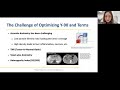
Yttrium 90 (Y90) radioembolization is a newer therapy for hepatocellular carcinoma in which physicians deliver radioactive microspheres to tumors through the surrounding liver vasculature. Prior to treatment, technetium 99m macroaggregated albumin imaging is used to estimate tumor perfusion, recorded as the tumor-to-normal ratio (TNR). We hypothesize that TNR can predict how well radiation distributes throughout the tumor. This is important because Y90 deposition is often uneven, resulting in regions of both high and low radiation dose.
This study compared pretreatment TNR values to post-treatment voxel-based dosimetry. D95 and D5 values were extracted to assess dose distribution; similar values indicate more uniform radiation, while larger differences indicate heterogeneity. Results showed heterogeneity indices ranging from 2.3 to 19.4, demonstrating highly variable and nonuniform dose distribution across the ten patients analyzed. No strong relationship was observed between TNR and dose distribution.
These findings suggest that TNR alone is not sufficient to predict radiation dose patterns in hepatocellular carcinoma. This project is significant because it highlights limitations in current pretreatment imaging methods. Improving these predictive approaches could lead to more accurate treatment planning and more effective radiation delivery.
Presentation 4
HILSABECK, CHARLOTTE ; CHIEN AI-CHI
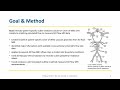
Patient-specific hemodynamic modeling of the Circle of Willis depends on accurate outlet boundary conditions, yet peripheral resistance values are often estimated from literature rather than derived from subject-specific data. This project aimed to determine resistance values for use in three-dimensional computational fluid dynamics models by matching simulated flow to measured flow in specific cerebrovascular regions. Peripheral resistance in Circle of Willis territories was investigated by separating the vascular anatomy into targeted segments so resistance could be tuned locally. Using vascular models and cross-sectional velocity data from four-dimensional flow magnetic resonance imaging, outlet resistance values were adjusted until the simulated velocity at the output cross-sectional plane matched the measured data. The results support the feasibility of using resistance matching to obtain more realistic outlet conditions for patient-specific blood flow simulation. This project helps establish a framework for improving the accuracy of computational cerebrovascular models for future research and clinical decision support.
Presentation 5
VEDA HINGARH, Miah Chao, Ethan Chen, Tengyue Zhang, Denise R. Aberle, William Hsu, Akihiro Nishi, Ya-Chen Tina Shih, Ashley Elizabeth Prosper, Yannan Lin4
Real-world lung cancer screening (LCS) programs fall short of adherence rates achieved in clinical trials, limiting their potential to reduce mortality. Psychological factors tied to smoking history — including stigma, fear, and medical mistrust — may contribute to this gap. This study assessed the feasibility of a patient-centered survey targeting these barriers in an LCS population.
Eligible participants completed a baseline LDCT between February and April 2025, were English-speaking, and had not yet reached their follow-up window. Research team members cold-called eligible participants from February through March 2026, with up to three contact attempts. Consented participants completed a 23-item survey covering medical mistrust, lung cancer worry, and fear, and received a $20 gift card. Non-completers received up to two reminders.
Of 116 patients screened, 94 met eligibility criteria. Of the 73 successfully reached, 50 enrolled; 67 accessed the survey link, but only 26 completed it without a reminder, and 10% required at least one prompt. Thematic analysis revealed four consent call patterns: terminology clarification; radiation exposure concerns; data privacy and trust questions; and conditional consent, where patients enrolled but deferred completion.
This pilot demonstrates the feasibility of recruiting LCS patients for psychological barriers research, though survey completion requires active follow-up. Addressing gaps around terminology, radiation safety, and data privacy may improve participant trust and engagement.
Presentation 6
ANTHONY LOW
Cushing’s Disease (CD) is a rare endocrine disorder characterized by a benign pituitary tumor called a corticotrophic adenoma causing excess release of adrenocorticotropic hormone (ACTH) from the pituitary gland leading to excess cortisol production by the adrenal gland. The translational research in our lab focuses on inhibiting proliferation of corticotroph tumors and ACTH secretion through inhibition of histone deacetylases (HDACs). Hypoxia is a well-known common feature of solid tumors, and provides a unique opportunity for development of targeted HDAC inhibition under hypoxic conditions using hypoxia activated pro-drugs (HAPs). We have developed a proteolysis-targeting chimera (PROTAC) to HDAC utilizing an alkyl linker connected to both a ubiquitin E3 ligand and a HDAC inhibitor, to disrupt HDAC activity through proximity induced degradation. We found Benzamide HDACi, tacedinaline (CI-994), exhibited a potent anti-proliferative effect with a low IC50 and was chosen as the structural backbone to make our selective HDAC degrades. In vitro treatment with the HDAC PROTAC followed by Western blot analysis confirmed HDAC isoform degradation, achieving a better HDAC degradation toward HDAC1 & 3 as well as exhibiting comparable antiproliferative and ACTH suppression. Incorporation of a hypoxia-induced moiety into the HDAC PROTAC design reduces potential off-target effects by allowing for targeted HDAC inhibition only under hypoxic conditions, ultimately providing an improved treatment option for patients with Cushing Disease.
Presentation 7
AVA TAM, CAROLINE REN, ASHLEY KIM, LEAH ALKALAY, ESTHER KIM, Brandon Koretz
Medical billing is how physicians document clinical work and receive appropriate reimbursement, but inconsistencies in coding practices can lead to issues such as undercompensation or inefficiencies. These challenges are especially relevant in geriatric care, where patients are often presented with multiple chronic conditions and require accurate coding. Despite federal and state guidelines, variability in billing codes continues to create inaccuracies, often exceeding 7% to 25%, which frequently cause financial penalties and denials. Our research question asks what methods could be used to encourage physicians to bill more accurately to improve the productivity of the geriatric physician population.
We identified the root causes of inaccurate medical coding and billing practices through surveys, fishbone diagrams, process maps, and interviews with healthcare professionals and billing experts. To correct these coding inaccuracies, we propose creating charts comparing the data of each individual physician to their colleagues and the practice average to produce personalized advice. Additionally, we propose providing one-on-one physician education meetings for improvement with a coding expert to go over inconsistencies and to address any questions or concerns.
Ultimately, this intervention aims to improve physician coding accuracy and practice relative value units (RVU) to optimize documentation and revenue capture.