Medical Research: Prerecorded presentation - Panel 2
Location: Online - Prerecorded
Presentation 1
HANNAH AHN, Rong-rong Huang, and Jianyu Rao
Prostate cancer diagnosis relies on multiparametric MRI and histopathology, yet spatial alignment between these modalities remains a challenge. To improve this, researchers utilize post-surgical ex vivo MRI with patient-specific 3D-printed molds, but the extended scanning durations introduce an ischemic window that may trigger cellular degradation. This research investigates whether ex vivo ischemia activates endogenous nucleases, thereby compromising the molecular integrity of DNA and RNA. The study matches ex vivo cases with controls based on Gleason Score, age, and race. Multiplex immunohistochemistry (IHC) staining was utilized to prioritize matching for Intraductal Carcinoma (IDC), as the presence of this high-risk pathological feature was deemed a more critical biological variable for matching than secondary markers like ERG/SP1. Methodology involves identifying tumor regions through pathology-annotated H&E slides and targeted punch cores from OCT-embedded tissue. Extracted nucleic acids are analyzed via automated electrophoresis to obtain RNA Integrity Number (RIN) and DV200 metrics, which quantify the degree of fragmentation and percentage of high-quality RNA. Anticipated results involve a correlation between increased scan duration and a decline in these integrity scores. By establishing these metrics, the project aims to define a practical safety threshold to ensure that high-fidelity genomic data is not sacrificed for enhanced imaging resolution.
Presentation 2
LUKE CARSON, Martin Rindahl
Arteriovenous fistulas are rare vascular abnormalities that can produce high output cardiac failure through significant arterial to venous shunting. This project examines how diagnostic imaging can distinguish renal vascular pathology from obstructive processes and prevent delayed treatment. We present the case of a middle aged patient with progressive heart failure initially suspected to have hydronephrosis on grayscale ultrasound. Further evaluation with color Doppler demonstrated extensive high velocity vascular flow within the renal pelvis, excluding obstruction and raising concern for an arteriovenous communication. Computed tomography angiography confirmed a large fistulous connection between the right renal artery and right renal vein with marked dilation of the renal vasculature and inferior vena cava. By correlating sonographic and cross sectional imaging findings with hemodynamic consequences, this case illustrates how multimodal imaging establishes diagnosis and guides management. Recognition of renal arteriovenous fistulas is critical because untreated shunting may lead to progressive cardiac compromise, whereas timely identification enables targeted intervention. This project highlights the importance of imaging literacy and diagnostic reasoning in identifying reversible causes of heart failure.
Presentation 3
Yelba Castellon-Lopez, Hugo Torres, Errol Philip, Vanessa Torres, ALIA EMBLETON, Aya Alioua, Caroline Mashall, Leslie Aguilar-Hernandez, Iris Guzman-Ruiz, Gael Perez, Cody Ramin
Background: Adult cancer survivors have a higher risk of cardiometabolic outcomes due to treatment effects. Glucagon-like peptide-1 receptor agonists (GLP-1 RAs) are effective for improving cardiometabolic outcomes and may offer potential benefits to obesity-related cancer survivors. However, the role of GLP-1 RAs among obesity-related cancer survivors remains unclear. We conducted a scoping review to map the literature on GLP-1 RAs use among cancer survivors.
Methods: Guided by the PRISMA-ScR framework, we searched three databases for eligible studies and used Covidence (Veritas Health Innovation, Melbourne, Australia) to manage screening, data extraction, and study flow.
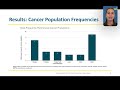
Results: Among 798 records identified, 19 studies met inclusion. Among included studies, breast cancer (7/19) and prostate cancer (3/19) were most frequently represented. Most commonly reported cardiometabolic outcomes were body mass index (BMI) (8/19), major adverse cardiovascular events (MACE) (7/19), and all-cause mortality (7/19).
Conclusion: Most studies reported positive associations between GLP-1 RA use and BMI, MACE, and all cause-mortality among obesity-related cancer survivors. However, evidence remains limited by observational designs and lack of differentiation between GLP-1 RA agents. Future research should clarify agent-specific effects, evaluate differential cardiometabolic effects across distinct obesity-related cancers and treatment contexts, and incorporate patient-centered outcomes with standardized cardiometabolic endpoints.
Presentation 4
IMOGENE GAEDE, Clove Taylor, Caitlin Tang, Matteo Pellegrini, Alejandro Espinoza, Daniela Markovic, Matthew Zinter, Ruth Cortado1, Ana C. Costa Monteiro, Michael Agus, Colin J. Sallee, ..., Anil Sapru
Pediatric critical illness is highly heterogeneous which can complicate clinical outcome
prediction. We aim to identify key genes and changes in gene expression associated with
hyperinflammatory and hypoinflammatory subphenotypes in critically ill pediatric patients.
RNA-seq data and genotype information were acquired retrospectively from the CAF-PINT
Cohort (IRB:16-0832). A Transcript Wide Association Study (TWAS) was performed using a
modified FUSION pipeline, integrating GEMMA GWAS summary statistics (n = 331), cis-eQTL
weights, and LD reference panels to identify genes associated with inflammatory subphenotype.
We computed GWAS-based polygenic risk scores (PRS) using GEMMA-derived SNP effect
sizes. Individual-level risk scores (n=280) were calculated as weighted sums of alternate
allele counts. PRS values were then analyzed as a quantitative phenotype using linear
regression in PLINK 1.9.
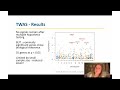
No TWAS-implicated genes passed a Bonferroni p<7.55×10e−5, and no PRS-associated
SNPs passed a Bonferroni p<5×10e−8, though several loci showed suggestive associations
consistent with known pathways.
While there was no direct gene overlap between the top genes, both analyses consistently
identified immune, metabolic, and structural pathways associated with inflammatory regulation.
These analyses were limited by small sample size and statistical power. Future work, such as
colocalization analysis, may help distinguish causal signals from linkage disequilibrium artifacts,
and amplify true associations.
Presentation 5
Mark A. Bachir, Iyawnna J. Hazzard, Alex S. Bachir, SIMRAN K. GILL , Gavin S. Chima, Biljinder S. Chima
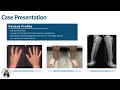
Fibular hemimelia is a rare congenital limb deficiency that can cause ankle instability, limb length discrepancy, valgus malalignment, and other deformities that complicate reconstruction and long-term function. This case explores the outcomes and challenges of limb salvage in a 19-year-old male with bilateral fibular hemimelia and tetramelic ectrodactyly who chose reconstruction over amputation from infancy. His care involved staged, multidisciplinary orthopedic treatment, including multiple corrective procedures, bilateral tibial osteotomies, external fixation, and major limb lengthening in June 2022. This operation achieved 11 cm of lengthening on the left and 7 cm on the right, though it was complicated by right fixator malfunction requiring replacement. After rehabilitation, he regained mobility and returned to high-demand athletics, including wrestling. In June 2025, progressive right ankle pain and instability required further realignment and reconstruction with distal tibial osteotomy and internal fixation. His postoperative course was complicated by poor wound healing, exposed bone, and Staphylococcus epidermidis osteomyelitis, requiring debridement, wound-vac therapy, IV antibiotics, and suppressive oral therapy. This case highlights the complex tradeoffs between limb salvage and amputation, the benefits of staged reconstruction in improving function and quality of life, and the importance of long-term multidisciplinary follow-up for managing late complications.
Presentation 6
STEPHANIE MANASYAN
Cardiovascular disease remains a leading cause of mortality worldwide, with myocardial infarction representing a major clinical outcome of atherosclerosis. Improving early risk prediction remains a critical challenge, highlighting the need for novel molecular biomarkers. Noncoding RNAs have emerged as key regulators of gene expression in cardiometabolic disease and may provide insight into underlying disease mechanisms.
This project investigates the potential of noncoding RNA–associated molecular signatures as biomarkers for cardiovascular risk. The study focuses on pathways related to lipid metabolism and inflammation, which are central to the development of atherosclerosis. Current work involves literature synthesis and preliminary analysis of existing datasets to identify patterns of gene regulation associated with increased disease risk.
By integrating molecular and translational approaches, this work aims to better understand how regulatory mechanisms can inform cardiovascular risk prediction. These findings may contribute to the development of more precise and individualized strategies for early detection and prevention of cardiovascular events.
Presentation 7
ABIGAIL J. MURPHY, *JOEL M. POLLACK, Ruby A. Sims, Itzel D. Huerta, Anya Yakimenko, Noah Z. Laird, Willus Fisher, Christopher Seet, and Steven J. Jonas
Engineering primary human T cells to express Chimeric Antigen Receptors (CARs) is a possible lifesaving immunotherapeutic treatment for pediatric B cell acute lymphoblastic leukemia (B-ALL). However, current CAR T-cell production requires timely, expensive, viral in vitro modification that remains widely inaccessible. Although in vivo translation is limited by non-specific delivery and low transfection rates in quiescent T cells, lipid nanoparticles (LNPs) provide a non-viral platform for engineering T cells to express the CD19 CAR receptor targeting ALL. This project aims to develop LNPs capable of inducing both transient and permanent CAR expression in T cells, currently in vitro. We report the development of anti-CD3 antibody (αCD3)-decorated LNPs that facilitate targeted activation and transfection of resting T cells, enabling two CAR T-cell engineering strategies. The first utilizes αCD3 LNP-mediated delivery of mRNA encoding CD19 CAR, resulting in transient expression in up to 96% of treated T cells. The second uses αCD3 LNPs delivery of CRISPR-Cas9 cargos for genome integration and permanent CAR expression, hypothesizing that αCD3 LNP synchronization of T cell cycling will complement the cell cycle dependence of homology-directed repair. We report data that S-phase delivery of CRISPR Cas9 cargos increases CD19 CAR integration by up to 4% of treated T cells. These αCD3 LNPs contribute towards the engineering of a CAR T cell platform for a wide range of possible treatments for cancer and autoimmune disorders.
Presentation 8
AMY NGUYEN, Soon-Gook Hong, Marcus Gallagher-Jones, Julia Mack.
Laminar flow protects blood vessels by promoting healthy endothelial cell (EC) behavior; however, not all ECs respond to flow in the same way. Some cells show sustained calcium signaling activity that contributes to anti-inflammatory responses, which suggests the presence of a specialized EC subtype. This project aimed to determine if signaling ECs are spatially organized across the monolayer and if they represent a distinct transcriptional population. Time-lapse Ca²⁺ imaging datasets from flow-aligned human aortic ECs were analyzed using a custom Python tool that identifies persistent signaling cells. Ca²⁺ signaling behavior was then used to map the spatial distribution of signaling ECs under laminar flow. In parallel, scRNA-seq data were analyzed to define transcriptional clusters, and 3 populations were identified. Cluster 1 showed a strong enrichment of mechanosensitive signaling pathways across GO, KEGG, and Reactome analyses which indicated its identity as a flow-responsive EC subtype. In contrast, Cluster 2 showed a proliferative signature, and Cluster 0 appeared more heterogeneous. These results support the hypothesis that only a subset of ECs sustain Ca²⁺ signaling under flow, and these cells are transcriptionally distinct. Also, the spatial organization of these ECs was shown to be non-random, indicating a coordinated interaction that contributes to vascular protection. Overall, these results contributed to a better understanding of the protective mechanism of endothelial cell heterogeneity in vascular resilience.