Medical Research: Prerecorded presentation - Panel 3
Location: Online - Prerecorded
Presentation 1
NIKI AHMADIEH, Aminreza Khandan, David G Armstrong, Bijan Najafi
Background:
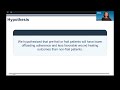
Poor adherence to offloading devices is a leading contributor to impaired wound healing in diabetic foot ulcers (DFUs), yet the role of physical frailty, characterized by slowness, weakness, fatigue, weight loss, and inactivity, remains largely unexplored. Frailty may compound adherence challenges by reducing tolerance for devices that are often heavy and mobility-restricting, particularly in patients with loss of protective sensation.
Methods:
In this secondary analysis of a randomized controlled trial, 173 DFU patients with complete frailty assessments (of 210 enrolled) were stratified by Fried frailty phenotype. A sensor-enabled offloading device with smartwatch-based monitoring objectively tracked adherence. Wound healing was assessed weekly using validated digital imaging, quantified by percent area reduction (PAR) up to 12 weeks or complete healing, whichever came first.
Results:
Frailty or pre-frailty was highly prevalent (86%). Non-frail patients demonstrated a higher rate of good adherence (68% vs. 58%) and favorable healing outcomes (PAR >80%: 63% vs. 42%) compared to frail/pre-frail counterparts, who showed disproportionately higher rates of poor adherence (10% vs. 4%).
Conclusions:
Frailty is prevalent among DFU patients and associated with lower device adherence and poorer wound healing. These findings establish frailty as a clinically actionable stratification marker and underscore an urgent need for lighter, mobility-compatible offloading solutions tailored to the capacities of frail patients.
Presentation 2
MEGAN HOANG, Dongyun Zhang, Anthony Heaney
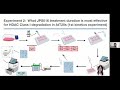
Cushing’s disease is an Adrenocorticotropic hormone (ACTH) dependent form of Cushing’s syndrome, with the characteristics of hypercortisolism and significant metabolic dysfunctions leading to elevated cardiovascular morbidity and mortality among patients. Dysregulated histone deacetylase (HDAC) activity is a prominent contributing factor for this disease, indicating HDAC isoforms as a therapeutic target. Proteolysis-targeting chimera drugs (PROTACs) offer a novel approach to HDAC degradation, particularly JPS016 which can bridge HDAC isoforms to an E3 ubiquitin ligase complex allowing for HDAC class I degradation. This study investigates the concentration and time-dependent effects of JPS016 on HDAC1, 2, and 3 degradations in the AtT20 mouse pituitary corticoptroph tumor cells and proopiomelanocortin (POMC) expression, the precursor to ACTH. It was hypothesized that JPS016 induces targeted proteasomal degradation of class I HDAC isoforms. Therefore, treating AtT20 cells with increasing concentrations of JPS016 over time will lead to greater HDAC degradation and a corresponding decrease in POMC expression. AtT20 cells were treated with concentrations from 0-5μM across 0-72 hours with short- and long-term time points, and protein samples were quantified in a Western blot. In these findings HDAC1 exhibited the most degradation out of the three isoforms and in the extended time course experimentation reveals that effective conditions at the 0.5μM for 24 hours and 1μM for both 48- and 72-hour treatments are most optimal.
Presentation 3
CONSUELO HUIDOR, Rena Yang, Seema Thapa, and Kymora B. Scotland
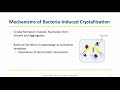
Kidney stone disease is a prevalent condition where hard mineral masses form and accumulate in the kidney. Calcium oxalate (CaOx) stones are the most common kidney stones, comprising more than 70% of all stones. Recent work has shown that CaOx stones, which were previously thought to be non-infectious, have bacterial biofilms as part of their intrinsic internal structure. Thus, we investigate the role of bacteria in CaOx crystal formation. Specifically, we use in vitro experiments to examine the role of bacterial DNA on CaOx crystal growth. We hypothesize that electrostatic interactions between polyanionic DNA and positively charged calcium ions promote crystal nucleation, thus driving CaOx stone formation. Furthermore, we examine the interactions between weaker polyanions and CaOx crystals, and observe morphological differences between the different conditions. Our findings suggest that polyanionic molecules play a key role in stone formation, and understanding these interactions may reveal targets for controlling kidney stone development.
Presentation 4
ELENA PONICHTERA, Tobias Niederegger, Leonard Knoedler, Victor Chien, Robert Gaudin, Curtis Cetrulo Jr, Alexandre G. Lellouch
Facial feminization surgery (FFS) is a central component of gender-affirming care, reshaping facial features to align with a patient’s gender identity through modification of the forehead, nose, cheeks, jawline, and chin. Artificial intelligence (AI) has recently emerged as a transformative tool in craniofacial and plastic surgery. Within FFS, AI techniques show potential to enhance patient care. However, most reports describe experimental or single-center applications. To date, this is the first review that aims to synthesize current evidence on AI-supported techniques in FFS.
A systematic review was conducted according to the PRISMA 2020 guidelines and a total of n = 757 (100%) studies were screened, with n = 9 (1.20%) fulfilling the predetermined eligibility criteria for qualitative synthesis. In summary, a total of n = 436 FFS cases with patient data were included. The mean LOE score was 3.8 ± 0.7, ranging from Level 5 (Foundational Evidence) in surveying studies to Level 3 in clinical studies. Preoperative AI enhanced precision, reproducibility, and automation of planning workflows, while postoperative AI enabled objective assessment of femininity and perceived age. Limitations reported across studies included small, single-center cohorts, retrospective designs, and lack of diverse datasets, raising concerns about generalizability and potential bias. Artificial intelligence demonstrates emerging applications in FFS, primarily supporting preoperative planning and postoperative outcome assessment.
Presentation 5
AARON FANG, GAVIN POSTIFF, SHANKA SENANAYAKE, Arpana Church
Our creative project will be an interactive online exploration of the gut-brain axis, which is the bidirectional communication network that links the gut microbiome with the central and enteric nervous systems. Our work has focused on translating our lab’s research, as well as continuing developments within the field, into educational blogs and easy-to-digest informational graphics on social media. This project will compile this information into a cohesive website that can be navigated by clicking through categories such as general mechanisms, the effects of varying lifestyle factors (including exercise and diet), associated health outcomes, recipes, and foods that are beneficial for both the brain and the gut. The goal of this project is to synthesize complex medical research into an engaging and interactive format to bridge the gap between research and public understanding. For this project we will utilize various peer-reviewed articles within the field, materials that we have created from our project A BioMe, informational graphics made using Canva, and short educational videos. This project highlights a way that scientific communication can improve public awareness and engagement, especially with emerging biomedical topics that can have an impact on everyday life.
Presentation 6
ANA SOFIA ORTIZ, CONNER SAKAE, Sammy Saab, Katherine Meneses, Jason Pan, Angshuman Saha
Background: Metabolic dysfunction-associated steatohepatitis (MASH) is one of the leading indications for liver transplantation. The Hispanic/Latino population in the United States bears a disproportionately higher prevalence of MASH compared to other cohorts. This study evaluates the differential contribution of risk factors to MASH among liver transplant recipients across Latinos and Non-latinos.
Methods: This single-center retrospective study examined 332 patients who underwent liver transplantation with a diagnosis of MASLD/MASH between 2014 and 2024.
Results: Latino patients comprised the majority of the cohort. Among transplant recipients, obesity, diabetes, and hypertension were highly prevalent across all patients. Obesity was significantly more common among Latino individuals, while coronary artery disease was less common. Rates of diabetes, hypertension, and hyperlipidemia were similar between groups. Socioeconomic disparities were observed, including lower median income and higher reliance on public insurance among Latino patients. Also, the mean BMI was slightly higher in Latino patients.
Conclusion: This study provides evidence that differences exist when considering the ethnic/racial contributions to cardiometabolic risk factors; such as obesity and diabetes, related to MASH. Additionally, the extremely large disparity in our study regarding mean median income and type of insurance highlights the need for additional research on these topics.
Presentation 7
SARAH SHAHBANDARYAN, Shreya Suresh, Kai Maks, Karen Sears
Reactive oxygen species can damage the cellular nucleotide pool, leading to mutations and DNA breaks when oxidized nucleotides are incorporated into DNA. The enzyme MTH1 prevents this damage by hydrolyzing oxidized nucleotides before they are used in DNA synthesis. While MTH1 is typically localized in the cytosol in most mammals, previous work has shown that bat MTH1 is frequently found in the nucleus. This difference may contribute to bats' ability to maintain genomic stability despite high metabolic rates.
This project investigates whether the bat MTH1 protein sequence alone is sufficient to drive nuclear localization across species. Mammalian fibroblast cells from bat, mouse, and human origins will be used to assess MTH1 localization patterns using fluorescence-based imaging and protein analysis techniques. Prior training focused on sterile technique and contamination control, and current work involves maintaining and working with assigned cell lines to support these experiments.
Understanding whether nuclear localization is sequence-driven will help clarify a potential genome-protective adaptation in bats. These findings may provide insight into how cells reduce DNA damage under oxidative stress and contribute to a broader understanding of genome stability and longevity.
Presentation 8
FIONA WONG and Xiaodong Zhong
Cardiac magnetic resonance imaging (MRI) using displacement encoding with stimulated echoes (DENSE) accurately tracks pixelwise myocardial displacement in the cardiac cycle, enabling high spatial-resolution mechanical measurement of the heart. However, traditional visualization methods often represent DENSE data in multiple 2D slices, which are difficult for physicians to intuitively interpret. In this study, we aim to improve clinical interpretability by integrating qualitative and quantitative DENSE data to improve the representation of whole-heart mechanics.
A 3D whole-heart mesh technique was developed based on the tracked pixels and derived strain values of 4D DENSE data. This mesh technique employed Delaunay triangulation coupled with kNN to overlay strain values on the epicardium and endocardium to provide a 4D (3D spatial + time) surface rendering.
Our current results improved the representation of DENSE data. Next steps include further mesh smoothing to increase spatial resolution and embedding myocardial strain data to enable detailed planar cross-sections, which will further improve myocardial mechanical analysis.
In summary, this whole-heart mesh reconstruction enhanced the representation of quantitative strain information as an intuitive 4D heart model. With future work to integrate other mechanical information, this technique has the potential to improve clinical interpretation of 4D DENSE MRI data.