Medical Research: Prerecorded presentation - Panel 5
Location: Online - Prerecorded
Presentation 1
Swisher J, Goldman J, Donohoe B, Vail J, Kim J, Duffaut C, Hatamiya N, Boland N, Holmes K, Overstreet E. UCLA Division of Sports Medicine.
Background: Cold water immersion (CWI) is widely used in athletic recovery, but its mechanisms remain unclear. Prior research has largely excluded female athletes, lacked real-world training contexts, and rarely included wearable biometric data.
Purpose: To assess the effects of CWI on recovery and performance in NCAA Division I athletes and identify predictors of response.
Methods: A prospective crossover study of 37 Division I athletes (men’s/women’s volleyball and cross country) was conducted over a four-week training cycle. Athletes completed two 1-week CWI periods (10-min immersions at ~53°F within 1 hour post-training, 5×/week) and two non-consecutive control weeks. Recovery was measured using WHOOP (HRV, resting HR, sleep) and daily surveys; performance was assessed via weekly jump testing.
Results: CWI reduced muscle soreness (p=0.013) but showed no change in HRV, resting HR, or sleep. A responder subgroup showed improved HRV (+9.6 ms, p=0.017), reduced resting HR (−1.2 bpm, p=0.016), improved recovery scores (p=0.008), and greater soreness reduction (p=0.0004). No effect on jump height or power was observed.
Conclusions: CWI does not improve recovery metrics uniformly in Division I athletes. A responder subgroup shows both objective and subjective benefits. Wearable biometrics may help identify athletes who benefit from targeted CWI protocols, supporting individualized recovery strategies.
Presentation 2
A. ARNDT, M. Berg, and A. M. Kasko (full names: ALISON ARNDT, Mica Berg, Andrea M. Kasko)
In the past decade, the frequency and impact of urban fires have increased as residential development expands into wildland-urban interface regions and climate change intensifies fire-prone conditions. These fires release complex mixtures of toxic particulate matter from the combustion of building materials, household products, and synthetic compounds. Inhalation of such toxins is known to cause respiratory irritation, exacerbate asthma, and contribute to long-term health risks such as cancer and cardiovascular disease. However, the specific cellular responses to urban fire residues, particularly those persisting in soil after a fire, remain poorly understood.
To better understand the cytotoxic effects of these residues, soil samples from a residential site destroyed in the Palisades fire were extracted using PBS, ethanol, and hexanes to capture a broad range of combustion-derived compounds. Extracts were applied to 3T3 fibroblasts to assess cytotoxicity, and relative metabolic activity was quantified after 48 hours using a resazurin viability assay. In addition, DI water extracts were used to measure pH and assess its contribution to observed toxicity. The results of these analyses indicate that urban fire soil residues exhibit heterogeneous cytotoxic effects, with pH and nonpolar extracts as potential drivers of toxicity. This analysis provides an initial assessment of the biological impact of urban fire residues and establishes a foundation for future studies aimed at identifying the specific compounds responsible.
Presentation 3
MONA GEORGE, Georgia Crane, Keer Zhang, Jennifer Long
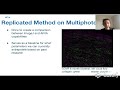
Current research in vocal fold (VF) injury explores the use of stem cell therapies to potentially improve voice quality. Recovery of voice function is typically accessed by histologic and acoustic parameters. Histologic analysis, such as multiphoton microscopy, uses qualitative observations of features such as collagen and elastin content to assess recovery. Currently, analysis of microscopy images is mainly qualitative as quantitative data is far more time consuming and requires more exploration of methods. As such, histology is not the main focus. Quantitative analysis is necessary to better determine recovery through metrics such as fiber direction.
Some quantitative analysis has been attempted in published papers using the platform ImageJ. ImageJ capabilities are limited and require more human intervention. AIVIA is a biophotonics AI Image Analysis Software with greater capabilities for quantitative analysis. This paper explores the extraction of metrics such as angle distribution and fiber alignment in ImageJ and AIVIA and compares the potential strengths of AIVIA. Preliminary results suggest AIVIA’s machine-learning algorithms significantly reduce processing time while capturing nuanced fiber features missed by global analysis. This study demonstrates that AI-driven quantification provides a more rigorous standard for evaluating vocal fold recovery, ultimately accelerating the development of effective tissue-engineered replacements for patients with vocal fold scarring.
Presentation 4
FADE IBRAHEEM
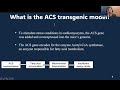
Heart failure (HF) is a leading cause of morbidity and mortality and is strongly associated with mitochondrial dysfunction and impaired calcium handling in cardiomyocytes. This study investigates how mitochondrial dynamics regulated by dynamin-related protein 1 (DRP1), particularly loss of the Ser616 phosphorylation site, interact with metabolic stress induced by cardiac-specific acyl-CoA synthetase (ACS) overexpression. We hypothesized that disruption of DRP1-mediated mitochondrial fission alters mitochondrial structure, signaling, and organismal viability.
DRP1 mutant and ACS transgenic mouse models were used. Methods included genotyping with Mendelian analysis, confocal imaging of mitochondrial morphology, and western blotting to assess mTORC1 signaling and validate protein expression. Additional experimental approaches were initiated for future analysis.
Results showed ACS expression significantly reduced mitochondrial size independent of DRP1, while DRP1 mutation alone had minimal effects under baseline conditions. mTOR signaling was largely unchanged, with modest increases in downstream markers suggesting subtle pathway modulation. Combined ACS overexpression and DRP1 loss resulted in reduced viability without complete lethality.
These findings suggest metabolic context is a dominant driver of mitochondrial remodeling, while DRP1 modifications exert more subtle effects, highlighting a potential interaction relevant to HF pathogenesis and future therapeutic targeting.
Presentation 5
JESSICA JAVAHERFOROUSH, Olumide Ojo, Andersen Teoh, Ferdinand Otuodi, Robert Chan, Kymora Scotland
Calcium oxalate kidney stones are the most common type of kidney stone. In most cases having a healthy diet is the first step to take in prevention. However, it can be difficult to consistently track intake manually, as it requires memory recall and consistent effort. This project evaluated whether artificial intelligence could improve dietary oxalate tracking through a mobile application, StoneFree AI. StoneFree AI was developed to interpret verbal food descriptions and images of meals, which were connected to oxalate values from the Harvard Oxalate Database. Performance was evaluated using 804 verbal food entries and 276 standardized food images from the ASA24 dietary assessment database. The verbal input feature had 82.1% of estimates within ±1 mg of reference values, 91.5% within ±5 mg, and 94.5% within ± 10 mg. The mean absolute error was 3.32 mg. In contrast, the image-based feature had more errors, especially with complex meals, portion size estimates, or ingredient recognition. This suggests that AI can be useful as a tool for dietary oxalate estimation when users can give a clear verbal input. This project supports the development of digital tools as an aid for a more personalized approach in kidney stone prevention.
Presentation 6
ASHER J. KIM, Akieve Burrows, Francesco Sanvito, Jingwen Yao, Benjamin M. Ellingson
Despite multidisciplinary treatment, glioblastoma (GBM) remains an aggressive brain tumor with a poor prognosis. In recurrent GBM trials, patients must demonstrate radiographic progression before enrollment, yet amino acid positron emission tomography (PET) could serve as a non-invasive surrogate for tumor growth activity. Few studies have correlated single-scan uptake to independently measured MRI-derived growth rates. I investigated whether 18F-FDOPA PET uptake at a single time point reflects anatomic tumor growth kinetics in recurrent GBM. I developed an automated qualification and rigid PET-to-MRI registration pipeline processing 157 patients across 168 studies. Contrast-enhancing volumes were isolated from deep-learning segmentation masks, and growth rates calculated as volume change between pre-treatment and index MRI divided by elapsed days. Standardized uptake values were extracted from matched PET data. After filtering to 14-182 day scan intervals, 21 patients had paired volumes and 20 had matched SUV Max. Tumor volumes increased significantly (Wilcoxon p = 0.0055), and higher SUV Max was significantly associated with greater tumor burden (Pearson r = +0.47, p = 0.038). These preliminary results support establishing amino acid PET as a quantitative metric to streamline clinical trial enrollment. Ongoing work will incorporate tumor-to-striatum ratios and percent change in SUV across longitudinal acquisitions to define thresholds for earlier identification of aggressive tumor phenotypes.
Presentation 7
LUCINE A. KSAJIKIAN, Chiranjit Dutta, Claudio Scafoglio, Buck Rogers, Oluwatayo F. Ikotun
Platinum-resistant non-small cell lung cancer (NSCLC) continues to have poor prognosis, with a 5-year survival rate below 20%, despite advances in targeted and immunotherapy approaches. Integrin αvβ6 is a cell surface receptor overexpressed in epithelial cancers, including NSCLC. We have demonstrated that αvβ6 expression is not only preserved across various lung adenocarcinoma (LUAD) subtypes, but is amplified following neoadjuvant platinum-based chemotherapy, supporting its potential as a durable therapeutic target in platinum-resistant disease. Radioligand therapy (RLT) is a next-generation approach that enables targeted delivery of radioactive payloads to antigen-expressing tumor cells. Using flow cytometry assessment, we identified NSCLC cell lines with high (H358) and low (A549) basal αvβ6 expression. The αvβ6-binding peptide A20FMDV2-K15R-IBA was radiolabeled with ¹⁷⁷Lu at a specific activity of 500 μCi/nmol. Cell-binding studies confirmed selective targeting, while in vivo biodistribution in RAG2 mice revealed 16-fold higher uptake in H358 tumors compared to A549. Efficacy studies demonstrated tumor growth inhibition across dosing regimens, including single- (1 and 2 mCi) and fractionated dosing (1 mCi x 2), with sustained tumor suppression. Further, we developed cisplatin-resistant H358 cell lines through incremental exposure to cisplatin (CDDP) to investigate therapeutic response of chemotherapy-resistance. These findings position ¹⁷⁷Lu-αvβ6 RLT as a highly specific and translationally relevant therapeutic strategy.