Microbiology, Immunology, and Molecular Genetics (MIMG): Prerecorded presentation - Panel 1
Location: Online - Prerecorded
Presentation 1
EDUARDO ENRIQUEZ, Ivan Salladay-Perez, Anthony J Covarrubias
Spatial Mapping of Senescence in MASLD and Response to ABT-263
Metabolic dysfunction-associated steatotic liver disease (MASLD) is characterized by chronic inflammation and the accumulation of senescent cells that contribute to tissue dysfunction. However, the spatial organization of senescence-associated pathways within the liver and their response to therapeutic intervention remain poorly understood. This project investigates how senescence markers are distributed across liver tissue in MASLD and how these patterns change following treatment with the senolytic agent ABT-263.
Using spatial transcriptomics data from three control and three ABT-263-treated liver samples, I developed a computational pipeline to visualize and quantify gene expression across tissue sections. Key markers of senescence and inflammation, including Cdkn1a, Ccnd2, and Trem2, were analyzed to assess cell cycle arrest and immune activation. Expression patterns were mapped spatially and compared between conditions to identify regions of persistent or cleared senescence.
Results indicate that ABT-263 treatment is associated with a reduction in senescence-associated gene expression, particularly in macrophage-enriched regions, suggesting effective clearance of senescent cells. However, residual expression in specific niches highlights potential spatial resistance to senolytic therapy.
This work provides insight into the spatial dynamics of senescence in MASLD and demonstrates the utility of spatial transcriptomics for evaluating therapeutic response, offering a framework for improving targeted interventions in liver
Presentation 2
MYLES HU, Hui Wang, Hong Zhou
The archaea domain plays an important role within extreme environments and in natural processes; however, they are studied to a significantly lesser degree than their bacterial and eukaryotic counterparts. In particular, the Methanosaeta concilii archaea is notable for its ability to produce and release methane. The surface layer of M. concilii is a primary cell wall component surrounding the outside of each cell; however, its exact three-dimensional structure remains poorly defined outside of knowledge that it self-assembles into a six-fold symmetric hexamer. By elucidating the structural biology of archaeal S-layers, their function on archaeal species can be more fully determined, as well as their relationship with other cellular components. Cryo-electron tomography in vitro and subtomogram averaging via TomoNet will be applied to generate a three-dimensional reconstruction of the M. concilii S-layer. The Relion workflow will be followed to generate multiple structures: one for the reference C6 hexamer symmetry and two for C2 symmetry, separated based on classification results. The resulting 3D model is expected to characterize a novel S-layer of M. concilii and connect its structure to the protein complex that adheres to the archaeal cell membrane. Ultimately, environmentalists and scientists can use the resulting insights to knock out archaea-specific proteins or mutate their subcellular structures. By then testing their impact on methanogenic activity, methane emissions into the atmosphere can potentially be decreased.
Presentation 3
RITA KAMAL, Adamaris Figueroa-Peche, Octavio Ocegueda-Martin, Sarah Wang, Krisanavane Reddi, Tejas Bouklas, Amanda Friese, Daniel Velez-Ramirez
Bacteriophages inhabit diverse environments, yet their mechanisms for coping with osmotic stress in high-salinity conditions remain unclear due to conflicting prior findings. This study tested the hypothesis that phages encoding an aquaporin-like protein exhibit reduced infectivity and osmotic tolerance compared to those lacking the gene under high-salt conditions. Wet-lab experiments assessed the effect of salinity on infectivity of the temperate phage PhunnelCake infecting Arthrobacter sulfureus. Host-only growth curves showed high salt tolerance, maintaining OD600 fold change above 0.25 from 0-8% NaCl. In contrast, with phage present, growth declined sharply between 0–5% NaCl, indicating active infection. Plaque assays showed a titer of 2.45 × 10⁻⁸ PFU/mL at 0% NaCl, with plaques forming up to 2% NaCl. At 5% NaCl, a full bacterial lawn with no plaques confirmed reduced infectivity at high salinity. To investigate aquaporin involvement, bioinformatic analysis of related phage JohnThicc was performed. iAQPs-RF identified gp41 and gp26 as likely aquaporins (70% and 54%). AlphaFold modeling of gp41 revealed a tunnel-like structure, and sequence alignment showed 70–90% conservation across AZ4 phages. These findings support a conserved aquaporin-like protein and suggest phages encoding it may have reduced osmotic stress resistance. Understanding these mechanisms may inform development of phage therapies for high-salinity environments such as aquaculture.
Presentation 4
VYAS KODUVAYUR, Noah Yan, Aleksandr Gorin, Sarina Lowe, and Alexander Hoffmann
Macrophage differentiation from circulating monocytes is a central process in the innate immune system. Primary human macrophages are commonly generated from peripheral blood monocytes, but substantial variability across samples can limit the reproducibility of experimental findings. It remains unclear whether this heterogeneity reflects intrinsic differences among donors or arises from technical factors while generating the cultures. To explore this, we generated and analyzed bulk RNA-seq data from monocytes and MCSF-differentiated macrophages from 19 healthy human donors. We found that transcriptional variability is greater at Day 7 than Day 0, with replicate day 7 cultures appearing highly consistent. This suggests that variability is amplified during differentiation rather than being driven by technical inconsistencies in culture conditions. Principal component–based modeling allowed us to partially predict macrophage states from monocyte profiles. Focusing on outlier donors, we identified a notable interferon signature, alongside surprising expression of T-cell marker genes. These results suggest that variable T-cell contamination in monocyte preparations may influence different degrees of interferon-mediated steering of the macrophage differentiation pathway.
Presentation 5
LUCILLE LACUNA, Brian Aguirre, Anubhav Chandla, Mahlet Mekonnen, Isaac Yang, and Madhuri Wadehra
Glioblastoma multiforme (GBM) is an invasive vascularized brain tumor that has, to date, developed resistance to standard therapies. One such treatment involves the use of anti-angiogenic treatments, which target blood vessel growth via inhibition of vascular endothelial growth factors (VEGF). However, GBM tumors eventually become resistant to anti-VEGF therapies. While these therapies improve vasogenic edema, leading to a rapid improvement in neurological symptoms, these treatments do not improve overall patient survival. Therefore, developing novel anti-angiogenic treatments that target other drivers of GBM progression is critical. In this study, RNA sequencing identified immune cells and hypoxia-inducible factors (HIF-1α and HIF-2α) as key genetic drivers of GBM resistance. Characterization of these immune cells reveals an increase in CD45+ (total immune cells) and F4/80+ (microglia) cells following anti-angiogenic treatment in mouse models. We subsequently utilized immunohistochemistry to determine HIF expression and localization in tumors and found that while HIF-1a was primarily expressed in tumor cells, HIF-2 was predominantly expressed within immune cells. Our results suggest that the relationship between hypoxia and immune cells plays a critical role in GBM progression and may represent a viable therapeutic target.
Presentation 6
NEHA MANDAVA, Benjamin Macadangdang
Environmental regulation of diversity generating retroelements in Bacteroides fragilis under gut relevant stress conditions
Diversity generating retroelements (DGR) enable targeted hypermutation of specific protein regions, promoting rapid microbial adaptation. In the human gut microbiome, the Bacteroides species contain a high density of these systems, but the environmental conditions that regulate their activation remain unclear. This study investigates how gut relevant stressors influence DGR activity in Bacteroides fragilis. Anaerobic cultures were exposed to oxygen stress, nutrient variation, and pH changes to model physiologically-relevant environmental shifts. Oxygen stress conditions included anaerobic controls, aerobic incubation, and aerobic shaking environments. Nutrient stress was assessed by culturing bacteria in minimal media with varying glucose concentrations, along with controls including nutrient-rich media and minimal media without glucose. Bacterial growth was monitored using optical density measurements across timepoints to establish baseline responses and optimize experimental conditions. Results showed altered growth patterns across stress conditions, reflecting the sensitivity of Bacteroides fragilis to environmental changes. These findings establish foundational conditions for future experiments measuring DGR transcription and sequence diversification, providing insight into microbial adaptation in the gut microbiome.
Presentation 7
YIXI OU, Gulistan Agirman, Stephanie Orchanian, Elaine Hsiao
Alzheimer’s disease (AD) is a progressive neurodegenerative condition associated with amyloid-beta (Aβ) plaques. Accumulation of Aβ plaques induces activation of myeloid cells, which can damage neurons and drive cognitive decline in AD patients. Recent evidence suggests that gut microbiota and their metabolites can influence AD progression as they can reduce neuroinflammation and stabilize metabolism in neurodegenerative diseases. This study investigated whether the bacterium Akkermansia muciniphila or a cocktail of the microbial metabolites butyrate, beta-hydroxybutyrate, and ursodeoxycholic acid, can effectively treat AD symptoms in a mouse model. We hypothesized that both treatment groups would exhibit reduced myeloid cell levels in the hippocampus. We treated mice with either microbes or the metabolite cocktail for three months and measured their neuroinflammation. Contrary to our initial hypothesis, the administration of A. muciniphila and the metabolite cocktail did not significantly reduce neuroinflammation. However, these results narrow the search for the precise microbial signals that effectively inhibit neuroinflammation in AD. Ultimately, this research aims to establish an accessible microbiome-based strategy to slow AD progression and address health disparities in disproportionately affected communities where high-cost clinical interventions are out of reach.
Presentation 8
HARRISON QIU, Nimisha Gupta, Anagh Samavedam, Nicole Yan, Kilian Mazaleyrat, Valerie Rezek, Scott Kitchen, Dieu-Huong Hoang, April Pyle
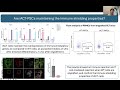
A barrier to the clinical translation of human pluripotent stem cell (hPSC)-derived therapies is the host immune response leading to graft rejection. We hypothesized that a minimalist 7-gene upregulation circuit is sufficient to confer immune-privilege to myogenic progenitors, allowing for integration into the host muscle niche without systemic immunosuppression.
To confirm the successful engineering of our universal platform, quantitative PCR (qPCR) was utilized to verify the robust mRNA expression levels of the seven-gene circuit compared to wild-type (WT) controls. To evaluate functional efficacy, we performed in vitro co-culture assays; ELISA analysis of the co-culture supernatant revealed a reduction in IFN-y secretion in 7-gene induced Allogenic Cell Tolerance (iACT) groups compared to WT.
In vivo validation was conducted in humanized immunocompetent mouse models of muscle injury. Flow cytometry (FACS) confirmed systemic immune activation in WT groups, while iACT groups maintained baseline levels. Fluorescence microscopy of cryo-sectioned muscle tissue provided visual confirmation of graft fate. These data validate that the 7-gene configuration is sufficient for maintaining immune-cloakedness, providing a safer, minimalist framework for universal "off-the-shelf" regenerative therapies.
Future directions will evaluate the therapeutic efficacy of these universal iACT cells in treating Volumetric Muscle Loss, Duchenne Muscular Dystrophy (DMD), and aging, providing a framework for "off-the-shelf" regenerative medicine.