Molecular, Cell, and Developmental Biology (MCDB): Prerecorded presentation - Panel 1
Location: Online - Prerecorded
The Zoom event has ended.
Presentation 1
MAITREYI L. BHARATH, Beyza Duymayan, Yitong Fiona Xie, Carrie M. Spratford
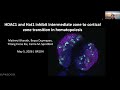
Hematopoiesis is the process of producing blood components that make up the immune system. Human hematopoietic mechanisms are not fully characterized, negatively impacting the development of treatments for human blood-related diseases. Many aspects of human hematopoiesis are conserved in Drosophila hematopoiesis, making flies a good model for identifying and characterizing analogs of key regulatory genes in human hematopoiesis. In particular, the exact mechanism by which chromatin regulation influences the transition from intermediate progenitors to mature blood cells remains unknown. To identify the role of chromatin regulation in hematopoiesis, the histone acetylation proteins HDAC1 and Hat1, which are conserved in humans, were knocked down in Drosophila lymph gland intermediate progenitors. The resulting lymph gland phenotypes indicated that HDAC1 and Hat1 suppress intermediate progenitor differentiation into mature hemocytes, albeit via different mechanisms, and may also play a role in regulating the rate of hematopoiesis and lymph gland development. Elucidating the role of chromatin regulation in Drosophila hematopoiesis can drive development of therapies that harness analogous regulatory pathways in humans to characterize and treat human blood-related diseases.
Presentation 2
TIMOTHY DULL and Pei Yun Lee
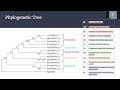
The cloning and identification of sea urchin genes are essential for studying sea urchin genetics and often serve as the first step in analyzing gene function and location. The goal of this project was to identify, amplify, clone, isolate, and verify the coding sequence of SPU-011689, which encodes trafficking protein particle complex subunit 12. A portion of the gene’s coding region was identified using BLAST, Echinobase, and InterPro. This gene was amplified using PCR, ligated into a plasmid, and transformed into E. coli. Plasmid DNA was isolated from the cells and digested using restriction enzymes to recover the coding region. The insert DNA sequence was verified through DNA sequencing. Finally, a phylogenetic tree was constructed using MEGA and confirmed the evolutionary identity. Ultimately, the target gene was successfully amplified, cloned, and isolated, with confirmed cells being preserved in long term storage. This gene can now provide the foundation for future studies examining the role of trafficking protein particle complex subunit 12.
Presentation 3
SHIRIN L. DUNKER and Pei Y. Lee
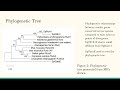
This paper focuses on the study of the sea urchin ortholog to the human Runx1 partner transcriptional co-repressor 1 gene. In humans, this transcription factor is responsible for repressing the expression of MMP7 and adipogenesis, processes implicated in tumor progression and metabolic dysfunction. Therefore, investigating this conserved sea urchin gene provides insight into potential therapeutic strategies to treat cancer and metabolic disease. This study identifies and clones the S. purpuratus Runx1 gene to test whether it can be used in future studies of the conserved transcriptional repression mechanism in humans. PCR amplification, purification, plasmid ligation, and bacterial transformation of the Runx1 gene were performed. Restriction digest of plasmid DNA confirmed that the gene was successfully cloned. DNA sequencing further validated this and revealed a 94% identity match. The successful cloning of the S. purpuratus gene supports its use as a developmental model. These results create a foundation for future studies of this gene to make key advances in ways to increase repression of MMP7 and adipogenesis in humans.
Presentation 4
YOUSEF FAYED, Ryan Johnson, Pavak Shah
A central question in developmental biology is understanding how cells orchestrate differentiation, division, and patterning events. Gene expression programs play an important role in regulating these processes. When quantifying gene expression, typically sequencing methods are used, such as scRNA-seq. One limitation of these methods, though, is that they can leave out crucial spatial context in the cell and introduce problems like poor coverage for low-expression genes. Fluorescence In Situ Hybridization (FISH) enables higher detection of specific RNA molecules within cells while preserving the native spatial context of the sample. However, current FISH workflows often lack cell membrane labelling, which makes cell segmentation difficult when trying to quantify transcript counts. Existing cell segmentation approaches, such as Voronoi tessellations, only approximate cell boundaries and can lead to inaccurate assignment of mRNA transcripts in neighboring cells.
My project aims to bridge this gap by integrating membrane labeling with pGk13a, an amphiphilic membrane labeling probe, into our lab’s existing FISH workflow through protocol optimization. By testing various parameters in different parts of the protocol such as fixation, RNA modification, and permeabilization, I will work to identify conditions under which pGk13a can be incorporated in order to distinctively map numerous RNA transcripts to individual cells. This would enable quantitative analyses that greatly aid in understanding organismal development.
Presentation 5
JOSÉ-JOAQUÍN APOLONIO GARCÍA, Peiyun Lee
RUNX family transcription factor 2 (RUNX2) is a transcription factor that is upregulated in over 20 different cancers, leading to tumor progression. The gene is therefore an ideal candidate for further research. This study investigated the feasibility of gene identification and cloning of RUNX2-related protein from S. purpuratus in the laboratory setting. In order to address this, we conducted BLAST analysis to initially find the identity of the gene RUNX2-related protein. PCR reactions, PCR purification, ligation, bacteria transformation, and cell inoculation were all performed to amplify the gene of interest. Sanger sequencing was finally performed to verify the identities of the genes at the end of the other processes. The gene of interest was successfully amplified and ligated into a plasmid. Analysis of the RUNX2 related gene showed likely failure in the DNA isolation miniprep step. Cloning was inconclusive given the failure to see it in gel electrophoresis after the miniprep. Future directions would include continuing work from the miniprep and running Sanger sequencing to confirm results of cloning. This work lays a foundation for further investigations into the function of RUNX2 in its role and to target in cancer therapies.
Presentation 6
BURAK KILICARSLAN, Jason Zhang, Pranava Jana, Rajesh Ghosh, Julia Cho
High Throughput Optimization of Ras-Activated Fluorescent Biosensors Through Linker Engineering and Reporter Selection
This project focuses on engineering and optimizing the Ras-LOCKR system, a modular protein switch that generates fluorescence in response to active Ras signaling. A key challenge in molecular biosensors is achieving strong, reliable signal readouts, and this work addresses how reporter choice and linker design can improve signal intensity and detection efficiency. The system is dimerization-dependent and remains inactive until GTP-bound Ras binds the key protein, triggering a conformational change that enables cage–key interaction and fluorescence emission. To investigate this, ddGFP and ddRFP Ras-LOCKR constructs were developed using molecular cloning, including Gibson assembly and bacterial transformation. Successful plasmid construction was confirmed through colony growth and sequencing validation using PlasmidSaurus. The GGS linker region was also randomized via degenerate codon PCR to assess its effect on system performance. Following plasmid scale-up, constructs were transfected into HEK293 cells for biosensor expression. These results establish a platform to evaluate how linker variation and reporter selection impact signal output. Next steps include encapsulating cells in picoshells and performing fluorescence-activated cell sorting (FACS) to isolate high-performing variants with improved signal and reduced background. This work advances tunable, high-performance biosensors for studying cellular signaling and enables scalable optimization of protein-based sensing systems.
Presentation 7
MICHELLE YEUNG, KELLY TANG, JOEY LIN, Kashmira Khaire, Aren Kasparian, Jau-Nian Chen
The voltage-dependent anion channel (VDAC) is an outer mitochondrial membrane protein that plays a role in regulating calcium levels within the endoplasmic reticulum-mitochondria contact sites. In cardiomyocytes, three VDAC isoforms are expressed: VDAC1, 2, and 3. Despite a high degree of homology at the structural and sequence level, these isoforms have varying functions. This study focuses on how calcium signaling affects ventricular trabeculation, a morphogenic process during development where myocardial cells extend from the inner ventricular wall to form an intricate network of muscle fibers. Although we know that defects in cardiac trabeculation are characteristic of many underlying heart diseases, the actual mechanism by which trabeculation occurs remains unknown.
To assess VDAC’s impact on heart development, zebrafish lines were genetically modified for knockout of individual isoforms of VDAC. Histological analysis and fluorescent microscopy of resulting VDAC knockout phenotypes reveal that zebrafish that lack VDAC2 activity display decreased trabeculation compared to zebrafish with VDAC. This was correlated with decreased cell counts and ventricular length and width. In contrast, preliminary imaging of mutant VDAC3 zebrafish hearts show an opposing phenotype of increased cardiac muscle. Further research could narrow down possible genes and molecules involved in this signaling pathway and develop into research on treatment for cardiac disease patients with mitochondrial dysfunction due to calcium uptake.
Presentation 8
RONGYING ZHANG, Yang Xia, Montgomery Blencowe, Peng Chao, Guo Huimin
The accumulation of pathological alpha-synuclein (alpha-syn) as Lewy bodies (LB) is the pathological hallmark for Parkinson’s disease (PD). Alpha-syn preformed fibrils (PFF) are widely used for PD research and drug development. However, recent studies highlight critical structural and seeding property differences between PFF and pathological alpha-syn in PD (LB-alpha-syn). In our preliminary study, we compared the proteomic changes induced by PFF and LB-alpha-syn in primary neurons. We found that PFF and LB-alpha-syn induced distinct proteomic changes, with very little overlap between the two.
It remains unknown whether the different structures of LB-alpha-syn and PFF lead to distinct biological consequences in neurons. We will analyze the gene regulatory networks for LB-alpha-syn and PFF induced proteomic changes using bioinformatics and system biology tools. Furthermore, we will perform functional analysis to explore whether these changes modulate the transmission, amplification, and toxicity of LB-alpha-syn and PFF. We will use mouse primary hippocampal neurons and a high-throughput screen platform to evaluate the function of multiple candidate genes.
This study will provide critical information on the similarity and difference between PFF and LB-alpha-syn. The results will provide important guidance to future studies using PFF based seeding models and better inform the interpretation and translation of results from such artificial models by considering their differences to patient-derived pathological alpha-syn.