Molecular, Cell, and Developmental Biology (MCDB): Prerecorded presentation - Panel 3
Location: Online - Prerecorded
Presentation 1
ELLA COOPER, Abhas Rajhans, Ella Kye, Ketema Paul
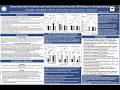
Sleep plays a critical role in maintaining neuronal integrity through repair of double-stranded DNA breaks (DSBs). Learning-induced neuronal activity can increase DSBs, while sleep is thought to restore them. The circadian gene Bmal1 may further influence DNA repair after sleep deprevation. This study investigates how sleep deprivation affects learning-associated DSBs and whether Bmal1 overexpression mitigates these effects.
The questions being asked are: How does sleep deprivation impact learning-evoked DNA damage in the hippocampus? And does Bmal1 muscle overexpression protect against these effects?
Wild-type (WT) and Bmal1 OE mice underwent 12-hour SD or control conditions. Learning was assessed using Novel Object Location Recognition (NOLR). Following testing, brains were collected and processed for immunohistochemistry to quantify γ-H2AX (DSBs), cFOS (neuronal activity), and LINE-1 expression in hippocampal regions (CA1–CA3, DG). Behavioral performance was measured via object preference indices.
SD/WT mice showed increased γ-H2AX and cFOS, indicating elevated DNA damage and neuronal activation, along with impaired memory performance. In contrast, OE mice maintained object location memory despite SD and showed attenuated cFOS increases compared to WT. While SD elevated markers of DNA damage overall, Bmal1 OE appeared protective at the behavioral level. These findings suggest that sleep deprivation exacerbates learning-induced DNA damage, but Bmal1 overexpression may aid in resilience.
Presentation 2
MAYA HANLEY, CHARLES MATTHEWS, TYLER BUCKLEY, STEVEN JACOBSEN
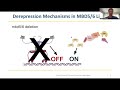
DNA methylation is documented as a method of eukaryotic epigenetic regulation. The downstream mechanism by which methylation silences or activates genes, however, is not well understood. In our research, we sought to characterize the proteins associated with methylated DNA using Arabidopsis thaliana as our model organism. Previous experiments have illuminated the partially redundant role of MBD5, MBD6, and each of their associated proteins. Our current research follows multiple generations of A. thaliana with specific edits to its genome to understand how modifying certain elements of the DNA methylation pathway affect its ability to epigenetically regulate gene expression. We followed multiple generations of transformed plants of various inserts and observed their genotypes and phenotypes to determine the impact of the relevant transgene in their function. The most current experiment has aimed to identify the activator repressed by MBD 5/6. We hypothesized that IDM 1 functions as the activator, which we are seeking to confirm by creating a generation of plants homozygous for an IDM 1 activation. By recording RNA from the transposable elements targeted by MBD 5/6 we can identify whether IDM 1 is the unknown activator.
JCCC funded Scholar
Presentation 3
KIMBERLY A. JORGE, Amy Rios, Eric J. Perez, and Tikvah K. Hayes
Lung cancer is a leading cause of cancer-related deaths in the United States and worldwide. Non-small cell lung cancer (NSCLC) makes up 85% of all lung cancers, with the most common subtypes being adenocarcinoma and squamous cell carcinoma. In adenocarcinomas, the epidermal growth factor (EGFR), a transmembrane receptor tyrosine kinase (RTK), regulates many important cellular processes and is frequently mutated. EGFR’s high frequency of gain-of-function mutations, several of which are known to be oncogenic, has led to the development of EGFR tyrosine kinase inhibitors (TKIs). EGFR-TKIs target EGFR mutations, however after prolonged treatment, resistance generally emerges. To proactively map the landscape of on-target EGFR resistance mutations, we employed functional genetic screens to identify secondary mutations causing resistance to osimertinib, a third-generation EGFR-TKI. We expressed a panel of EGFR secondary mutations in distinct EGFR primary genetic backgrounds in the PC9 lung cancer cell line. We then assessed the growth and signaling capabilities of these mutations in the presence of osimertinib using colony formation and western blot assays. We found that distinct secondary mutations were able to promote colony formation in the presence of osimertinib. We also found increased levels of phosphorylated-ERK in resistance-causing mutations treated with osimertinib, correlating with increased colony formation. Together, our data show that the function of resistance causing secondary mutations can be context dependent.
Presentation 4
HTET A. KHANT and Pei Yun Lee
Understanding unknown genes involved in sea urchin development, an evolutionarily conserved model system, is essential for linking genomic sequences to molecular and cellular mechanisms. An unknown gene (1313) from Strongylocentrotus purpuratus was identified and cloned via bacterial transformation. Blast and InterPro analyses suggested Palmitoyl transferase ZDHHC5 to be the tentative identity of the 1313 gene which encodes protein with Palmitoyltransferase activity with implications in fatty liver disease. For cloning, the ZDHHC5 gene was amplified, purified, and then transformed. The amplified ZDHHC5 gene has 17.1 percent band size error and transformation procedure resulted in one white colony. However, we were not able to verify successful cloning of ZDHHC5. Although the gene was identified, cloning of the gene was unsuccessful since transformation was evident in the presence of a white colony yet cloning was not verified. These findings support the predicted identity of the gene to be ZDHHC5 and highlight the importance of successful cloning to be able to investigate its potential role in regulatory pathways governing sea urchin development.
Presentation 5
BENJAMIN E. LINZA and Pei Yun Lee
Tripartite motif proteins containing RING finger, B-box, and coiled-coil domains are involved in the regulation of cell growth, differentiation, apoptosis, and transcription, and are considered prominent tumor suppressor genes as E3 ubiquitin ligases that are negative regulators of MAPK signaling pathways. Initial comparison of gene 28577’s nucleotide and amino acid sequences to NCBI BLAST databases demonstrates the gene’s commonalities to TRIM-2 and TRIM-45 protein structures, with InterPro analysis yielding TRIM-45-like results. Phylogenetic analysis was performed to confirm the gene’s identity using TRIM family proteins from D. rerio, H. sapiens, C. intestinalis, and others. Cloning of 28577 was done using PCR with GataE included as a control to ensure the functionality of PCR components, with both 28577 and GataE being successfully amplified following DNA purification. Plasmid ligation succeeded, and the integration of the plasmid with plated E. coli showed success through the generation of blue colonies, generated using IPTG & X-Gal LacZ staining, on ampicillin-coated plates. Official sequencing confirmation is still needed to verify that the sequences have been cloned and amplified accurately. The confirmation of successful cloning would allow us to use this gene to further understand the function of TRIM proteins not only in skeletal development, but in the regulation of tumor suppression in Deuterostomes.
Presentation 6
NINA M. ROBERTSON and Pei Yun Lee Ph.D
Researchers fully sequenced the Strongylocentrotus purpuratus genome in 2006, but the identity and function of many genes remained unknown. Conducting research on an unstudied gene in the purple sea urchin helps fill the knowledge gap left in this genomes research. This research asks can I successfully identify and introduce an unknown purple sea urchin and GataE gene into a plasmid vector? Using BLAST, Interpro, and Echinobase, I determined that my gene is a glutamate receptor 3. Additionally I used MEGA to construct a phylogenetic tree in order to determine the gene's relationship to its counterparts in other species. The study aimed to amplify and ligate the gene into a plasmid vector. The plasmid with the ligated gene was then transformed into competent E. Coli cells. Lastly, I verified successful cloning via colony PCR, restriction digest, and Sanger sequencing. This experiment showed the successful amplification and purification of the sea urchin gene. These data confirm that the unknown gene's identity is a glutamate receptor 3 and establishes its ability to be cloned. Because the glutamate receptor gene plays an important role in the development of the nervous system, studying it will allow us to learn how this complex bodily system forms.
Presentation 7
AKSHAT UBALE, Teresa Kortz
Introduction:
Pediatric sepsis is a leading cause of pediatric death globally, disproportionately so in sub-Saharan Africa. A lack of tools for early risk stratification prevents targeted care.
Objectives:
Using unsupervised clustering to identify subphenotypes. Then, comparing clinical characteristics, biomarker profiles, treatment, and mortality across clusters.
Methods:
A prospective cohort study was conducted at the Muhimbili National Hospital in Tanzania with 325 children with severe sepsis aged >28 days to 14 years. Participants were followed until discharge or death. Clinical data were collected in Tanzania, while metagenomic sequencing, RNA sequencing, and biomarker assays were completed at UCSF. Leiden clustering was then applied to the data.
Results:
Cluster 1 (n=109), cluster 2 (n=100), and cluster 3 (n=116) had significant clinical differences in median age in months (p=0.019), median white blood cell count (p<0.001), and median glucose (p=0.029). The biomarkers median procalcitonin, ferritin, and C-reactive protein, all had significant differences with p<0.001. While the mortality rate without steroid treatment was significant with p<0.001, the mortality rate with steroid treatment was not, with p=0.995.
Conclusion:
The 3 subphenotypes identified by unsupervised clustering differ in multiple clinical characteristics, inflammation via biomarkers, and mortality without steroids. These findings emphasize clustering-based stratification to create more targeted decisions to ameliorate outcomes in sub-Saharan Africa