Molecular, Cell, and Developmental Biology (MCDB): Prerecorded presentation - Panel 4
Location: Online - Prerecorded
Presentation 1
PRIANNA HONG and Pei Yun Lee
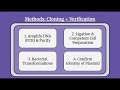
Transcription factor Ptf1a functions as part of the PTF1 heterotrimeric complex and plays a critical role in both pancreatic exocrine cell specification and maintenance of acinar cell identity. Although common amongst many families, Ptf1a is understudied in S. purpuratus, or purple sea urchins. This study first aimed to identify an unknown purple sea urchin gene by searching databases such as BLAST and InterPro, and then constructing a phylogenetic tree. Secondly, a fragment of the gene was cloned into E. coli bacteria. The coding region of Ptf1a was amplified using PCR and verified through gel electrophoresis, yielding a product with the expected 411 bp size and minimal error. Purified PCR products were ligated into a plasmid vector and transformed into competent bacterial cells. Successful cloning was assessed through colony screening, restriction enzyme digestions, and DNA miniprep PCR. Restriction digest analysis and subsequent PCR confirmed the presence of the Ptf1a insert. Minor discrepancies in fragment size were likely due to sample contamination. Overall, results demonstrate successful cloning of the sea urchin Ptf1a gene. Future studies will explore its functional role in a mouse model, with the long-term goal of investigating potential applications to pancreatic disease research.
Presentation 2
GIANNA KIM, Rayyan Irfan Ghoor, Cuining Liu, Mohammad Baig, Yu Sun, Justin Langerman, Terence Li, Kathrin Plath, and Chongyuan Luo
Cellular reprogramming of fibroblasts into induced pluripotent stem cells (iPSCs) is utilized for disease modeling, regenerative medicine, and understanding fundamental mechanisms of cell fate determination. While single-cell multi-omic studies have begun to delineate transcriptomic and epigenetic trajectories of reprogramming, the spatial organization of cells undergoing conversion and how local microenvironments shape reprogramming outcomes remain largely unexplored. We apply highly multiplexed, imaging-based spatial transcriptomics alongside single-nucleus 10X Multiome profiling (RNA + ATAC) across multiple donors and reprogramming time points to characterize the spatial arrangements of transcripts during fibroblast-to-iPSC reprogramming. We developed a computational pipeline following cell segmentation, transcript distributions, and spatial neighborhood analysis to characterize distinct intermediate states and their spatial contexts during reprogramming at cellular and subcellular resolution. Preliminary results indicate our segmentation approach performs consistently across cell types without bias in intracellular and extracellular capture, and ongoing analyses will further resolve the gene expression signatures and cellular morphology across reprogramming states in their spatial context. Spatially transcriptomics provides novel and compelling context to cellular reprogramming, offering insights that may inform strategies to improve reprogramming efficiency.
Presentation 3
NOELLA LEE, Jiayi Peng, and Pei Yun Lee
Strongylocentrotus purpuratus gene #022242 encodes the zinc finger E-box binding homeobox 2 (Zeb2) protein, a transcription factor found in both sea urchins and humans. It plays a role in neurodevelopment, neural injury, and coordinating the epithelial-mesenchymal transition (EMT). In humans, a heterozygous mutation causes neurodevelopmental defects, resulting in Mowat-Wilson syndrome. Additionally, due to its regulation of EMT, ZEB2 has been implicated as a driver of cancer progression. This project aimed to clone the zeb2 gene from S. purpuratus, a common model organism used to study development. The identity of gene #022242 as zeb2 was confirmed via BLAST, InterPro, and phylogenetic analyses. Subsequently, it was amplified from S. purpuratus genomic DNA using PCR, ligated into the pGEM-T Easy vector, and amplified in Escherichia coli. The successful cloning of zeb2 was confirmed by colony PCR, restriction digestion, and DNA sequencing analyses, which showed results matching the expected gene size and sequence. This work enables future studies aiming to understand Zeb2’s function in development-related processes, including localization via in situ hybridization or functional analysis through overexpression and knockdown experiments to determine its effects on cell fate decisions.
Presentation 4
ADELYNE MCMICHAEL, SILU LIU, YIFEI LIU, LUCY SHI, MAGGIE QIN, HAYDEN ZHAO, Xingbo Cai, Steve Jacobsen
Histone modifications and DNA methylation interact to regulate gene expression; however, the mechanism connecting active histone marks to DNA demethylation remains unresolved. In this study, I investigate how histone H3K4me3 promotes active DNA demethylation at a defined endogenous locus in Arabidopsis thaliana. Using the FWA locus as both a phenotypic and molecular readout, I test the hypothesis that chromatin-associated factors function downstream of H3K4me3 to facilitate the recruitment or activity of DNA demethylases.
To address this question, I conduct a forward genetic suppressor screen in a system where targeted H3K4me3 deposition induces both demethylation and late flowering. After EMS mutagenesis, I screen M2 populations for early-flowering individuals, which serve as indicators of disrupted H3K4me3-driven demethylation. Candidate lines are validated by assessing FWA promoter methylation via methylation-sensitive restriction digestion and PCR, and by confirming intact expression of the targeting construct. Validated suppressors are further characterized by segregation analysis and sequencing-based mapping to identify causal mutations.
I anticipate identifying genes required for coupling H3K4me3 to active DNA demethylation, including chromatin readers or factors that facilitate demethylase function. This research attempts to define a mechanistic link between histone modification and DNA methylation turnover, advancing understanding of how chromatin state regulates gene expression at specific loci.
Presentation 5
ALEXANDER RIDLEY, Julie Park, Claire Storey, Constance Yuen, Wahed Zedan, Mohamed Altai, Katherina Luckerath, Daniel Thorek, Johannes Czernin, Robert Damoiseaux, David Ulmert
LRRC15 is a TGFβ-induced plasma membrane protein selectively expressed in highly aggressive mesenchymal stem cell-derived malignancies and cancer-associated fibroblasts. Its expression is associated with increased invasiveness, immune evasion, and treatment resistance, making it a compelling therapeutic target. However, its cell-intrinsic oncogenic role remains poorly understood. This project investigates how LRRC15 impacts tumor growth and pathobiology. We compared LRRC15 wild-type and CRISPR-knockout U118 (high-expressing) and U87 (low-expressing) glioblastoma cell lines. Knockout was confirmed by Western blotting and RT-PCR. In-depth in vitro profiling showed that LRRC15 loss markedly reduced migration, colony formation, growth rate, and metabolic activity in both models, while Ki-67 levels remained largely unchanged, pointing to more nuanced effects on cell-cycle dynamics. High-throughput compound screening revealed unique vulnerabilities in DNA replication/repair, survival signaling, and redox homeostasis. In vivo xenograft growth kinetics have been fully evaluated, and RNA sequencing of the harvested tumors is underway to define transcriptional reprogramming and disrupted tumor-stroma interactions induced by LRRC15. By illuminating LRRC15’s pathomechanistic contributions, this study uncovers tumor dependencies that can be harnessed to enhance the efficacy of LRRC15-radiotheranostics and potentially transform treatment outcomes.
Presentation 6
JORDAN D. ROBINSON and PEI YUN LEE
The purple sea urchin serves as a model organism for understanding human disease. In uncovering unknown gene 1313 as palmitoyltransferase ZDHHC5, using BLAST, InterPro, and Echinobase, research suggests it is a transmembrane protein that palmitoylates cell surface molecules for pore formation in immune responses and apoptosis. Phylogenetic analysis confirmed that unknown gene 1313 was palmitoyltransferase ZDHHC5. We attempted to clone a portion of this gene into a plasmid. We first amplified gene 1313 using PCR; purified, and ligated the PCR product to a vector; transformed bacteria to uptake this plasmid; then attempted to confirm the plasmid DNA’s identity using plasmid PCR, and restriction digest. Based on these experiments, we were unable to confirm if the cloning was successful. As such, palmitoyltransferase ZDHHC5 was not successfully cloned. Future directions include re-cloning gene 1313 with different primers. Studying this gene will help us understand palmitoyltransferases ZDHHC5’s enzymatic processes.
Presentation 7
JAMES WILSON, Marlene E Starr, Tamar Tchkonia, James Kirkland, and Larissa Langhi Prata
Senescent cells (SenCs) accumulate with age and contribute to chronic inflammation, potentially exacerbating responses to infections. Patients with chronic diseases associated with SenCs are more susceptible to morbidity and mortality from infections than healthier, younger individuals without a high SenC burden. SenCs can arise in organs after inflammation and in response to metabolic, DNA, or tissue damage signals. Dasatanib and quercetin are senolytics that reduce morbidity from aging and chronic diseases in animal models and in early clinical trials. Sepsis is a life-threatening systemic response to infection that leads to tissue damage, morbidity, and high mortality. We hypothesized that pre-existing senescent cells impact responses to sepsis, and therefore senolytics could be used to improve sepsis outcomes. To investigate this, we used a murine model of sepsis comparing young and old mice, with vehicle or dasatinib + quercetin (DQ) treatment administered preventively with antibiotics. Clinical parameters were assessed over 3 days. Lowering the SenC burden before sepsis significantly improved the survival of old mice. This study demonstrates that reducing the senescent cell burden prior to sepsis protects old mice from sepsis-induced mortality, underscoring the potential of senolytics as a preventive strategy in elderly populations, particularly those undergoing scheduled surgeries, who are at elevated risk of developing sepsis. Further research is needed to evaluate mechanisms and timing.