Neuroscience: Prerecorded presentation - Panel 4
Location: Online - Prerecorded
Presentation 1
PAPARVINEE CHAISUPAT, Marisa Mekkittikul, Cansheng Zhu, Ajit S. Divakaruni
Neuronal metabolism is heavily dependent on glucose metabolism, but can shift depending on physiological conditions. This flexibility underpins metabolic interventions such as the ketogenic diet, which increases ketone body availability and has been shown to manage seizures in pediatric patients resistant to antiepileptic drugs. However, the mechanisms of action of the ketogenic diet remain unclear. Previous work in the laboratory suggests that neuronal handling of amino acids is altered by the availability of ketone bodies, but in-depth mechanistic studies are lacking. To address this gap in knowledge, we aim to investigate how beta-hydroxybutyrate availability alters intermediary metabolism in neurons. Primary neurons are cultured and treated with stable isotope tracers labeling specific carbons on either glucose or beta-hydroxybutyrate to study pathway-specific fluxes. We use gas chromatography-mass spectrometry to determine the abundance and 13C enrichment of metabolites in glycolysis, the TCA cycle, and amino acids. Upon beta-hydroxybutyrate supplementation, we anticipate that 13C labeling from glucose will decrease and rebalance how glucose is used for oxidation and anaplerosis. We hypothesize this will also adjust the handling of the amino acids glutamate and gamma-aminobutyric acid (GABA) that regulate neuronal excitability. The results could help explain some of the beneficial effects of dietary modification on medically refractory seizure disorders.
Presentation 2
MARISSA ESTRADA, Laila Sathe, Michael Wells
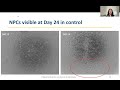
Human pluripotent stem cell derived neuronal models are valuable for studying brain development and disorders such as autism by enabling analysis of genetic and environmental influences on neurons. However, one major limitation of these models is donor-dependent variability during neuronal differentiation, where certain donor lines exhibit persistent neural progenitor cell (NPC) proliferation that overtakes neuronal cultures and reduces experimental reproducibility. This project investigates whether optimizing induction conditions can improve the stability of NGN2-accelerated neuronal differentiation across genetically distinct donor lines. Using dual-SMAD inhibition followed by transient neurogenin-2 (NGN2) overexpression, human stem cell derived progenitor cells were induced into neurons utilizing varying doxycycline and zeocin concentrations to evaluate their effectiveness on suppressing NPCs. Cultures were monitored via imaging over a 28-day differentiation period, and morphological changes were compared across treatment conditions to evaluate the extent of NPC persistence and culture stability. Results indicated that donor-specific variability remained and NPC growth persisted in certain lines.Thus indicating the need for further optimization of neuronal differentiation protocols to achieve consistent neuronal cultures across donor backgrounds. A stable differentiation protocol will improve neuronal model reliability and enable future studies of environmental and genetic impacts across genetically diverse donor lines.
Presentation 3
ASHLEY KUO, HALEY WONG, Dean Buonomano, Saray Soldado Magraner
Parvalbumin-expressing (PV) interneurons represent a major class of fast-spiking, GABAergic, inhibitory cells that modulate the activity and synchrony of neighboring excitatory pyramidal neurons. PV neurons play an essential role in shaping cortical plasticity, facilitating learning and memory processes through mechanisms such as targeted local circuit disinhibition. While their physiological importance is well-documented, their spatial distribution across the neocortical hierarchy remains less understood. This study investigates the anatomical organization of PV interneurons across distinct cortical processing levels in the developing brain using an in vitro organotypic preparation. Using early postnatal mice (few-day-old pups), we conducted a histological analysis of 400-micrometer-thick coronal slices, sectioned from the anterior to the posterior pole. Our primary objective is to map and quantitatively compare the distribution of PV interneurons between higher-order associative areas and lower-order primary sensory areas, specifically contrasting the anterior cingulate cortex with the primary auditory cortex. Data collection and histological quantification are currently ongoing. Ultimately, this research aims to provide a clearer understanding of how inhibitory networks are structurally organized across the anterior-posterior axis to support neural processes.
Presentation 4
TESS LEONG, Meenakshi Nair, Thorsten Althoff, Richard Slivicki, Kenneth Lin, Emily Silva, Nicolas Massaly
Pain is a subjective experience integrating sensory, emotional, and motivational components. Assessing spontaneous behaviors in rodents, rather than reflexive responses to noxious stimuli, better captures the emotional and aversive burden of pain, closely reflecting human conditions. Advances in machine learning (ML) enable automated detection and tracking of pain-associated behaviors in freely moving rodents. However, methods for implementing these tools and extracting reliable behavioral signatures remain limited.
1,000+ video frames were extracted and manually annotated to train DeepLabCut (DLC), a markerless pose estimation tool that tracks nine anatomically defined body points across time. BORIS is then used to generate frame-precise human annotations of behaviors of interest. DLC and BORIS outputs are fed into PixelPaws, which utilizes XGBoost to transform DLC-derived trajectories into kinematic features that capture movement dynamics and to generate behavior classifiers. This enables objective classification of affective pain-related behaviors and quantification of behavioral patterns, providing a standardized and scalable framework for assessing pain.
Linking ML pipelines with targeted neuronal manipulation establishes a translational framework for objectively assessing the emotional dimension of pain. Moving away from stimulus-evoked nociceptive assays and toward spontaneous behavioral profiling creates an accurate and efficient evaluation of pain, accelerating the development of safer, non-opioid therapeutics.
Presentation 6
VIBHA SRINIVAS, ANNIE DISHCHYAN, Leo Bauerlein Kelly, Sanika Shahapurkar, Savannah Behboudi, Julia Talavera, and April D. Thames
Chronic psychosocial stress has been increasingly recognized as a contributor to systemic inflammation. Given that people living with HIV (PLWH) often experience higher cumulative stress burden due to social, structural, and health-related factors, we analyzed baseline data of a study on an older PLWH population (R01 MH114761; PI: A. Thames) to examine whether chronic stress burden predicts systemic inflammation in PLWH. Comparing a stress composite using the Perceived Stress Scale (PSS) and the Chronic Burden Scale (CBS) against bioinflammatory markers (IL-6, IL-8, TNF-α, IFN-γ, and CRP) levels subjected to principal components analysis (PCA), we conducted a linear regression with respect to chronological age, metabolic age, and stratified by HIV status. In the full sample (N = 83), there was no significant association between age-adjusted stress burden and inflammation (r = 0.08, p = 0.47; β = 0.20, p = 0.47, R² = 0.006). Among individuals with HIV (n = 58), stress burden was moderately associated with inflammation (r = 0.32, β = 0.62, p = 0.094, R² = 0.10), indicating that higher chronic stress was associated with greater systemic inflammation. In contrast, no association was observed among HIV-negative participants (n = 25; r = −0.05, β = −0.15, p = 0.69, R² = 0.003). These findings suggest that chronic stress may be associated with increased systemic inflammation and highlights the importance of considering psychosocial determinants to understand inflammation-related health disparities in PLWH.
Presentation 7
KIMIYA NATAN, Leonardo Sportelli, Jack Dodson, Leanna Hernandez
Abnormal sleep duration has been associated with a wide range of neurodevelopmental disorders, with an estimated 50-80% of children diagnosed with autism spectrum disorder (ASD) showing sleep problems. Previous studies report moderate heritability of sleep duration in adults and children, yet it remains unclear whether these genetic variants and the biological pathways they act upon are shared with the genetic architecture of autism. To this aim, we conducted a genome wide association study (GWAS) of Childhood Sleep Duration in a cohort of 4843 European ancestry individuals from the Adolescent Brain Cognitive Development (ABCD) study. We performed linear regression adjusting for age, sex, batch, and first five genetic principal components. Genetic correlations with neurodevelopmental traits were estimated using LD Score Regression. Although no loci reached genome-wide significance, we identified 16 loci with suggestive evidence of association (P<10-5) and significantly enriched for genes expressed in late childhood and involved in the regulation of presynaptic membrane potential (P<.05). We identified negative genetic correlation between sleep trait and neurodevelopmental disorders (ASD: rg = -0.63; ADHD: -0.48; P < .05), indicating that genetic variants increasing risk for ASD and ADHD are associated with shorter sleep duration. Our analyses highlight a shared genetic risk with neurodevelopmental disorders. Further investigation in multiple ancestries will assess the replicability and generalizability of these results.