Neuroscience: Prerecorded presentation - Panel 5
Location: Online - Prerecorded
Presentation 1
BRETT BAPTIST, Shraddha KC, Avi Samelson
Neurodegenerative diseases affect over 55 million people worldwide, treatments cost over $500 billion annually, and there is no cure. Tauopathies, which include Alzheimer's Disease, are the most common neurodegenerative diseases and are attributed to the aggregation of the protein tau in the brain. Induced pluripotent stem cells (iPSCs) are a promising tool for modeling disease because they enable the study of neurons in vitro. One of the current barriers in iPSC models is controlling levels of transgenic gene expression. The current models used cannot recapitulate the high gene expression found in endogenous neurons. Here, we have utilized three drug-inducible systems and are beginning to transduce them into iPSC-derived neurons. The use of different inducible systems enables enhanced control over temporal dynamics, the ability to replicate distinct neurodegenerative characteristics, and the manipulation of expression to achieve the expected protein aggregation and expression of the 4R tau isoform of MAPT. Future analyses will assess the performance of our drug-inducible models to further our understanding of neurodegenerative disease mechanisms and enable greater exploration of potential drug targets.
Presentation 2
ROHAN BHALODIA, Karen Safaryan, Peyman Golshani
ACC neuronal firing has been shown to correlate with the error measured between the predicted choice outcome and the actual outcome; this activity has been hypothesized to adjust attention allocated to stimuli and switch between tasks. Abnormalities in attention and task-switching are fundamental pathophysiological manifestations of ADHD, OCD, and autism. The means by which the ACC processes sensory inputs in order to calculate this prediction error is poorly understood. To investigate ACC and Visual Cortex (V1) coordination in determining prediction error, we train mice to perform an audiovisual set-shifting task, in which mice attend to one stimulus while ignoring the other and change the stimulus they attend to between groups of trials. Using neuropixel single-cell recordings, we measure the spiking activity of neurons in the ACC and V1. We statistically correlate the spiking activity to various trial variables using a Generalized Linear Model (GLM) to determine the relevant task variables encoded by each neuron. To our surprise, we found outcome selective cells present in both the V1 as well as the ACC. Moreover, we found mirrored task selective cells in both the V1 and ACC recorded sites. We will further investigate the significance of the redundant encoding of task variables via population analysis of the neurons. These findings form the foundation for development of therapies targeted at illnesses with abnormal attention and stimulus processing, such as ADHD, OCD, or autism.
Presentation 3
ALONDRA CARRILLO, Tirth K. Patel, and Jason D. Hinman
A key feature of Alzheimer’s disease (AD) is the accumulation of tau protein, and while glymphatic dysfunction and age-related lymphatic decline have been implicated in disease progression, the mechanisms underlying impaired tau clearance remain poorly understood. The glymphatic system, driven by aquaporin-4 (AQP4) mediated exchange of cerebrospinal and interstitial fluid, facilitates the movement of waste toward brain borders, where meningeal lymphatic vessels (mLVs) enable drainage to the periphery. This study investigates how tau pathology affects the structure and function of glymphatic and mLVs, and how these changes impact tau clearance from the brain. We quantified AQP4 expression patterns in wild-type and tauopathy mice models to assess changes in glymphatic-associated fluid regulation, using Podocalyxin staining to identify blood vessels and examine AQP4 polarization relative to the vasculature. mLV morphology was evaluated by measuring vessel width. Preliminary findings show a decrease in AQP4 expression in older tauopathy mice, along with an increase in mLV diameter compared to wild-type controls. These findings can suggest that tau pathology is associated with structural alterations in mLVs and reduced glymphatic-associated AQP4 expression, which together may contribute to impaired brain clearance mechanisms.
Presentation 4
HUANG ERIC, Freelin Anne, Konopka Genevieve
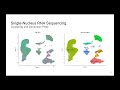
Human memory is a widely researched field across a variety of disciplines; however, there is little focus on how gene expression is influenced during memory-related activity. This project seeks to identify gene expression programs underlying memory processes. During cognition, coordinated neuronal signals can be observed as harmonic oscillations known as local field potentials (LFPs). Particularly, the 2-10 Hz frequency band (encompassing delta, theta, and low alpha ranges) is implicated in hippocampal-dependent memory processes (encoding and retrieval). Cholinergic signaling has been shown to modulate theta-band oscillations, and carbachol application has been associated with increased power in these frequency bands. Using samples from the temporal lobe, slices were treated with control (4 mM K⁺), high K⁺ (8 mM K⁺), or carbachol (50 µM), followed by single-nucleus Multiome sequencing to profile both gene expression and chromatin accessibility. To process the single-nucleus RNA sequencing (snRNA-seq) data, samples underwent quality control and filtering, followed by clustering, showing distinct cell populations within the dataset. Differential gene expression analysis was performed using Seurat to identify transcriptional changes across conditions. Upregulated and downregulated genes in the test conditions reveal cell-type specific gene expression response to signatures associated with human memory. Future work will integrate snATAC-seq data to perform multiomic analysis.
Presentation 5
CHARLES S. KOPP, Yvonne S. Yang and Thomas J. Maierhofer
To investigate whether individuals who self-indicate past traumatic experiences have increased brain inflammation, we measured positron-emission topography (PET) scanning of injected [18F]-FEPPA, a radiotracer that binds to activated microglia, the resident immune cells of the brain. The data include a clinical survey of patients (n = 86) who filled out the Traumatic Experience Checklist (TEC) and other relevant covariates such as smoking status (tobacco and marijuana). Data also includes an indicator for the rs6971 genotype, which causes increased binding of the [18F]-FEPPA tracer unrelated to inflammation. We fitted separate linear models for each of five brain regions (the medial prefrontal cortex, dorsolateral prefrontal cortex, anterior cingulate cortex, hipocampus, and cerebellum) to assess the main effects of cumulative trauma on brain inflammation, accounting for covariates age, sex, BMI, THC and tobacco use, and TSPO binding genotype. We found no significant or clinically relevant effect of trauma on brain inflammation across all brain regions. This null finding is relativized by the TEC being a self-report measure of potentially traumatizing events, rather than impacted trauma, as well as the observational nature of this study.
Presentation 6
MINDY NGUYEN, Aashna Gupta, Thu Duong, Isabella. Borhan, Elena Ghaleb, Ursha Vora, Angelina Leconte, Stephanie Kengne
Trauma and stress are widely recognized as precursors to Post-Traumatic Stress Disorder, but are not associated with other psychotic symptoms or disorders, such as schizophrenia. Schizophrenia is a complex neurodevelopmental disorder that chronically impairs daily functioning and is characterized by symptoms such as delusions, hallucinations, and disorganized thinking. This study aimed to synthesize research and analyze trends on how trauma and stress contribute to the onset or exacerbation of schizophrenia by conducting a bibliometric analysis that highlights leading authors, institutions, journals, and keyword trends. 300 top-cited articles from the WoS Core Collection were extracted and exported to Excel for data organization and bibliometric review, yielding a final sample of 100 articles. Excel and the Bibliometrix package in RStudio were used to generate key metrics and visualizations. Senior authors, institutions, and journals were primarily located in Europe, especially the UK. Included in the top 15 used keywords were “sexual abuse” and “childhood trauma,” representing a range of adverse experiences. The reviewed literature highlights frameworks such as the dopamine hypothesis, the stress-vulnerability model, and the stress-sensitization model to explain how chronic stress dysregulates the HPA axis, resulting in prolonged cortisol exposure, heightened amygdala reactivity, and altered mesolimbic dopamine signaling, which may contribute to aberrant salience attribution and psychotic symptomatology in schizophrenia.
Presentation 7
SANIKA SHAHAPURKAR, Annie Dishchyan, Leo Bauerlein Kelly, Vibha Srinivas, Savannah Behboudi B.S., Julia Talavera B.S., and April Thames Ph.D.
People living with HIV are at increased risk for depression (Fuenmayor & Cournos, 2022), yet the psychosocial mechanisms underlying this relationship remain unclear. Although social support is often conceptualized as protective, stress arising within social networks may paradoxically exacerbate depressive symptoms (Mussa et al., 2024). Differentiating supportive from stressful social network dynamics may therefore clarify HIV–depression pathways. In a sample of 196 adults with and without HIV, we examined whether stress within social networks contributed to the HIV–depression relationship using hierarchical regression modeling. After adjusting for age, gender, and socioeconomic status, HIV status remained independently associated with greater depressive symptoms (β = −0.39, p = .011). Higher levels of stress from familial (β = .21, p = .014), non-familial (β = .26, p = .006), and other social networks (β = .28, p = .003) were significantly linked to greater depressive symptoms. Notably, stress from non-familial support networks accounted for approximately 19% of the HIV–depression association. Stress within social networks demonstrated a robust association with depressive symptoms independent of HIV status and socioeconomic factors, suggesting that the quality of relational dynamics may be more consequential than the mere presence of support.
Presentation 8
JINGYUE WANG
Amide proton transfer-weighted (APT) imaging is a molecular MRI technique that generates image contrast based predominantly on the amide protons. Since APT has been used to show pH changes in abnormal tissue, it is a valuable neuroimaging tool to detect acidosis in subjects with traumatic brain injury (TBI) non-invasively. Previously, there were few studies that combined APT with structural MRI methods such as diffusion weighted imaging (DWI) and Multi-Gradient Echo (MGE) MRI. The current study aims to investigate if APT values offer insights into the mechanisms of neural structural changes and if acute phase (day 3) APT can predict DWI and MGE in the chronic phase of TBI (day 30) in rat models.
Anatomical image, DWI, and MGE of rats that underwent controlled cortical impact at 3 and 30 days post-injury were converted to NIFTI format, skull stripped, and bias field corrected. APT data is converted into MTRasym maps. Imaging data were correlated in anatomical template space. Pathological imaging data is selected using Mean Absolute Deviation, and cross-subject voxel-wise analysis was done with FSL. The Receiver Operating Characteristic (ROC) curve is used to categorize CCI and sham groups.
Results showed significant differences between low values of APT between CCI and sham groups, and APT showed distinct values for core and peripheral injury regions. APT at 3 days also showed a higher categorization and predictive power of chronic injury compared to DWI metrics such as fractional anisotropy.